Namibia Captain Demands Removal of 'Associate' Label in Cricket
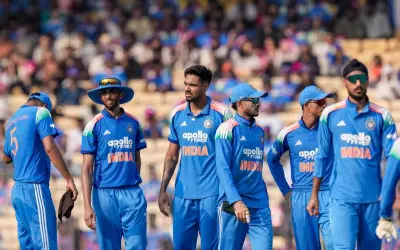
In a dramatic start to the ongoing T20 World Cup, three Associate nations came agonizingly close to creating major upsets within just 24 hours. The Netherlands, the United States, and Nepal all had victories within their grasp before crucial dropped catches and moments of individual brilliance from established cricket superstars turned the tide against them.
"Time to Remove Limiting Labels"
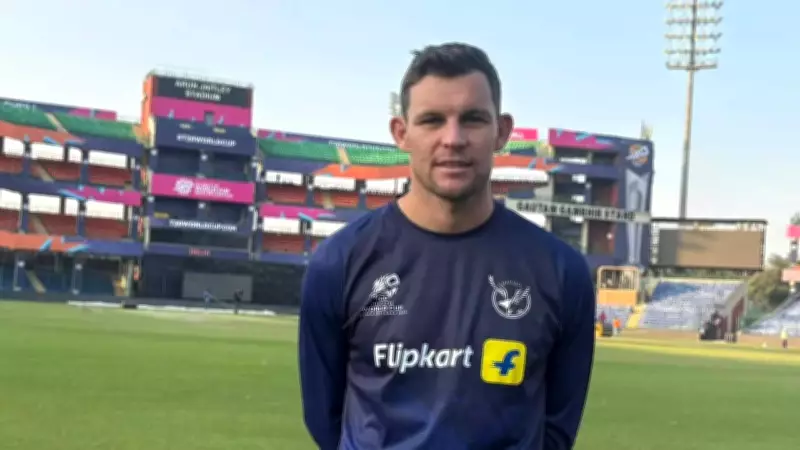
Speaking after Namibia's first training session in New Delhi on Sunday, captain Gerhard Erasmus made a passionate case for eliminating the terms 'Associate' and 'minnows' from cricket vocabulary. "Teams should not tag themselves in that way," declared the 30-year-old leader, who is preparing for his fourth consecutive T20 World Cup appearance.
"You should not limit yourself with labels. Everyone is human, playing with the same white ball. We have enough proof to back ourselves," Erasmus emphasized, pointing to Namibia's impressive track record against established cricket nations.

Proven Competitiveness Against Top Teams
The Namibian captain highlighted several significant victories that demonstrate his team's capabilities. "We beat Sri Lanka, a proper Sri Lankan team, in the 2022 T20 World Cup that had just won the Asia Cup, in good conditions in Australia. That was not a fluke. Against Ireland and Zimbabwe, we have had a positive record. So I do not believe in that tag," he asserted.
Erasmus stressed that the skill gap between established and emerging cricket nations has narrowed significantly. "Many games are decided by small moments, like a single catch. Skill levels are very close. More exposure through such games will help level the playing field. If teams across the world get that exposure, the global game will become stronger, and that will benefit everyone," he explained.
Approaching the India Challenge
With Namibia's population estimated at just three million, their upcoming match against cricket giants India in Delhi represents a classic David versus Goliath scenario. However, Erasmus remains unfazed, drawing inspiration from the USA's competitive performance against top teams.
"We have nothing to lose when playing against India. You can go out and enjoy it because those teams are the best in the world for a reason. They are world champions for a reason. It is about enjoying the moment and appreciating that you have earned the right to play against them," he said, adding, "If you approach it positively, you often get the best results."
The Challenge of Limited Exposure
Despite Namibia's fourth consecutive T20 World Cup appearance and historic victory over South Africa in October 2023, Erasmus acknowledges significant challenges. "I think it becomes difficult at a certain level because you don't get to play the big teams very often. Because of that, the exposure is limited, and every two years when you come back to a World Cup, it feels like a big step up. That is the toughest thing to recreate," he admitted.
The captain praised his team's resilience despite these limitations. "We try to play against teams like Zimbabwe and some South African franchise sides in between to maintain that level of cricket. In that sense, it is actually a remarkable story that we can still come and compete against some of the top nations."
Cricket's Growing Popularity in Namibia
Erasmus described cricket's evolving status in his country, where only four clubs compete in the top men's division and there's no first-class structure. "These days, a lot more people follow cricket. In a sense, we have overtaken rugby, which is culturally a big sport in South Africa and Namibia. Soccer is still the most participated sport, so in terms of numbers we are probably not there yet," he noted.
The captain credited global visibility for cricket's growth in Namibia. "The brand we have created with Namibia, the fact that people see us on streaming platforms and on TV every two years on the world stage, has created real anticipation around cricket. Getting South Africa to play in winter was a massive thing. Our ground opening, for example, was sold out."

Structural Challenges and Future Development
Erasmus outlined the grassroots structure in Namibia, which primarily operates through school cricket and age-group teams. "We have tried to set up an academy and a high-performance setup over the last three or four years. That has also been difficult because it is tough to get inbound tours or go outbound due to financial constraints. Setting up a viable high-performance structure is the next step for us," he explained.
When questioned about red-ball cricket development, Erasmus provided a pragmatic assessment. "The ICC structure has changed. In the past, we used to play four-day cricket through the Intercontinental Cup, but that structure was removed around 10 or 12 years ago. There is no incentive for us to play red-ball cricket now because it does not feature in qualification pathways. It also does not make financial sense for us to invest in red-ball cricket."
Namibia finds itself in Group A alongside cricket powerhouses India and Pakistan, as well as the Netherlands and the USA. Their campaign continues with a crucial match against the Netherlands at Delhi's Arun Jaitley Stadium on Tuesday, where they'll look to prove that the 'Associate' label no longer applies to competitive emerging cricket nations.