New Zealand Cricket: The Small Nation with a Big Impact
On the global map, New Zealand appears as two remote islands in the Pacific Ocean, often described as resembling half-eaten mutton chops. Despite its modest population of just 5.3 million and a cricketing structure with an annual turnover of approximately $22 million—roughly one-fifth of tennis legend Roger Federer's estimated net worth—this nation has consistently punched above its weight in prestigious ICC tournaments.
A Remarkable Achievement Against the Odds
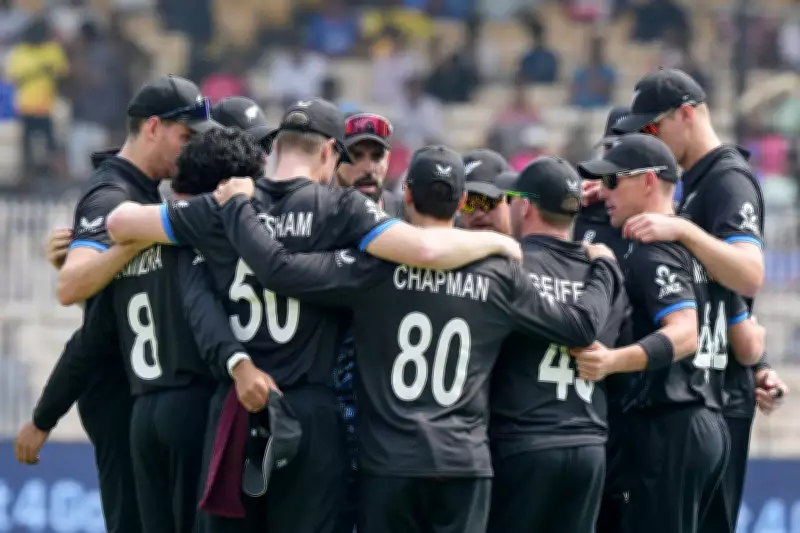
This Sunday marks the second time in five years that New Zealand has reached the summit clash of a major ICC tournament. They have achieved this feat with a talent pool that is only a fraction of the size available in cricketing giants like India. The question arises: what makes the Black Caps so ultra-competitive despite their limited resources?
Heath Mills, CEO of the New Zealand Players' Association, provided insight into their approach. "We have six domestic teams: Wellington, Auckland, Canterbury, Otago, Central Districts, and Northern Districts. At any given time, we have only around 66 players to choose from. It's about being smart and extracting the maximum potential from our very limited talent pool," Mills explained in an interview.

The Strategic Decision That Transformed New Zealand Cricket
Two decades ago, New Zealand Cricket (NZC) made a pivotal decision that would have far-reaching consequences for their cricketing ecosystem. "The administrators realized the best way forward was to permit our players to participate in high-profile T20 leagues such as the IPL, the T20 Blast, and the Big Bash League," Mills stated. "These leagues are effectively funding the development of our players. It's a win-win situation for us."
This strategy has yielded significant dividends. Former players like Stephen Fleming, Daniel Vettori, Mike Hesson, and Shane Bond have emerged as some of the most sought-after coaches on the global T20 circuit. Their expertise has been instrumental in nurturing talent back home.
The benefits were evident in the recent T20 World Cup, where New Zealand openers Finn Allen and Tim Seifert hammered a blistering 117-run stand against South Africa in the semifinal at Eden Gardens, propelling their team into the final. Both Allen and Seifert are seasoned performers in the Big Bash League, with Allen representing the Perth Scorchers and Seifert playing for the Melbourne Renegades.
Navigating Turmoil and Planning for the Future
Despite their on-field success, New Zealand cricket faced significant turmoil over the past winter. A split emerged between former NZC chief Scott Weenink and the six member associations over a proposed franchise T20 league intended to replace the domestic Super Smash competition. Tentatively named NZ20, this new league aims to attract foreign investment through IPL franchises and recruit top overseas players.
Weenink advocated for a New Zealand franchise entering the Big Bash League instead, but he stepped down on January 30, accelerating the path for NZ20's development. "Hopefully, we can see this league taking shape by next summer," Mills expressed optimistically. Currently, New Zealand is the only ICC Full Member nation without a franchise T20 league.
"The NZ20 would help boost our profile and provide greater exposure for some of our domestic players," Mills added. For New Zealand cricket, the hope is that NZ20 will introduce a new economic dimension without disrupting a system that has proven highly effective.
The Key to Sustained Success
The steady rise of the Black Caps in the T20 rankings demonstrates that smart planning and a strong organizational culture matter more than sheer scale. By leveraging global opportunities and fostering a cohesive environment, New Zealand has crafted a blueprint for success that other smaller nations might emulate.
As they prepare for another major final, the story of New Zealand cricket serves as a testament to resilience, innovation, and strategic foresight in the face of limited resources.