Nigeria's World Cup Qualification Hangs in Balance as FIFA Reviews DR Congo Complaint
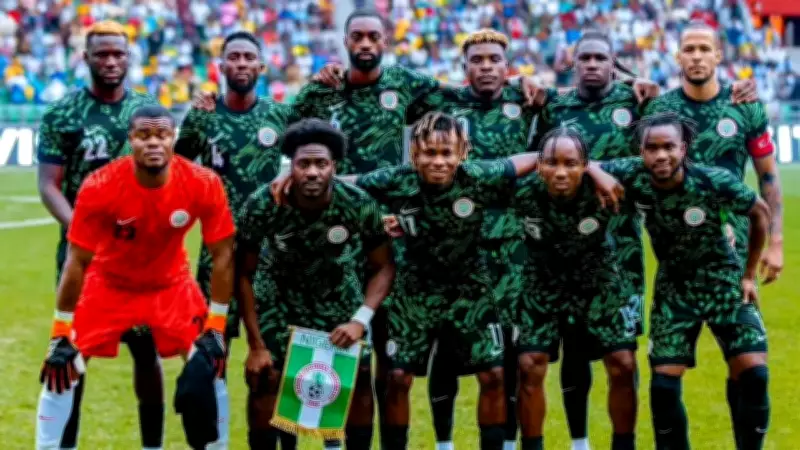
The Nigeria Football Federation has successfully prompted FIFA to launch a formal review into whether DR Congo fielded ineligible players during a crucial World Cup qualifying match in November. This development has suddenly revived Nigeria's hopes of reaching the expanded 2026 tournament in North America, just months before the competition begins.
The Controversial Match and Eligibility Questions
The dispute centers on DR Congo's victory over Nigeria in November, a result that secured the Congolese side a spot in the intercontinental playoff. Nigeria immediately challenged the outcome, arguing that player eligibility issues may have improperly influenced the match's result.
Nigeria's complaint specifically focuses on the participation of Aaron Wan-Bissaka and Axel Tuanzebe, both former England youth internationals who represented DR Congo in the crucial qualifier. The NFF contends that Congolese law does not permit dual citizenship, raising serious questions about whether these players were legally eligible to compete for the national team.

Official Statements and Federation Positions
NFF general secretary Mohammed Sanusi provided detailed reasoning behind the complaint: "Congolese rules clearly state that you cannot hold dual citizenship, yet some of their players possess European and French passports. Our firm position is that FIFA was deliberately misled into allowing these players to participate."
While FIFA has confirmed the matter remains under active review, officials have not provided a specific timeline for their decision. NFF communications director Demola Olajire urged caution and patience, stating: "FIFA has not communicated any decision to us or to the Congolese federation. Speculation at this stage would be premature."
The Congolese Football Federation has strongly rejected Nigeria's protest, characterizing it as a desperate attempt to "win through the back door" rather than on the football pitch.
Potential Consequences and Tournament Implications
Should FIFA determine that DR Congo indeed used ineligible players, the governing body could impose several significant penalties:
- Substantial financial fines against the Congolese federation
- Disciplinary action against team officials
- Potential forfeiture of the match result
In the most severe scenario, Nigeria could be awarded the victory, which would completely reopen their path to World Cup qualification. This ruling could dramatically reshape the final lineup for the 2026 tournament, which expands to 48 teams for the first time in history.
Timing and Competitive Landscape
DR Congo is currently scheduled to face either New Caledonia or Jamaica in the intercontinental playoff on March 31. A FIFA ruling before that critical date could fundamentally alter the competitive landscape, potentially removing DR Congo from contention and reinstating Nigeria's qualification hopes.
With the World Cup set to begin in the United States, Canada, and Mexico, the stakes have never been higher for African football. For Nigeria's Super Eagles, this FIFA decision represents more than just a technical ruling—it could determine whether the team remains on the sidelines or receives another opportunity to compete on football's grandest global stage.
The expanded 2026 tournament format has created additional qualification pathways, but this eligibility controversy demonstrates how administrative decisions can dramatically impact competitive outcomes. Football federations worldwide will be closely monitoring FIFA's ruling, as it could establish important precedents for future international competitions.