Pakistan Government Blocks Cricket Match Against India in T20 World Cup 2026
In a dramatic development that has sent shockwaves through the international cricket community, the Government of Pakistan has officially decided to boycott the group stage match against arch-rival India in the upcoming ICC T20 World Cup 2026. While the move is reportedly intended as a gesture of solidarity with Bangladesh, it has not been welcomed by the Bangladesh Cricket Board (BCB), which fears severe financial and structural consequences for the sport globally.
Official Announcement and Political Decision
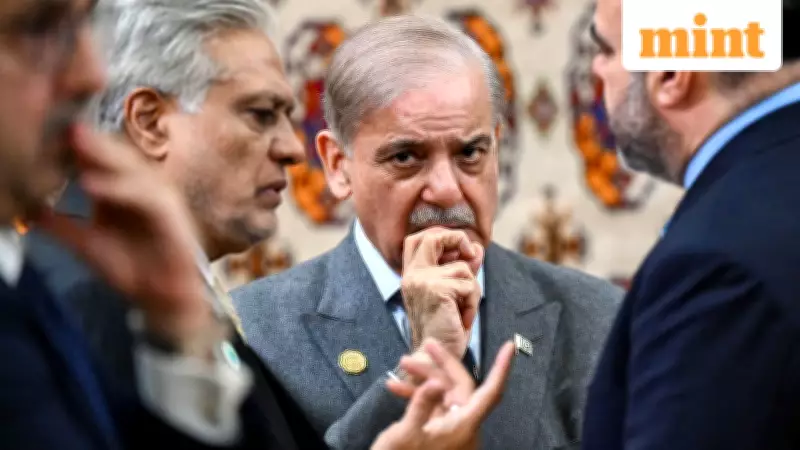
The Pakistan Cricket Board (PCB) has maintained a conspicuous silence on the matter, leaving the announcement to the country's political leadership. The Government of Pakistan, under Prime Minister Shehbaz Sharif, made the declaration via a post on the social media platform X (formerly Twitter). The statement read, "The Government of the Islamic Republic of Pakistan grants approval to the Pakistan Cricket Team to participate in the ICC World T20 2026, however, the Pakistan Cricket Team shall not take the field in the match scheduled on 15th February against India." No official explanation has been provided for this politically charged decision.
Bangladesh Cricket Board's Mounting Concerns
Contrary to Pakistan's apparent intention to support Bangladesh, the BCB is deeply troubled by the potential ramifications. Senior officials within the board, speaking anonymously to Prothom Alo, revealed that the boycott is likely to disrupt global cricket finances and long-term planning. Bangladesh's cricket administration depends heavily on revenue shared by the International Cricket Council (ICC), and any disturbance to the central revenue pool could have devastating effects.

One BCB director explained, "Pakistan wanted to send a strong message to Indian cricket. They wanted to challenge India's dominance. From that perspective, the decision may make sense." However, the same official emphasized the financial downside, stating, "If the India–Pakistan match does not take place, the entire cricketing world will face financial losses. Even our dividend will decrease. We did not want such losses."
ICC Warns of Wider Ecosystem Damage
Following the Pakistani government's social media announcement, the ICC issued a stern warning that refusing to play the scheduled match would damage the broader cricket ecosystem. The financial consequences are viewed as particularly serious, especially for cricket boards like Bangladesh that rely extensively on ICC distributions. The uncertainty continues to trouble administrators worldwide, who are grappling with the potential fallout.
Another BCB director expressed frustration with the ICC's handling of Bangladesh's situation, noting, "The ICC excluded us without properly listening to our position. Some response was inevitable. Pakistan's decision not to play India is a very significant development." Despite this, the official clarified that they do not support the boycott, reflecting a complex mix of frustration and concern.
Financial Vulnerability and Domestic Struggles
The financial vulnerability of boards like Bangladesh is a central theme in this crisis. A Bangladeshi official directly involved in negotiations with the ICC highlighted the stark reality: "This will directly affect the ICC's central revenue pool. Like everyone else, we are also stakeholders in that fund. Take Kenya or Uganda, for example. They would be satisfied with a $100,000-200,000. But, given our infrastructure, how will we survive if ICC revenues decline?"
Compounding these worries, domestic cricket in Bangladesh is no longer a source of substantial revenue. Even the money generated from sponsorships and broadcast rights barely suffices to cover the annual costs of running cricket in the country, making ICC distributions critically important for survival.

Strained Relations and Future Implications
The boycott has further strained Bangladesh's cricket ties with India, echoing the long-standing tensions between India and Pakistan. The BCB fears that this dispute could negatively impact future tours and tournaments, including prestigious events like the Asia Cup. The competitive balance in IND vs PAK matches has already been affected, with Pakistan losing all three encounters at the latest Asia Cup. Nevertheless, an India vs Pakistan match retains immense symbolic and commercial weight beyond the sport itself.
Hope for Dialogue and Resolution
Despite the prevailing uncertainty, cricket officials remain cautiously optimistic that dialogue will resume to ease the crisis. The ICC has already taken proactive steps by appointing a peacemaker to negotiate with Pakistan. Imran Khwaja, deputy chair of the ICC, has been tasked with convincing Pakistani authorities to participate in the match against India.
A BCB director expressed a glimmer of hope, stating, "The door to dialogue can always be opened, let us see what happens." The cricketing world now watches closely, hoping for a resolution that preserves the financial stability and competitive spirit of the global game.