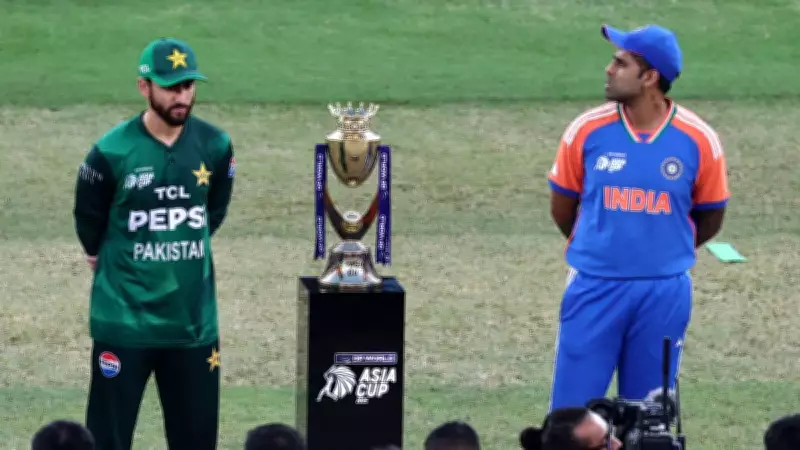
Pakistan PM Shehbaz Sharif Announces Boycott of India Match in 2026 T20 World Cup
In a significant development that has sent shockwaves through the cricketing world, Pakistan Prime Minister Shehbaz Sharif has declared that Pakistan will not play against India in the upcoming T20 World Cup scheduled for 2026. This announcement marks a major escalation in the longstanding political tensions between the two neighboring nations, which have often spilled over into the realm of international sports.
Official Statement and Rationale Behind the Decision
Prime Minister Shehbaz Sharif made this bold statement during a recent public address, where he explicitly cited Pakistan's unwavering support for Bangladesh as the primary reason for this decision. He emphasized that Pakistan stands in solidarity with Bangladesh, which is set to co-host the 2026 T20 World Cup alongside India and Sri Lanka. Sharif's remarks highlight the complex geopolitical dynamics that continue to influence cricketing fixtures between India and Pakistan.
The decision underscores the deep-seated political rift between India and Pakistan, which has frequently disrupted bilateral cricket series and other sporting engagements over the past decade. Historically, matches between these two cricketing giants have been among the most anticipated events in the sport, drawing massive global audiences and generating immense revenue. However, political disputes, particularly concerning territorial issues and cross-border tensions, have often led to cancellations or boycotts.

Impact on the 2026 T20 World Cup and Global Cricket
This announcement could have far-reaching implications for the structure and scheduling of the 2026 T20 World Cup. The International Cricket Council (ICC) now faces a challenging task in reorganizing the tournament's fixtures to accommodate Pakistan's absence from matches against India. Such a move might necessitate last-minute changes to the group stages or knockout rounds, potentially affecting the competitive balance and viewer interest in the event.
Moreover, the boycott raises questions about the future of India-Pakistan cricketing relations. Fans from both countries, who have long cherished these high-stakes encounters, may be disappointed by the prospect of missing out on one of sport's greatest rivalries. The economic impact is also considerable, as India-Pakistan matches are known to drive substantial broadcasting rights deals, sponsorship revenues, and ticket sales.
Broader Context of Sports and Diplomacy
Pakistan's stance reflects a broader trend where sports are increasingly used as a tool for diplomatic signaling and political protest. By boycotting the match, Pakistan aims to convey its support for Bangladesh and possibly address other bilateral grievances with India. This decision aligns with previous instances where cricketing ties have been suspended due to political tensions, such as the cancellation of bilateral series following the 2008 Mumbai attacks and other security concerns.
In response, cricket authorities and analysts are urging for dialogue and diplomacy to resolve such disputes, emphasizing that sports should ideally remain apolitical. However, given the current geopolitical climate, a swift resolution seems unlikely. The ICC and other stakeholders may need to mediate or establish contingency plans to ensure the smooth execution of the 2026 T20 World Cup without compromising the spirit of the game.
As the situation unfolds, the cricketing community will closely monitor any developments, hoping for a reversal or compromise that allows for the revival of this iconic rivalry. Until then, the absence of an India-Pakistan clash in the 2026 T20 World Cup stands as a poignant reminder of how politics can intersect with and disrupt the world of sports.