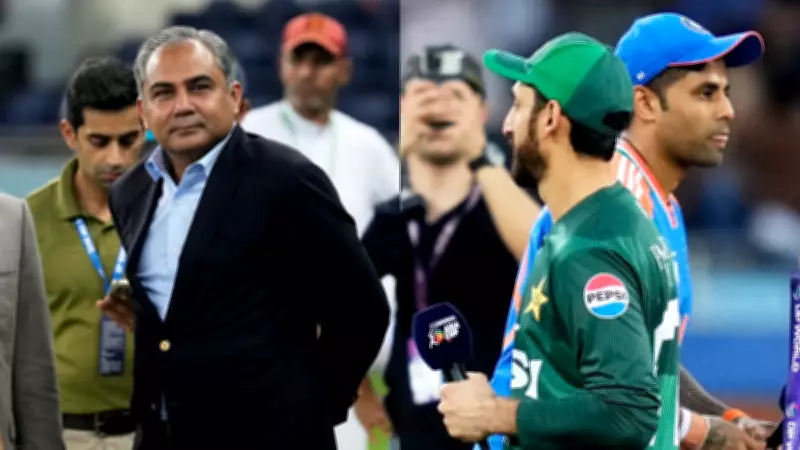
Will PCB Chief Mohsin Naqvi Reverse Pakistan's India Boycott Stance for T20 World Cup?
In a development that could reshape cricket diplomacy in South Asia, Pakistan Cricket Board (PCB) chairman Mohsin Naqvi has indicated a potential reconsideration of Pakistan's longstanding boycott policy against playing India in bilateral series. This comes amidst heightened anticipation for the upcoming T20 World Cup, where the arch-rivals are scheduled to face each other in a high-stakes encounter.
Background of the India-Pakistan Cricket Standoff
The cricketing relationship between India and Pakistan has been strained for over a decade, with bilateral series suspended due to political tensions. Pakistan has maintained a firm stance of boycotting matches against India in ICC events unless the Board of Control for Cricket in India (BCCI) agrees to resume bilateral cricket. This hardline position has created significant challenges for international cricket scheduling and has been a recurring point of contention in ICC meetings.
Naqvi's Recent Statements and Changing Dynamics
Mohsin Naqvi, who assumed the PCB chairmanship recently, has made several public statements suggesting a more pragmatic approach. Following Bangladesh's recent elections, where cricket diplomacy played a notable role in regional relations, Naqvi acknowledged the importance of cricket as a bridge between nations. His comments have been interpreted by cricket analysts as signaling a possible policy shift, particularly with the T20 World Cup approaching.

"We must consider what serves Pakistan cricket best in the long term," Naqvi stated in a recent media interaction, without directly addressing the India boycott. "International cricket should transcend political boundaries when possible."
Implications for the T20 World Cup
The potential policy reversal carries significant implications for the upcoming T20 World Cup, where an India-Pakistan match is always a marquee event. Key considerations include:
- Tournament Scheduling: A confirmed India-Pakistan match would be a major draw for broadcasters and sponsors
- Player Preparation: Both teams would need to adjust their strategies for what could be a crucial group stage or knockout match
- Security Arrangements: Enhanced security protocols would be necessary given the historical significance of such encounters
- Fan Engagement: Millions of cricket enthusiasts across both nations eagerly anticipate these rare contests
Regional Cricket Diplomacy Context
The timing of Naqvi's apparent reconsideration coincides with evolving regional dynamics. Bangladesh's recent elections demonstrated how cricket can serve as a diplomatic tool in South Asia. Several cricket boards in the region have been advocating for more regular India-Pakistan contests, arguing that they benefit the entire cricketing ecosystem through increased revenue and fan engagement.
However, any policy change would require careful navigation of domestic political sentiments in Pakistan, where playing India remains a sensitive issue. Previous PCB administrations have faced criticism for both maintaining and relaxing the boycott stance, indicating the complex balancing act Naqvi must perform.
Looking Ahead: Potential Scenarios
Cricket analysts are closely monitoring several potential developments:
- Formal Announcement: Whether PCB will issue an official statement clarifying its position before the T20 World Cup
- BCCI Response: How India's cricket board will react to any softening of Pakistan's stance
- ICC Mediation: Potential role of the International Cricket Council in facilitating dialogue between the boards
- Player Perspectives: Reactions from current and former cricketers from both nations
The coming weeks will be crucial in determining whether Mohsin Naqvi's PCB will indeed make a strategic U-turn on the India boycott policy. Such a decision could potentially open new chapters in cricket diplomacy while significantly impacting the commercial and competitive landscape of the T20 World Cup and beyond.