The Erosion of Neutral Ground: How Politics is Consuming South Asia's Shared Spaces
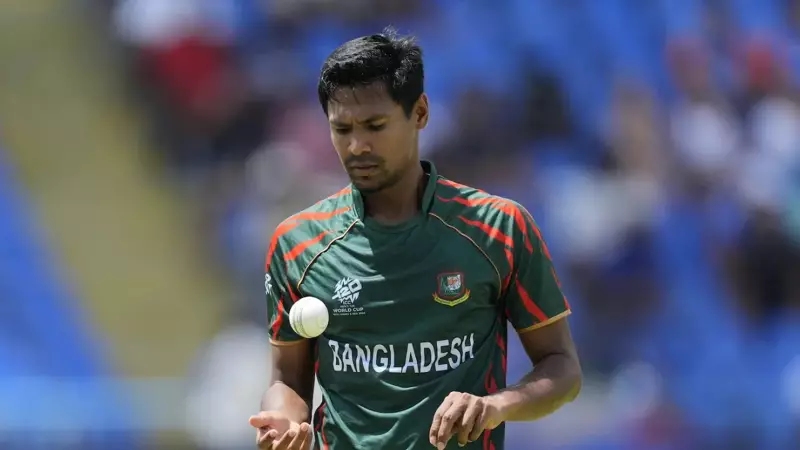
When political tensions infiltrate every facet of public existence, societies forfeit more than just diplomatic decorum. They begin to relinquish the rare, benign domains of interaction that have historically nurtured coexistence between neighboring nations. Across the diverse tapestry of South Asia, a deeply concerning metamorphosis is currently unfolding. What commenced as a directive from the Board of Control for Cricket in India (BCCI) to the Indian Premier League franchise Kolkata Knight Riders, instructing them to release Bangladeshi pace bowler Mustafizur Rahman, has rapidly escalated into a full-blown international sporting crisis.
From IPL Controversy to World Cup Ultimatum
The situation intensified when the International Cricket Council (ICC) formally notified the Bangladesh Cricket Board (BCB) of a stark ultimatum. If Bangladesh fails to dispatch its national team to India for the upcoming T20 World Cup, they face replacement by Scotland. This development marks a pivotal juncture, illustrating how sport and culture, which for decades functioned as vital bridges during periods of closed borders and failed diplomatic dialogue, are now being systematically weaponized as extensions of state policy.
The central question confronting South Asia is no longer whether it can afford to politicize its last remaining neutral spaces. The pressing inquiry is whether the region possesses the collective wisdom to enact a sensible reversal of course before irreversible damage is inflicted upon these cultural and sporting lifelines.

A Stark Contrast: South Asia Versus European Cohesion
To contextualize this crisis, one can examine the European Union's model. Approximately 60 to 65 percent of the EU's total trade occurs within the bloc itself. Crucially, even during significant political disagreements, sectors like trade, culture, and sport remain largely insulated from governmental interference. Footballers are not dropped from clubs, orchestras are not disbanded, and films are not banned solely due to bilateral disputes between member states.
South Asia, regrettably, occupies the opposite end of this spectrum. Nations within the region have, at times, excelled in the art of mutual detriment, with intra-regional trade languishing at a mere 5 percent of their total commerce. For generations, however, cricket, cinema, music, and a shared popular culture operated as informal safety valves. These were spaces where political rhetoric softened and people-to-people connections flourished, even when governmental relations were strained. That fragile, yet essential, separation is now collapsing at an alarming rate.
The India-Pakistan Precedent: A Cautionary Tale
The trajectory of India-Pakistan relations offers the most stark warning of the consequences when political grievances colonize the realms of culture and sports. In the mid-2000s, Pakistani cricketers not only played in India but also became stars during the inaugural seasons of the IPL. That era of exchange ended abruptly following the tragic 2008 Mumbai attacks, as bilateral cricket fixtures vanished. Pakistani players have since been systematically excluded from the IPL, and broader cultural exchange has suffered immensely as a direct result.
This political intervention did not resolve the underlying geopolitical conflict. Instead, it severed the human connections and shared experiences that might have provided opportunities to soften the harsh edges of that very conflict. Cinema followed an identical, disheartening path. When Pakistani actors began appearing in mainstream Indian films in the early 2010s, audiences on both sides of the border warmly embraced this artistic exchange.
The Cultural Fallout: From Mahira Khan to Market Shrinkage
That cultural opening collapsed after the 2016 Uri attack. Under intense political pressure, artists like Mahira Khan were removed from Indian projects. In a more recent example from May 2025, following the Pahalgam attack, Khan's images were quietly erased from promotional posters and album artwork for the Bollywood film Raees. These actions symbolize a broader retreat from shared cultural spaces.

The controversy surrounding Mustafizur Rahman represents a watershed moment in South Asian sports' descent into overt political theatre. Signed by a Kolkata-based IPL franchise, the bowler was dropped citing "security grounds" amid rising political tensions and online outrage. His participation, in an ideal world, should have hinged solely on athletic form and physical fitness.
In a formal letter to the ICC, the BCB challenged this selective application of security protocols. The board argued that if a player's nationality, the presence of supporters wearing national jerseys, or an impending national election in Bangladesh were deemed legitimate security risks, then the very premise of hosting a truly global, inclusive tournament becomes untenable.
The Tangible Costs: Trust, Careers, and Economics
The sports and culture industries operate fundamentally on trust in contracts and institutional integrity. When transient political winds override these core principles, the damage proliferates rapidly. Promising athletes see their careers derailed, loyal fans lose faith in the fairness of the games they love, and entire industries suffer a catastrophic loss of credibility.
The economic repercussions are starkly real and measurable. The IPL alone is now valued at over US$10 billion, with its broadcasting rights recently fetching more than US$6 billion for a five-year cycle. When Bangladesh responded to the controversy by banning the broadcast of the 2026 IPL season, the financial fallout extended instantly to advertisers, broadcasters, sponsors, and millions of fans. This chain reaction perfectly illustrates how immense economic value is sacrificed at the altar of political posturing.
South Asia's vibrant film, music, and entertainment industries are heavily dependent on cross-border audiences and widespread diasporas. Every political intervention, every ban, and every boycott inevitably shrinks market access and constricts creative space. While Europe understands this economic and cultural imperative instinctively, South Asia continues to ignore it, often with reckless disregard for the consequences.
Charting a Path Forward: The Imperative for Institutional Safeguards
The path forward demands the establishment of robust institutional safeguards. International sporting bodies must be empowered and compelled to enforce team participation and player selection based solely on sporting merit and pre-existing contractual obligations, rendering them immune to external political pressure. A select few societal spaces must remain stubbornly and defiantly above the fray of daily politics.
This is not because underlying political disputes are unimportant, but because preserving these neutral zones is precisely how societies retain the vital capacity to imagine themselves beyond perpetual conflict. These spaces keep a window open for dialogue, understanding, and the possibility of better days ahead. Soft power, embodied in shared cultural and sporting experiences, possesses the profound potential to overpower hard power. It can prevent temporary tensions from hardening into permanent, unbridgeable chasms.
South Asia stands at a crossroads. It must consciously choose to protect these last remaining bridges of shared humanity. The alternative is to watch them burn, with the devastating cost borne not by politicians in distant capitals, but by millions of ordinary citizens who simply wish to enjoy a cricket match, lose themselves in a compelling film, or be moved by a beautiful song—without being forced to choose a side in a geopolitical struggle. The preservation of these spaces is not a luxury; it is a necessity for regional peace and prosperity.