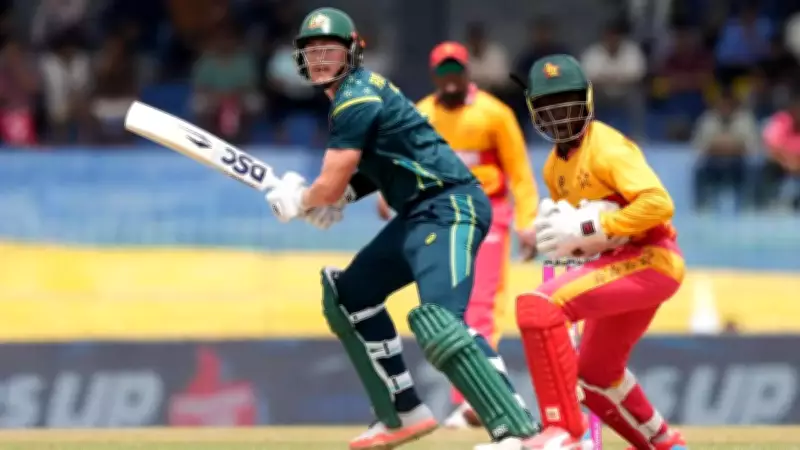
Australia batter Matt Renshaw has firmly stated that the pitch at the R Premadasa Stadium in Colombo was not responsible for their 23-run loss to Zimbabwe in the T20 World Cup. He highlighted that teams from the sub-continent do not complain about conditions when they tour Australia, underscoring the need for adaptability in modern cricket.
Renshaw's Stance on Pitch Conditions
Renshaw, who scored a valiant 65 off 44 balls, saw Australia bowled out for 146 while chasing 170 against Zimbabwe. In the post-match press conference, he remarked, "I think that's just the nature of cricket. You get a sub-continent team come to Australia and you don't get them complaining about the bounce or the pace. It's just the way that cricket is nowadays. You've got to be able to go through different surfaces." This comment reflects his belief that cricketers must adjust to varying pitches without making excuses.
Adapting to Different Surfaces
Renshaw explained that transitioning from the hard and bouncy tracks in Australia during the Big Bash League to slower surfaces in places like India and Sri Lanka is part of the game. "Yes, the wickets in Australia during Big Bash are quite true - they get a lot of bounce. You go to India, and if in the other side of the tournament, there's different wickets, there's probably higher scores, shorter boundaries." He noted that the large boundaries at Premadasa Stadium added to the challenge, but it was simply a matter of cricket dynamics.

He emphasized the importance of preparation, saying, "It's probably just trying to adjust the conditions as well as we can so that when we get to these conditions we know what the game plan is, we know how we get best suited." This approach shows Australia's focus on strategic planning rather than blaming external factors.
Credit to Zimbabwe's Bowlers
Renshaw also praised Zimbabwe's bowlers for their effective performance. "Yeah, probably makes it quite tough to chase 170 out there. They bowled really well at the start, took some early wickets, and felt like every time we built some momentum that partnership with Maxi (Glenn Maxwell) was obviously important but couldn't get enough momentum in there to chase that down and it was just too many to knock." He acknowledged that Zimbabwe's disciplined bowling and early wickets made the chase difficult for Australia.
Injury Impact and Team Performance
Discussing team dynamics, Renshaw mentioned that Marcus Stoinis, who batted at No. 7 after injuring his finger while fielding, might have otherwise come in higher up the order. However, he refused to use this as an excuse. "Probably Marcus Stoinis was going to bat higher, he got that hit on the finger, we don't know how bad it is, I'm sure the medical staff will treat that, but yeah that was the one today but yeah we just weren't good enough today."
He concluded by admitting Australia's shortcomings, "They played really well, they batted really well, got 170 on the board, had wickets in hand to launch at the end and took early wickets. So it's always tough in a T20 when that happens." This honest assessment highlights the team's acceptance of defeat while giving due credit to Zimbabwe's strong performance.