Rovman Powell: The Night That Forged a Cricket Star
In the heart of Jamaica, on a night when rain poured relentlessly, an 11-year-old boy made a promise that would echo through his life. Inside an unfinished house with a tin roof, water seeped through cracks, pooling on the floor. A single mattress lay in the center, kept dry by careful placement. It was here that young Rovman Powell told his mother, "Don’t worry, mom. You sleep. I’ll take care of the water." This moment, far removed from cricket stadiums, laid the foundation for one of the sport's most inspiring journeys.
A Childhood Defined by Responsibility
This is not merely a cricket story; it's a narrative of survival instincts honed in adversity. Rovman Powell, now a towering figure in global T20 cricket, recalls those damp nights with vivid clarity. "I knew the importance of a male figure in the house," he reflects. "I was that male figure." Growing up with a single mother, Joanne, who worked multiple jobs, and a sister, Powell understood his role early: to protect and provide.
What feels natural for an 11-year-old? For Powell, it was staying awake to shield his family from the elements, a responsibility that shaped his worldview. He explains, "In a third-world country like Jamaica, many aren't from stable financial backgrounds. My mom slogged for us." Watching her struggle to complete their house year after year, he made a vow in grade six: "Listen to me. I’m going to change things around. Just give me time."

Education and Cricket: Vehicles Out of Poverty
Powell saw two paths to uplift his family: education and cricket. He pursued both with unwavering focus, knowing they were his tickets to a better life. A pivotal moment came when a school assignment about fathers brought him to tears—he never knew his father, who left early. His teacher, Nicholas Dillon, offered life-changing advice: "Don’t let that define you. Use it as a pillar of growth to ensure you are the total opposite." This bond evolved into a father-son relationship, with Powell expressing "massive respect and gratitude" for Dillon's guidance.
Cricket entered his life in stages: Jamaica Under-19s, a scholarship to the University of the West Indies under coach Robert Samuels, and finally, selection by Jamaica Tallawahs in the Caribbean Premier League. When he saw his first significant paycheck, his reaction was disbelief: "What am I going to do with so much money? I’ve never seen that type of money." His first act wasn't splurging on luxuries; it was asking his mother to list every debt—from the television to the stove—and paying them all off. "That lifted all that weight off her shoulder," he says, allowing her to walk "a little bit freer."
From Struggle to Strength on the Cricket Field
Powell believes his childhood hardships directly influence his batting style. "You build that natural, strong resistance from a young age," he notes. Whether carrying water or lifting burdens, his body learned to bear weight, mirroring his mental fortitude. This translates to his cricket: "So, now it shows in my cricket where you are strong and you hit the ball as hard as you can." It's muscle memory as autobiography, a testament to resilience.
Today, as Powell travels the world for IPL contracts, ILT20 performances in Dubai, and other T20 leagues, he remains grounded. "I’ve always stayed rooted to who I am," he asserts. Reflecting with his mother, they laugh about their past, marveling at how far he's come. "Your imagination sometimes is as far as you can see," he muses, never dreaming he'd play cricket globally.
A Legacy of Fulfilled Promises
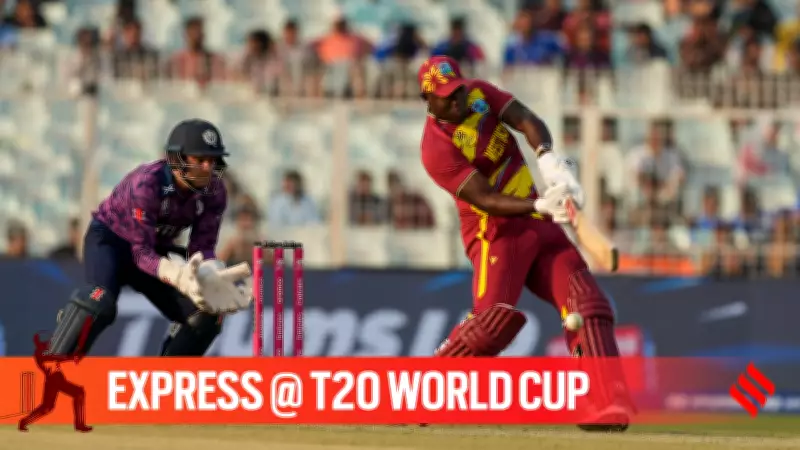
As Rovman Powell steps onto the field for the T20 World Cup, hitting big sixes under pressure, it's a far cry from that rainy night in Jamaica. The house is now finished, the debts are paid, and the dream is real. The rain still falls in Jamaica, but a proper roof keeps it out—a symbol of Powell's journey from protector to star. For that 11-year-old boy who kept his word, the pressure of a World Cup is nothing compared to the weight he once carried.