Former Selector Kris Srikkanth Opens Up on Rohit Sharma's 2011 World Cup Exclusion
In a candid revelation, former India chief selector Kris Srikkanth has addressed one of the most contentious decisions in Indian cricket history, expressing deep regret for leaving Rohit Sharma out of the triumphant 2011 World Cup squad. Srikkanth admitted that the omission still weighs on his conscience, highlighting the complex selection dynamics that shaped India's historic campaign.
The Emotional Apology and Strategic Reasoning
Srikkanth disclosed that he personally apologized to Rohit Sharma last year, stating, "I feel bad for him even today. I told Rohit last year, I am sorry. It's not by purpose, but it's just that we want to take those half all-rounders." This heartfelt admission underscores the human element behind high-stakes selection calls, where strategic necessities sometimes override individual talent.
The selection committee's philosophy was deeply influenced by the legendary 1983 World Cup victory, where team flexibility and multi-dimensional players proved decisive. Srikkanth emphasized that their thought process was "similar to that of the 1983 World Cup," prioritizing players who could contribute with both bat and ball to create a balanced, adaptable squad capable of handling diverse match situations.

Team Balance Over Individual Brilliance
At the time of selection, Rohit Sharma had already established himself as a promising ODI batter with over 1,200 runs to his name. However, the selectors faced the difficult choice between his batting prowess and the need for all-round capabilities. Srikkanth clarified that the decision was never about questioning Rohit's ability, but rather about optimizing team composition for tournament success.
The strategy centered around what Srikkanth termed the "half all-rounder concept," where players like Yuvraj Singh, Virender Sehwag, Sachin Tendulkar, Suresh Raina, and Yusuf Pathan provided crucial bowling options alongside their batting. This approach created depth and versatility that proved invaluable throughout the tournament.
Yuvraj Singh's Heroics Validate Selection Strategy
The selection philosophy received ultimate validation through Yuvraj Singh's extraordinary performance, as he emerged as the Player of the Tournament with 362 runs and 15 wickets. Srikkanth pointed to this achievement as justification for their team-building approach, noting, "And at the end of the day, who was the Player of the Tournament? Yuvraj Singh, with the ball and bat."
Yuvraj's all-round brilliance became the cornerstone of India's successful campaign, demonstrating how multi-dimensional players could turn matches in critical moments. The contributions from other "half all-rounders" further reinforced the selection committee's conviction that this was the right path to ending India's 28-year World Cup drought.
The Legacy of a Difficult Decision
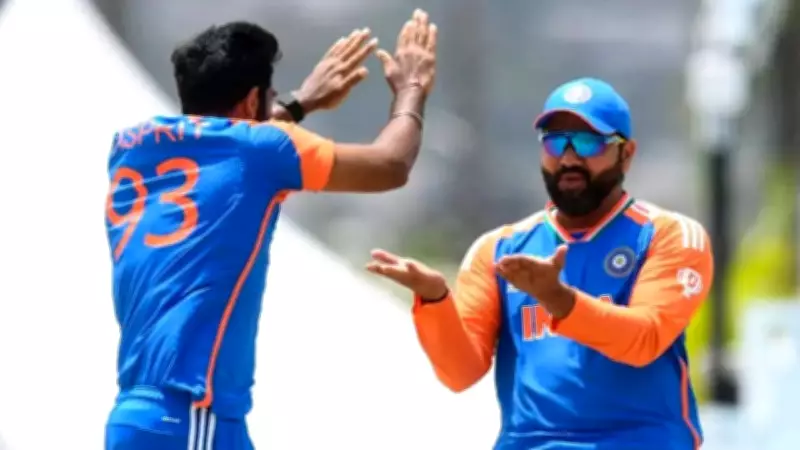
While India's 2011 World Cup victory under MS Dhoni's leadership remains one of the nation's greatest sporting achievements, it came at the personal cost of excluding talented players like Rohit Sharma. Srikkanth expressed particular sympathy for Rohit's situation, stating, "He was actually good enough to play in the 2011 World Cup, but poor boy missed out."
This revelation adds a poignant layer to cricket history, reminding fans that behind every triumphant team are difficult choices and personal sacrifices. Rohit Sharma's subsequent evolution into one of India's finest white-ball batters only amplifies the what-if scenarios surrounding his 2011 exclusion, though Srikkanth's regret suggests the selectors recognized his potential even at the time.
The 2011 World Cup selection story serves as a compelling case study in team management, where balancing immediate tournament needs with long-term player development creates enduring dilemmas. Srikkanth's openness about this decision provides rare insight into the complex calculations that define cricket's biggest stages.