The Parvati Valley in Kullu district of Himachal Pradesh has emerged as a notorious safe haven for rave parties due to its remote terrain, limited access points, and entrenched drug culture. The issue gained prominence after the Himachal Pradesh High Court on June 24 ordered the transfer of the Kullu deputy commissioner, superintendent of police, and sub-divisional magistrate for failing to maintain public order and control the nuisance from such gatherings.
Geography and Secrecy Enable Rave Culture
The valley's rugged landscape, with narrow serpentine trails along the Parvati River, provides natural cover and escape routes for organizers. According to O P Sharma, former Convener of the Nasha Nivaran Board, Himachal Pradesh, drugs have been present in the area since the 1990s. He told PTI that Malana Cream (cannabis) was originally notorious, but synthetic drugs like LSD and MDMA later took hold. Sharma, who led NCB operations in the region from 2002 to 2006, questioned why the Narcotics Control Bureau stopped operations after 2007.
Recent Incident and Court Intervention
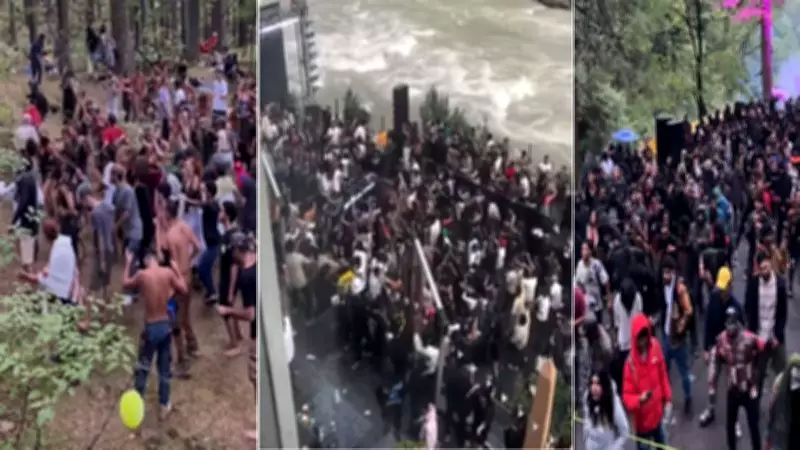
The immediate trigger for the High Court's action was a ticketed event at Green Forest-I and Green Forest-II in Grahan near Kasol from June 7 to June 11. A District Legal Services Authority report described the venue as an isolated forest area with around 50 camping tents, private security, and infrastructure for thousands. After the court's intervention, police raided the site and arrested two tourists with cocaine and LSD. A Russian national, Caria Kuzminykh, who was DJing at the event, died from a suspected drug overdose.

Foreign Influence and Organized Drug Trade
Sharma noted that foreigners penetrated the valley with hybrid cannabis seeds and married local women, establishing an organized drug trade. He called for probing the role of the forest department and foreign resident office. Poverty and lack of infrastructure, combined with ideal climate and topography, have fostered cannabis cultivation, especially in Kasol, which Sharma called the mother of all drug dens in the state.
Corporate Expansion and Local Opposition
Rave parties have evolved from small gatherings to corporate events held in larger forests and private resorts. Organizers avoid the word "rave" in permit applications, using "cultural event" instead. Aman Singh Sood, a local hotelier and social activist, said locals oppose these parties, warning that long-term drug tourism harms the valley's cultural heritage. Budhi Prakash Thakur, President of the Hotel Owners Association of Manali, welcomed parties if proper permissions and police vigilance ensure no drug abuse. However, Roshan Lal Thakur alleged collusion, stating, "Without police patronage, rave parties cannot be organised."
Enforcement Challenges and Statistics
Promotion via apps like Telegram makes detection difficult. In the past three years, police have registered 6,246 cases under the Narcotic Drugs and Psychotropic Substances Act, filing chargesheets in 5,684 cases. The recent crackdown has pushed ravers to regulated campsites and cafes in the valley.