Indian Women's Football Team Grapples with Coaching Instability and Management Questions
New Delhi: The Indian women's national football team finds itself in a state of flux following a series of rapid coaching changes and disappointing tournament results. The turmoil began when Thomas Dennerby concluded his two-year tenure as head coach after the Paris Olympics qualifiers, spanning from 2021 to 2023.
A Revolving Door of Coaches
What followed Dennerby's departure was a concerning pattern of instability. Langam Chaoba Devi served from January to September 2024, followed by Santosh Kashyap from September 2024 to January 2025, and then Crispin Chhetri from January 2025 to January 2026. Additionally, interim stints were handled by Suren Chhetri and Joakim Alexandersson, highlighting the lack of continuity that has plagued the team's development.
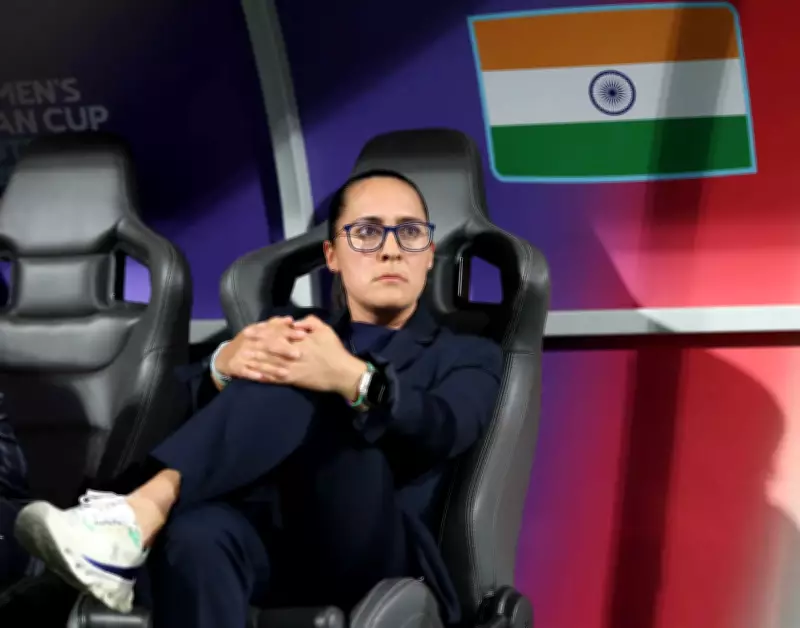
Despite leading India to their first AFC Women's Asia Cup qualification on merit in 23 years, Crispin Chhetri was surprisingly demoted last year. The All India Football Federation (AIFF) then appointed Costa Rican coach Amelia Valverde, who came with an impressive resume featuring experience at both country and club levels.

Disastrous Asia Cup Campaign
At the continental competition in Australia, India endured a humiliating campaign, losing all three matches: 1-2 against Vietnam, 0-11 to Japan, and 1-3 versus Chinese Taipei when desperately needing a victory. This poor performance has triggered significant soul-searching within Indian football circles.
As often happens in football introspection, the initial focus has fallen on the coach. The AIFF technical committee has recommended that Valverde's contract not be renewed, citing the team's underwhelming results. Instead, they've suggested considering Indian options, with Anthony Andrews of East Bengal and former coach Crispin Chhetri emerging as the two main contenders.
Internal Criticism and Management Failures
AIFF Executive Committee and Women's Football Committee member Valanka Alemao has been particularly vocal in her criticism. "After the team played and did not qualify for the next stage, questions must be asked and answers sought from those responsible for the series of blunders concerning the team as it has caused huge embarrassment to the country," Alemao stated in an email to AIFF president Kalyan Chaubey.
She further questioned the technical committee's decision-making process: "The technical committee cleared the appointments without calling for any list of prospective candidates to be prepared or advertised, as it happened while choosing the coach for the women's team without any knowledge of the executive committee."
Alemao also raised practical concerns: "Where was the need to bring in someone so close to the tournament, and what was the cost of payments to all three?"
Valverde's Challenging Tenure
Valverde faced numerous obstacles during her brief tenure. She had only six weeks to implement her system and connect with players, a timeframe some technical committee members believed was sufficient given her credentials. However, the constant changes in strategy and the demoralizing loss to Japan proved decisive in the decision to move on from her leadership.
Compounding these challenges were off-field issues including an irregular domestic league and haphazardly arranged friendly matches. The appointment began to feel more like a hopeful gamble than a carefully considered decision, and that gamble ultimately failed to pay off as AIFF officials had anticipated.
Additional Controversies and Logistical Failures
Right before the tournament began, another controversy emerged when the wrong-sized kits were supplied to both the squad and coaching staff. A last-ditch effort required arranging kits through a local vendor, prompting AIFF to initiate an investigation into this logistical fiasco.
Alemao emphasized the impact of these failures: "Two days before the first match, the players had to endure bizarre shocks. Questions must be raised and those who are responsible for such blunders that have brought shame to the nation must be taken to task."

Indian Coaching Candidates and Their Limitations
East Bengal's Anthony Andrews presents an intriguing alternative despite not receiving the position previously. The AFC 'A' license holder led Gokulam Kerala to consecutive Indian Women's League titles and guided East Bengal to victory last season. He was considered following Dennerby's exit in 2023, but the opportunity didn't materialize at that time.
Both Crispin Chhetri and Anthony Andrews face a significant hurdle: neither possesses an AFC Pro coaching license, which raises questions about their qualifications for the national team role.
Youth Teams and Future Direction
Amid this renewed emphasis on Indian coaches, it's noteworthy that the U-17 and U-20 national teams continue to be led by foreign coaches. Former Italy international Pamela Conti will guide the India U-17 side at the Asian Cup in May, while Swedish coach Joakim Alexandersson leads the U-20 team at the Women's Asia Cup in April.
India's immediate future includes the FIFA International window in April with matches against Australia, Malawi, and Kenya, followed by the SAFF Women's Championship in June. However, as things currently stand, the Indian women's football team appears no better positioned than it was a year ago, with fundamental questions about management, coaching stability, and long-term planning remaining unanswered.