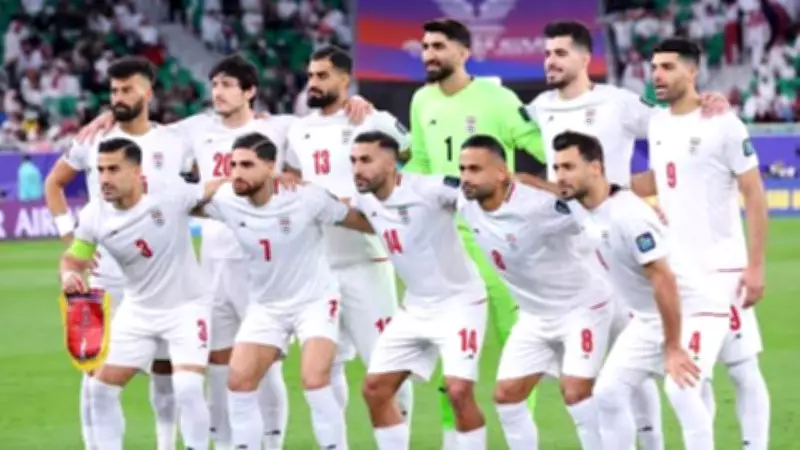
Iran's 2026 FIFA World Cup Participation Hangs in the Balance Amid Geopolitical Tensions
In a dramatic turn of events, Iran's confirmed spot at the 2026 FIFA World Cup has been thrown into serious doubt, potentially forcing football's global governing body to scramble for a replacement team. The Iranian national football team had already secured qualification for the prestigious tournament and was drawn into a competitive group alongside Belgium, Egypt, and New Zealand.
Political Conflict Triggers Potential Withdrawal
The uncertainty stems from recent geopolitical developments involving the United States and Israel. Following reported airstrikes that resulted in the death of Iran's Supreme Leader Ayatollah Ali Khamenei and significant damage in Tehran, the Iranian government has indicated its national team may not participate in the tournament.
Iran's Sports Minister, Ahmad Donyamali, delivered a forceful statement during a television interview, declaring: "Considering that this corrupt regime has assassinated our leader, under no circumstances can we participate in the World Cup." He emphasized that Iran cannot compete in an event primarily hosted by the United States after these recent events.

FIFA's Response and the Replacement Dilemma
Despite the political stance from Iran, FIFA President Gianni Infantino has maintained that Iran remains welcome to compete. Infantino revealed that former U.S. President Donald Trump provided assurances that the Iranian team would be permitted to enter the United States for tournament participation.
However, should Iran officially withdraw, FIFA faces the complex task of selecting a replacement team. The tournament schedule is already set, and the group stage draw has been finalized, creating logistical challenges for any last-minute changes.
Potential Replacement Candidates from Asia
According to FIFA regulations, when a qualified team withdraws, the governing body can appoint a replacement, typically selecting from the same continental confederation. Since Iran qualified through the Asian Football Confederation, the most likely replacements would come from Asian nations.
Two primary candidates have emerged:
- United Arab Emirates National Football Team: Having finished directly behind Iran during Asian qualifying, the UAE presents a logical replacement choice that would maintain competitive balance.
- Iraq National Football Team: Currently involved in intercontinental playoff pathways, Iraq represents another viable option, with some reports suggesting FIFA could promote them directly into the tournament.
A less likely scenario would involve FIFA proceeding with only three teams in Iran's group, but this would complicate the tournament's new 48-team format, where the best third-place teams advance to knockout stages. Most football analysts consider replacing Iran with another nation as the more practical solution.
Tournament Implications and Next Steps
Iran had earned their World Cup berth by finishing first in their Asian qualifying group, demonstrating strong footballing credentials. Their potential absence would not only affect their scheduled opponents but could alter the competitive dynamics of the entire tournament.
FIFA officials are expected to await the completion of qualification playoffs before making any definitive decisions regarding Iran's participation or potential replacement. The situation remains fluid, with football authorities monitoring political developments while preparing contingency plans.
This unprecedented situation highlights how geopolitical conflicts can intersect with international sporting events, creating complex challenges for tournament organizers and participating nations alike. The football world now watches closely as events unfold, awaiting clarity on whether Iran will compete or if another nation will inherit their coveted World Cup spot.