Trump's World Cup Warning to Iran Sparks International Football Controversy
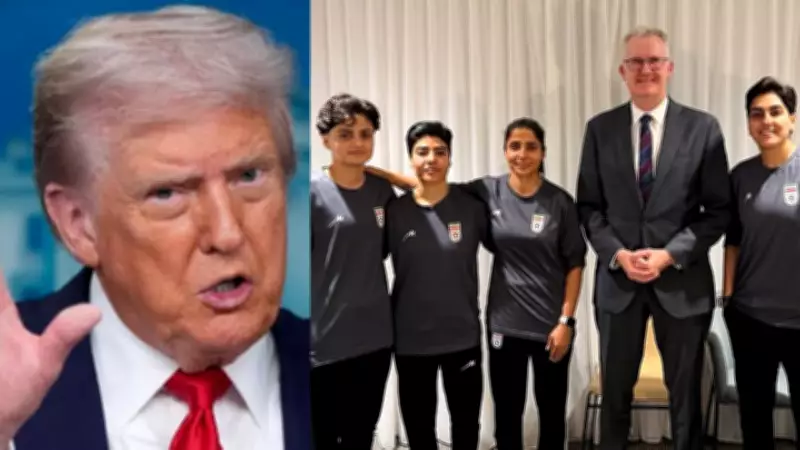
Political tensions have spilled into the world of international football as former US President Donald Trump suggested Iran's national soccer team should reconsider participating in the upcoming FIFA World Cup 2026 "for their own life and safety." The controversial comments have ignited a heated debate about politics intersecting with global sports events.
Iran's National Team Delivers Strong Response to Political Interference
Iran's national soccer team responded swiftly and firmly to Trump's remarks through an official statement shared on their Instagram platform. The players emphasized that participation in the World Cup is determined solely by FIFA, the global governing body of football, not by individual countries or political leaders.
"The World Cup is a historic and international event and its governing body is FIFA, not any individual or country," the team declared in their social media post. They further highlighted that Iran earned their tournament spot through legitimate sporting achievement, finishing first in Group A during Asian qualifying matches.

Trump's Truth Social Post Raises Safety Concerns
The controversy began when Donald Trump posted on his Truth Social platform on Thursday, stating: "The Iran National Soccer Team is welcome to The World Cup, but I really don't believe it is appropriate that they be there, for their own life and safety." This comment came amidst escalating regional conflicts involving Iran, the United States, and Israel.
Trump's warning followed his earlier claims about Iran being "about to surrender" and describing the country as "a cancer threatening us all" that had been eliminated. The political context includes recent military actions, with Israel reportedly striking over 200 targets in Iran and drone attacks affecting residential areas in Beirut.
Iran's Football Leadership Shows Diverging Views
While the national team players defended their right to participate, some Iranian sports officials have expressed different perspectives. Ahmad Donyamal suggested in a television interview reported by RTÉ that "there were no conditions under which we can participate" in the World Cup, indicating potential boycott considerations.
This followed earlier warnings from Mehdi Taj about difficulties in looking forward to the tournament given the tense geopolitical situation. Despite these internal discussions, the players themselves remain committed to their World Cup participation, describing their qualification as achieved through "a series of decisive victories achieved by the brave sons of Iran."
World Cup 2026 Tournament Details and Schedule
The FIFA World Cup 2026 is scheduled to take place across the United States, Canada, and Mexico from June 11 to July 19, representing the first World Cup hosted by three nations. Iran has been placed in a challenging group alongside New Zealand, Belgium, and Egypt.
Their tournament schedule includes:
- June 15: Iran vs New Zealand in Los Angeles
- June 21: Iran vs Belgium in Los Angeles
- June 26: Iran vs Egypt in Seattle
The team was expected to base themselves at the Kino Sports Complex in Tucson, Arizona during the tournament. FIFA President Gianni Infantino had previously emphasized that the Iranian team would be welcome, stating after meeting with Trump that the World Cup should serve as a unifying event that brings people together across political divides.
Broader Context of Regional Tensions
The football controversy unfolds against a backdrop of significant regional conflict. Recent developments include reported casualties from Iranian drone attacks, with two Indian nationals killed and ten injured in Oman according to official statements. These incidents contribute to the complex security environment surrounding international events.

The situation highlights the ongoing challenge of separating sports from politics in global tournaments, particularly when host nations have complex diplomatic relationships with participating countries. As the 2026 World Cup approaches, the debate over Iran's participation continues to evolve, with football authorities, political leaders, and the players themselves navigating this sensitive intersection of sport and international relations.