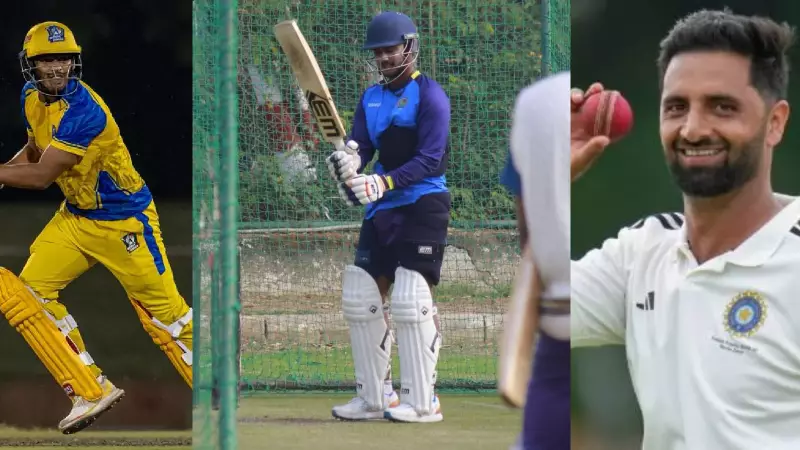
The IPL 2026 mini-auction on December 16, 2025, will be remembered not just for the mega deals for international stars, but for a historic moment that celebrated raw, domestic talent and their extraordinary backstories. In a stunning turn of events, three uncapped Indian cricketers, all sons of teachers, became the talk of the nation, collectively fetching a staggering Rs 36.8 crore and redefining the auction landscape.
Record-Breaking Bids for Domestic Talent
While Australian all-rounder Cameron Green became the most expensive overseas buy at Rs 25.2 crore for Kolkata Knight Riders, the day truly belonged to the Indian youngsters. Rajasthan's wicketkeeper-batsman Kartik Sharma and Uttar Pradesh's all-rounder Prashant Veer created history by each commanding a monumental Rs 14.2 crore from the Chennai Super Kings (CSK). This sum shattered the previous record for the most expensive uncapped Indian player, held by fast bowler Avesh Khan at Rs 10 crore since 2022.
Not far behind, Jammu & Kashmir's fast-bowling all-rounder Auqib Nabi sparked a fierce bidding war before being snapped up by the Delhi Capitals for an impressive Rs 8.4 crore. The most remarkable aspect of these life-changing deals is that all three players entered the auction with a humble base price of just Rs 30 lakh.

Inspiring Journeys: From Humble Classrooms to IPL Stardom
The narratives of these three players are woven with sacrifice, unwavering family support, and modest beginnings. Prashant Veer's father is a 'Shiksha Mitra', a contractual schoolteacher in Amethi earning about Rs 12,000 a month, while his mother managed the household. To pursue cricket, Prashant left home early for Saharanpur.
Overwhelmed after his selection, Prashant shared his dream-like experience with The Indian Express. "I was just hoping that someone would raise their paddle... Sapna lag raha tha sab (it felt like a dream). My family has not seen so much money in their life, this will change things for good," he said, adding that playing for CSK under M.S. Dhoni was a prayer answered.
Kartik Sharma's father, Manoj, a teacher himself, quit his job over a decade ago to nurture his son's precocious hitting talent. The family of five, including Kartik's two younger siblings, relied on the meagre earnings of his mother, Radha, an Anganwadi worker, and support from relatives. His father's faith was rooted in Kartik's explosive power-hitting, which earned him the nickname 'Sixer King' in Rajasthan circuits. His trial performances were legendary, including smashing 119 runs in 32 balls with 17 sixes for KKR.
Auqib Nabi's story began in the classrooms of Baramulla, where his parents initially dreamed of him becoming a doctor. His passion for cricket gradually won over his father, an English teacher at a government school, who became his biggest supporter. With no formal coaching available locally in his early years, Auqib played his first real red-ball cricket only after turning 19. His talent was discovered almost by accident when he accompanied a friend to state trials and was picked.
A New Chapter and Vindication of Faith
For Auqib Nabi, the Rs 8.4 crore bid from Delhi Capitals, following a contest with teams like Royal Challengers Bengaluru and Sunrisers Hyderabad, was a vindication of the faith his family showed in his unconventional path. For Kartik Sharma, the deal is a reward for a meteoric rise; he had made his senior debut for Rajasthan just 11 months prior and had already become only the third Indian to score a century on both First Class and List A debuts.
The IPL 2026 auction has underscored a powerful theme: extraordinary talent can emerge from the most ordinary Indian backgrounds. The investments by CSK and Delhi Capitals are not just in players, but in the compelling stories of resilience and dedication they represent. These three sons of teachers have not only secured their financial futures but have also taken a giant leap into the limelight, inspiring a generation of aspiring cricketers across the country's small towns and villages.