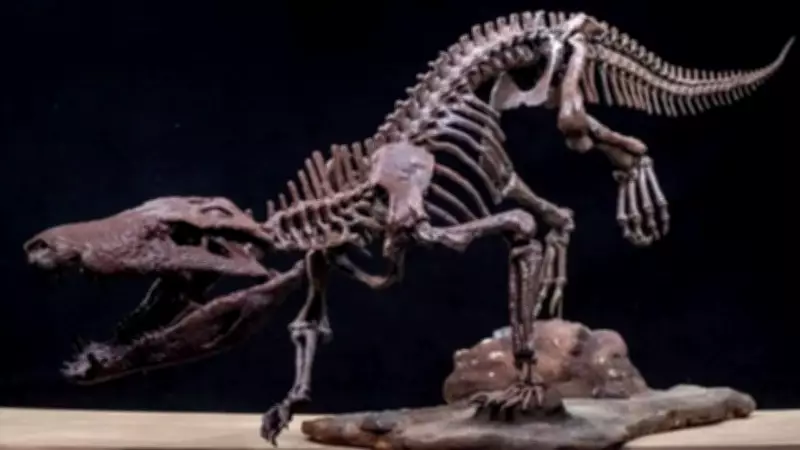
A stretch of windswept Patagonia has yielded a fossil that provides a rare glimpse into one of the largest crocodile relatives living near the end of the dinosaur era. According to Argentina's National Scientific and Technical Research Council (CONICET), researchers uncovered an exceptionally preserved skeleton belonging to a previously unknown species named Kostensuchus atrox. This animal lived approximately 70 million years ago in what is now southern Argentina, a landscape that differed greatly from the cold, open terrain seen today.
Discovery of a Prehistoric Predator
The discovery includes much of the skull, jaws, and parts of the body, offering scientists an unusually complete picture of a predator that held a prominent place in its ecosystem. The fossil was found in the Chorrillo Formation in Santa Cruz Province, an area that has produced evidence of dinosaurs, birds, mammals, turtles, and other animals from the final stages of the Cretaceous Period.
According to CONICET, Kostensuchus atrox belonged to an extinct group of crocodile relatives known as peirosaurids. Unlike modern crocodiles, which are strongly linked to rivers and wetlands, this animal appears to have been adapted for a more active predatory lifestyle on land.

Anatomy of a Hypercarnivore
The researchers reported that the skull measured roughly 50 centimeters in length and contained more than 50 teeth. Several of those teeth exceeded five centimeters in height and featured serrated edges suited for cutting flesh. According to the study titled “A new large hypercarnivorous crocodyliform from the Maastrichtian of Southern Patagonia, Argentina,” the animal also possessed a broad snout, deep jaw structure, and enlarged muscle attachment areas, all features associated with a powerful bite. Scientists involved in the study described it as a hypercarnivorous predator. Its anatomy suggests it was capable of tackling sizable prey and occupied a position near the top of the local food chain.
Patagonia's Prehistoric Ecosystem
The fossil was recovered from rocks dating to the Maastrichtian age, the final chapter of the Cretaceous before the mass extinction that ended the reign of non-avian dinosaurs. According to CONICET, the same geological formation has produced fossils of large herbivorous dinosaurs as well as the carnivorous theropod Maip macrothorax.
Researchers suggested that Kostensuchus and Maip may have occupied similar ecological roles as major predators within the region. According to Fernando Novas, lead author of the study, the relationship may have resembled modern competition between large African predators that share the same hunting grounds.
The environment itself was far from barren. According to the research team, the area contained rivers, floodplains, and humid habitats rich in vegetation. Fossils from the formation indicate the presence of fish, frogs, turtles, mammals, insects, and numerous dinosaur species, creating a complex ecosystem capable of supporting multiple large predators.
One of the Largest Peirosaurids
According to the study, Kostensuchus atrox is among the largest peirosaurids yet identified. The researchers estimated a body length of roughly 3.5 meters and identified skeletal features linked with strong forelimbs and a robust build.
The study argues that broad-snouted peirosaurids such as Kostensuchus evolved into specialized predators during the final stages of the Cretaceous. Their large serrated teeth, powerful jaws, and increased body size distinguish them from many earlier members of the group.
According to CONICET, the specimen provides one of the most complete views yet of this branch of crocodile evolution. The fossil not only reveals the appearance of a formidable predator but also adds another piece to the picture of life in Patagonia shortly before one of the most significant extinction events in Earth's history.