In a stern message to India's sports administrators, the government has warned officials against treating multi-sport events as "family outings" and demanded their full commitment to athletes. The directive came during the Sports Governance Conclave held in Ahmedabad on Friday, where a long-term medal strategy was also unveiled.
"Be There 100% or Don't Go": A New Mandate for Officials
Sports Secretary Hari Ranjan Rao, a former Additional Secretary at the Prime Minister's Office, issued a sharp rebuke to officials from the Indian Olympic Association (IOA) and National Sports Federations. He stated it would be "shameful" if a large contingent of officials travelled to events but was unavailable when athletes needed support.
"They have to be there 100 per cent of the time for the athletes. Please don't go if you think of this as an outing with relatives. We don't need you," Rao asserted. This criticism addresses long-standing complaints about administrators being inaccessible during major competitions despite travelling in significant numbers.

Medal Targets and Strict Deadlines for 2023 Games
Turning to immediate priorities, Rao outlined medal projections and set strict deadlines for the upcoming Commonwealth Games and Asian Games. He revealed that the current medal estimate for the Asian Games stands at 111 medals, aiming to surpass India's previous best of 106 medals.
For the Commonwealth Games, however, the projection is more modest at around 20-odd medals. This lower estimate is due to the exclusion of sports where India traditionally excels, such as badminton, hockey, shooting, and wrestling, from this year's programme. "CWG would be a bit of a showstopper. Three gold and 22 total medals are expected because it's a truncated Games," Rao explained.
He emphasized the urgency of meeting selection deadlines, noting that the Asian Games Organising Committee has set January 30 as the final date for name submissions. The IOA had instructed federations to submit names, including support staff, by January 15. "Japanese are ruthless, they won't adjust," Rao cautioned, urging federations to adhere to timelines to avoid missing the Games.
Rao also stressed the importance of cultural preparedness for the Asian Games in Japan, highlighting the need for athletes to be trained in social etiquette and food habits to avoid mistakes in the "sensitive" host nation.
A Decade-Long Blueprint: The Road to 2036 and 2048 Olympics
The conclave served as a platform to present a comprehensive 10-year medal strategy, approved by Prime Minister Narendra Modi. The ambitious plan sets clear targets for future Olympics.
To break into the top 10 nations at the 2036 Olympics, which India aspires to host, the strategy aims for 12 to 14 gold medals and a total of 30 to 35 medals. Looking further ahead to the 2048 Games, the goal escalates to 35-40 gold medals and approximately 100 total medals.
Rao cited China's successful 'Project 119' before the 2008 Beijing Games as a model. China focused on five specific disciplines where it was not traditionally strong and reaped rewards, winning eight golds in those events. "This is the kind of focus that is expected from all of us," he told the gathering.
He posed a critical question to the sports bodies: "With these kinds of statistics, are we ready to host the 2036 Olympics?" He pointed out the painful reality that India's participation in the 2028 Los Angeles Games will be significantly lower than powerhouses like the US and China, potentially not even covering half the disciplines.
Transformational Reforms on the Horizon
To achieve these lofty goals, the government outlined a series of proposed reforms. The plan includes establishing Olympic Training Centres for every sport, creating an AI-driven monitoring mechanism to identify talent, and founding a National Institute of Sports Science and Research.

In a significant update, Rao revealed that a committee led by badminton legend Pullela Gopichand has recommended sweeping coaching reforms. The government plans to act on these by setting up a coaching certification board that will offer tiered certifications for grassroots, intermediate, and elite-level coaches.
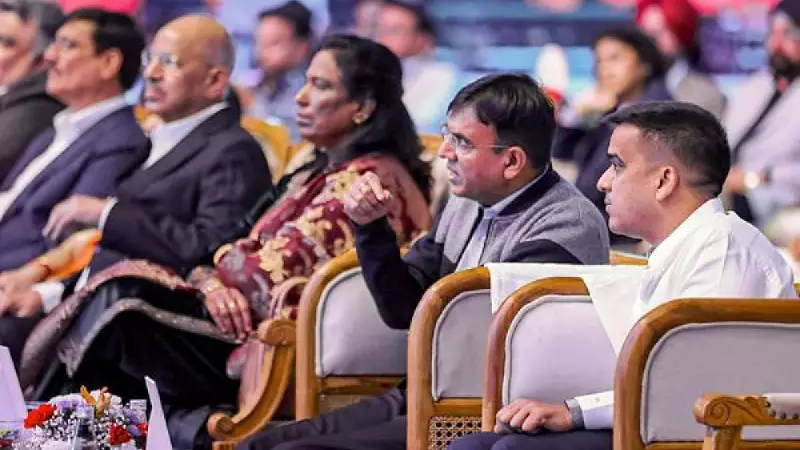
The conclave was attended by Union Sports Minister Mansukh Mandaviya, IOA President P T Usha, and Gujarat's Deputy Chief Minister and Sports Minister Harsh Sanghavi. The event marks a clear shift towards greater accountability and strategic planning in Indian sports administration, with the government taking a firm lead in setting expectations and demanding results.