In a landmark announcement that has electrified the nation's sporting community, Prime Minister Narendra Modi has declared India's formal and determined intent to host the Olympic Games in 2036. This bold ambition represents a historic leap for the country, aiming to bring the world's most prestigious multi-sport event to Indian soil for the first time.
A Historic Ambition for a New India
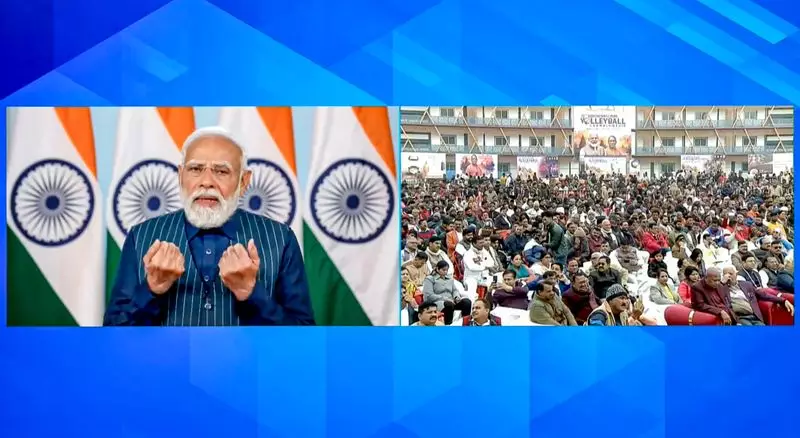
Prime Minister Modi made this significant declaration during his address at the opening ceremony of the 141st International Olympic Committee (IOC) Session in Mumbai. He emphasized that this is not merely a desire but a "captain's effort" backed by the passion of 1.4 billion Indians. The Prime Minister positioned the bid as a core part of India's transformative journey, stating that the nation is "working with all its strength" to realize this dream.
The bid for the 2036 Games is seen as a natural progression for a country that has been steadily increasing its global sporting footprint. India has successfully hosted major international events in recent years, including the ICC Cricket World Cup, and is set to host the Youth Olympics in 2030. The 2036 bid is the culmination of this growing confidence and capability in sports administration and infrastructure development.

The Roadmap and Foundation for the Mega Event
Outlining the nation's preparedness, PM Modi highlighted the comprehensive and long-term strategy behind the bid. He assured the global sporting community that India's proposal would be "very strong". A key pillar of this strategy is the development of world-class sports infrastructure across the country, not just in metropolitan hubs.
The government's Khelo India and TOPS (Target Olympic Podium Scheme) initiatives are foundational to this mission. These programs are designed to identify, nurture, and support athletic talent from the grassroots level to the elite podium. Hosting the Olympics is viewed as the ultimate catalyst to turbocharge this ecosystem, inspiring a generation of young athletes and leaving a lasting legacy of sports culture, modern venues, and urban development.
The proposed timeline is clear: India is targeting the 2036 Summer Olympics. This provides a 13-year window for meticulous planning, construction, and coordination with the International Olympic Committee and various international sports federations.
Global Context and National Resolve
The announcement in Mumbai carries deep symbolic weight. This IOC Session is the first to be held in India in nearly forty years, since the 1983 meeting in New Delhi. PM Modi connected India's ancient philosophy of viewing the entire world as one family (Vasudhaiva Kutumbakam) with the unifying spirit of the Olympic Games. He framed India's bid as an invitation to the world to celebrate human potential and unity.
While the Prime Minister did not specify potential host cities, major urban centers with existing infrastructure like Ahmedabad (with the massive Narendra Modi Stadium), Delhi, and Mumbai are likely to be strong contenders, possibly in a cluster model. The bid will also align with sustainable development goals, focusing on green technologies and legacy planning to ensure the facilities benefit citizens long after the Games conclude.
Securing the hosting rights for the Olympics is a complex and competitive process involving multiple rounds of evaluation and voting by IOC members. India can expect stiff competition from other nations also vying for the 2036 edition. However, the unequivocal commitment from the highest level of government marks a crucial first step in what will be a long and detailed campaign.
This move has the potential to redefine India's identity on the global sports stage, shifting the perception from a cricket-centric nation to a diversified sporting powerhouse capable of organizing the planet's biggest event. The journey to 2036 has officially begun, with the nation mobilizing its full strength towards this historic goal.