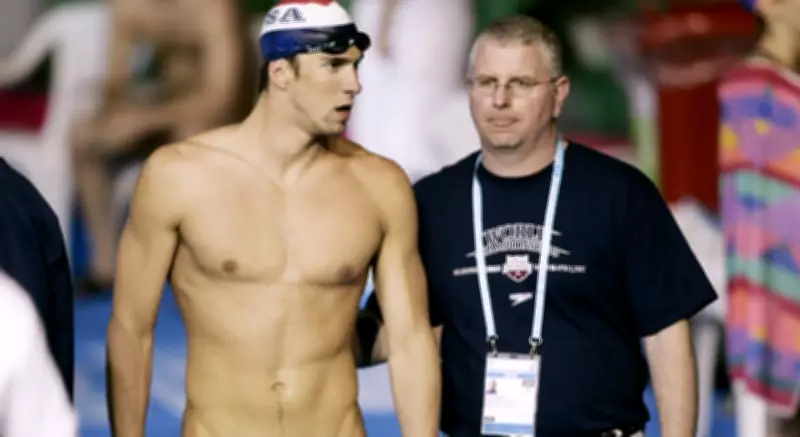
Michael Phelps: The Mindset and Method Behind the Greatest Olympian
There is a common tendency to hear inspirational quotes like "I think that everything is possible as long as you put your mind to it and you put the work and time into it. I think your mind really controls everything" and dismiss them as mere sports clichés. This statement reads easily, almost too casually, until it is placed within the context of Michael Phelps's extraordinary life and career. Then, it becomes clear that nothing about his journey was simple or without significant cost.
The Making of a Legendary Routine
Michael Phelps stands as the most decorated Olympian in history, with an astounding 28 medals across five Olympic Games from 2000 to 2016. Among these, 23 are gold medals, including eight won in a single fortnight at the Beijing 2008 Olympics. He also set 39 world records over a career that spanned longer than most swimmers achieve. While these numbers are often highlighted, they can obscure the meticulous method behind his success, which gives his quote profound weight.
Long before Beijing and the accumulation of medals, Phelps had established a deliberate daily routine focused on unwavering consistency. Under the guidance of his coach, Bob Bowman, he trained from approximately 2001 to 2007 without missing a single day, including birthdays and Christmas. This commitment ensured continuity and built a foundation of discipline. Bowman emphasized not just physical training but also mental preparation. Each night, Phelps engaged in "videotape" mental rehearsals, visualizing perfect races stroke by stroke until they became reflexive. This combination of physical repetition and mental conditioning underpinned his belief that the mind controls everything, developed over years as a habit rather than a mere phrase.

Beijing 2008: A Test of Preparation
The value of this preparation was vividly demonstrated at the Beijing Olympics, where Phelps aimed to surpass Mark Spitz's record of seven gold medals from 1972. He achieved eight golds, seven in world-record time, but a defining moment came in the 200m butterfly final. Early in the race, his goggles began leaking, leaving him blind by the final length. Instead of panicking, Phelps relied on his training, having practiced swimming without goggles and mentally rehearsed such scenarios. He counted his strokes precisely, as trained, and finished with a world record of 1:52.03. This was not instinct but recall, as his body followed what his mind had already prepared for.
A few days later, in the 100m butterfly, Phelps won by a razor-thin margin of 0.01 seconds, touching ahead of Milorad Čavić in 50.58 seconds. He initially thought a shortened final stroke had cost him the race, but it actually secured his victory. Mark Spitz later praised Phelps as perhaps the greatest athlete and racer of all time, calling his performance "epic." These close races highlight how consistent preparation, rather than improvisation, led to success.
The Arithmetic of Excellence
What set Phelps apart was not just his ability to win but the calculated approach to his training. While many competitors took Sundays off, Phelps did not, adding 52 extra training days per year. Over four years, this amounted to 208 additional days in the water, equivalent to nearly another Olympic cycle. His weekly training volume ranged from 80,000 to 100,000 meters, with sessions starting before dawn and including strength conditioning and mental rehearsals. This disciplined routine transformed his quote into practical instruction, emphasizing that putting one's mind to it requires subjecting it to the same rigor as the body.
Challenges Beyond the Pool
Despite his mental discipline, Phelps's mind was not always perfectly ordered. As a child, he was diagnosed with Attention Deficit Hyperactivity Disorder (ADHD), finding focus difficult in traditional settings. Swimming provided an outlet for his restless energy. Later, after the 2004 and 2012 Olympics, he experienced periods of deep depression, struggling with purpose once the structure of competition ended. In 2014, following a second arrest for driving under the influence, he entered rehabilitation, a turning point in his life. This contrast underscores that while the mind controls everything, it is not always easily controlled, requiring attention beyond athletic performance.

By the 2016 Rio Olympics, Phelps was 31, an age when many swimmers retire, yet he returned to win five more gold medals, demonstrating enduring commitment and preparation.
Lessons for Everyday Life
Extracting tidy lessons from Phelps's story would oversimplify its complexity. He did not rely on abstract confidence but on repetition and visualization, rehearsing exact sequences, including potential failures. His training without breaks was framed as arithmetic, where small differences accumulate into significant outcomes over time. His mental health struggles do not contradict his quote but complete it, showing that controlling the mind requires ongoing care, especially when supportive structures fade.
These principles apply beyond Olympic pools. For instance, a trader visualizes market downturns to react calmly, a student prepares for unexpected exam questions, and a business owner plans for supplier issues in advance. Such practices are not pessimistic but ensure resilience when challenges arise, echoing Phelps's method of preparing for the ordinary with the same care as the extraordinary.