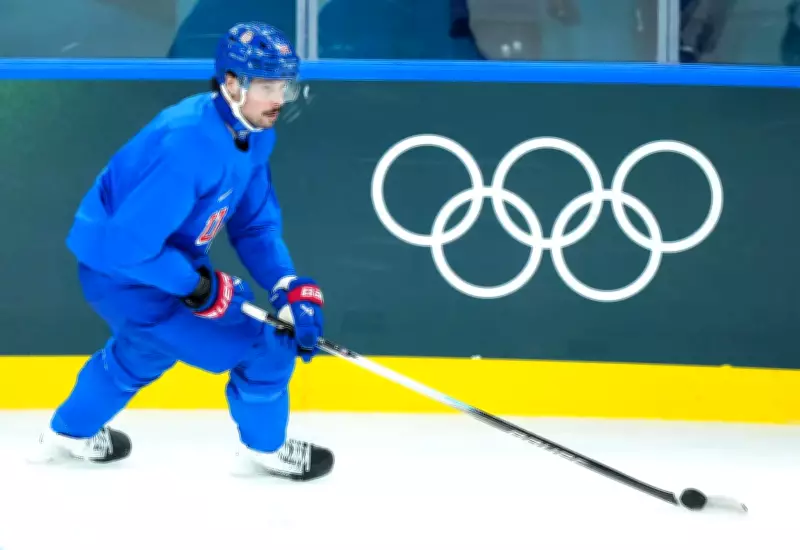
NHL Stars Voice Mixed Reactions to Mandatory Neck Guards at Milano Cortina 2026 Olympics
As elite NHL players gear up to display their extraordinary talent on the world's grandest sporting stage at the Milano Cortina 2026 Winter Olympics in Italy, a significant equipment change has sparked widespread discussion and mixed emotions. The International Ice Hockey Federation (IIHF) has mandated the use of cut-resistant neck guards for all participants in international events, a rule that many seasoned NHL athletes find challenging to adapt to after years of playing without such protective gear.
The Tragic Catalyst Behind the Safety Mandate
This pivotal safety regulation is not an abrupt development. In December 2023, the IIHF Council voted unanimously to require neck laceration protectors at all levels of IIHF competitions. This decisive action was a direct response to the heartbreaking death of professional hockey player Adam Johnson in October 2023. During an Elite Ice Hockey League game in England, Johnson suffered a fatal neck injury when defenceman Matt Petgrave's skate blade accidentally cut his throat. The incident sent shockwaves through the global hockey community and prompted immediate calls for enhanced protective measures.
The IIHF's mandate represents a fundamental shift in international ice hockey protocols, prioritizing player safety above traditional equipment preferences. For NHL stars accustomed to maximum mobility and comfort, this adjustment presents a notable challenge as they prepare for Olympic competition under unfamiliar regulations.

Player Perspectives: From Reluctance to Acceptance
The implementation of mandatory neck guards has elicited diverse reactions from Olympic-bound NHL players, revealing a spectrum of opinions about balancing safety with performance comfort.
U.S. forward Brady Tkachuk acknowledged the protective benefits while admitting his discomfort with the new requirement. "Yeah, I'm just not used to it. Being in the NHL, I've never worn it forever. So, just gotta follow the rules," Tkachuk stated. He further noted, "I just haven't worn one since youth hockey, and I know they're implementing them here and in junior leagues and stuff like that."
Zach Werenski shared a more hesitant viewpoint, citing superstition and equipment consistency concerns. "I've thought about it. I won't say I'm superstitious, but maybe a little bit. And I've never worn one, and I don't like changing anything. I don't like changing my equipment around. But maybe after this tournament, if I like it and I feel good with it, you never know," Werenski explained.
Safety Awareness and Practical Adjustments
Canadian player Mark Stone emphasized the importance of safety in today's high-speed game. "You've seen some horrible, horrible incidents around the globe. The game has gotten so fast, so stuff happens at a high pace... We're very fortunate in the league that we play, our staff are very, very prepared, which I am very, very grateful for," Stone remarked, highlighting the proactive measures being taken.
Team USA's Jack Eichel described his personal adjustment process. "I do not wear one in Vegas, no. So, it's new for me. But it's new for a lot of guys. You just try and find whatever's most comfortable for you. Obviously, it's part of international play, so we'll make it work," Eichel said. He added about his initial experiences, "This is the first time I've worn mine. I forgot to wear one yesterday in practice. I really haven't worn one in quite a while. So just try and get used to what it feels like. But, honestly, it's not bad. I mean, you can feel it a little bit, right? I think you're usually more free. But it's not like a hindrance or anything."
Canadian captain Sidney Crosby is taking a practical approach to the equipment change. "We haven't worn them, so I'm just trying to figure out which one feels the most comfortable. You're just trying to balance having protection and obviously what feels comfortable. That's basically it," Crosby stated, indicating that even veteran players are experimenting with different options to find the right fit.

Broader Implications for Professional Hockey
This Olympic mandate foreshadows broader changes in professional hockey. Notably, starting next season, first-time NHL players will be required to wear neck guards as stipulated by the new labor agreement between the league and the players' association. This development suggests that the safety standards being implemented at the Milano Cortina Olympics may eventually influence regular season play across major leagues.
The ongoing dialogue between players, governing bodies, and equipment manufacturers continues as the hockey world seeks optimal solutions that protect athletes without compromising their performance capabilities. As the Milano Cortina 2026 Winter Olympics approach, the neck guard requirement stands as both a tribute to Adam Johnson's memory and a forward-looking safety measure that may redefine equipment standards in ice hockey for generations to come.