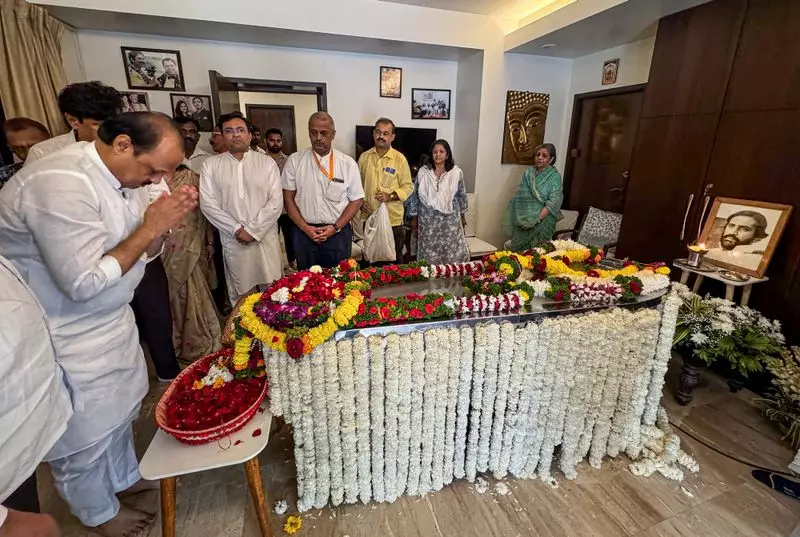
The Indian sports community is in mourning following the passing of former Indian Olympic Association (IOA) president and Member of Parliament, Suresh Kalmadi. He was 78 years old. Kalmadi, a significant but controversial figure in Indian sports administration, died on Monday after a prolonged illness.
A Long and Influential Career in Sports Administration
Suresh Kalmadi's association with Indian sports spanned several decades. He served as the president of the Indian Olympic Association (IOA) for 15 years, from 1996 to 2011. His tenure was marked by both ambitious projects and significant controversy. He was also a three-time Member of Parliament from Pune, representing the Congress party.
Kalmadi is perhaps most widely recognized for his role as the Chairman of the Organising Committee for the 2010 Commonwealth Games held in Delhi. While the event was ultimately hosted, it was marred by allegations of massive financial irregularities and corruption, casting a long shadow over his legacy. He faced legal proceedings in connection with these allegations.

Tributes from the Sporting World
News of his death prompted an outpouring of condolences from prominent figures across the Indian sports fraternity. Many acknowledged his contributions to sports infrastructure and administration despite the controversies.
The current president of the IOA, PT Usha, expressed her sorrow, stating the news was "saddening." She highlighted his long service to Indian sports and extended her deepest condolences to his family and supporters.
Indian cricket legend and former MP, Sachin Tendulkar, called Kalmadi a "giant of the Indian sports fraternity." He noted Kalmadi's passion for sports and credited him for playing a pivotal role in bringing major sporting events to India, which helped in developing infrastructure and inspiring a generation of athletes.
Other notable figures paying tribute included Anurag Thakur, Union Minister for Sports and Youth Affairs, and Abhinav Bindra, India's first individual Olympic gold medalist. Bindra recalled Kalmadi's support during his career, particularly in the lead-up to the 2008 Beijing Olympics.
A Complex and Contested Legacy
Suresh Kalmadi leaves behind a complex legacy. On one hand, he was a powerful administrator who oversaw a period of increased visibility for Indian sports on the international stage. His leadership coincided with India hosting major events like the 2010 Commonwealth Games and the 2003 Afro-Asian Games.
On the other hand, his career was inextricably linked to the 2010 Commonwealth Games scandal, which led to his arrest and time in jail. The scandal raised serious questions about governance and transparency in Indian sports administration. For many, his story is a cautionary tale about the intersection of sports, politics, and power.
His passing marks the end of an era in Indian sports administration. The condolences from across the spectrum indicate the significant footprint he left on the sporting landscape, even as the controversies of his career remain a part of his story. The focus now turns to his contributions to building a framework for major events in India, however flawed its execution may have been in one prominent instance.