India's Tennis Landscape: Doubles Dominance Meets Singles Challenge
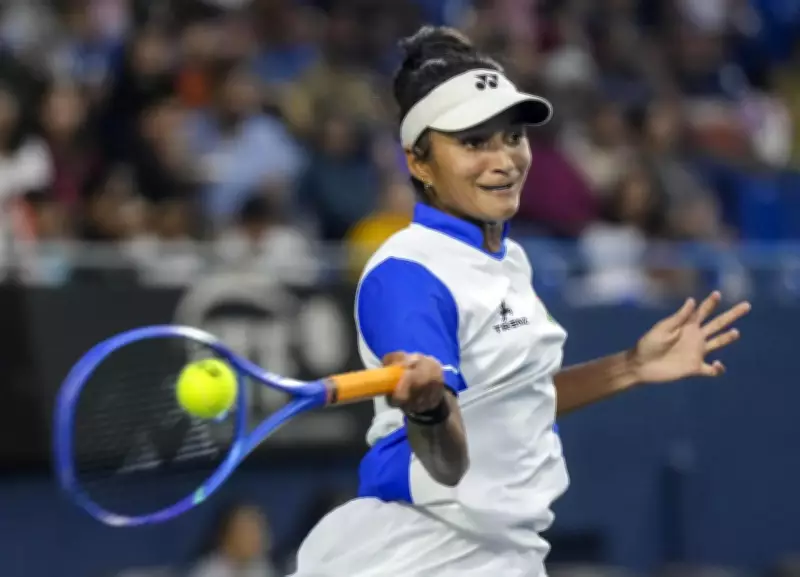
As New Delhi gears up to host the Billie Jean King Cup Asia/Oceania Group I tie next week, a familiar pattern in Indian tennis has resurfaced with striking clarity. The host nation's squad—comprising Ankita Raina, Vaishnavi Adkar, Rutuja Bhosale, Shrivalli Bhamidipaty, and Sahaja Yamalapalli—faces a stark reality: none currently hold a singles ranking inside the top 300 on the WTA tour.
The Singles Ranking Dilemma
Sahaja Yamalapalli, the highest-ranked among them, sits at World No. 385, a position that underscores the immense climb required to compete at the elite levels of women's tennis. This ranking gap highlights a persistent issue in Indian tennis, where success in singles has remained elusive for decades.
Tennis legend Sania Mirza remains the solitary Indian woman to have broken into the top 100 of WTA singles rankings, with her career-high of World No. 27 achieved back in 2007. This milestone continues to serve as the benchmark for aspiring players, yet no one has come close to matching it in the intervening years.

The Doubles Pathway
In contrast, India's global and Grand Slam achievements have predominantly emerged from doubles competition. Players increasingly view doubles as a more accessible route to improve rankings and extend their professional careers. This divergence has created what many observers describe as a tennis paradox—a nation capable of producing world-class doubles players while struggling to develop top-tier singles competitors.
Structural Gaps and Systemic Challenges
Billie Jean King Cup captain and former Davis Cup player Vishal Uppal identifies fundamental structural issues within Indian tennis. "The system has traditionally leaned towards doubles," Uppal explained in an exclusive interview. "Before we talk about producing champions, we must first focus on getting more players to Grand Slam level competition."
Uppal emphasized that achieving this requires comprehensive development: "Their training must be excellent, their athletic development must be robust, and the tournament opportunities they receive must be of high quality."
A Call for Broader Investment
The captain advocates for a fundamental shift in approach, arguing against the traditional focus on individual stars. "In my opinion, our mistake has been concentrating on one or two players while neglecting the vast majority," Uppal stated. "We need an ecosystem that supports and promotes hundreds of players, allowing the cream to naturally rise to the top. Tennis is a ruthless sport—focusing on just a few individuals proves ineffective."
Athletic development represents another critical area requiring attention. "This is an extremely athletic sport," Uppal noted. "If you cannot run effectively, you cannot compete at the highest level. We must prioritize enhancing the athletic capabilities of our players."
Immediate Focus: BJK Cup Qualification
With the tournament scheduled to commence at Delhi's DLTA stadium on April 7, Uppal maintains that the team's primary objective remains qualification for the World Group play-offs. The competition features hosts India alongside teams from Indonesia, South Korea, Mongolia, New Zealand, and Thailand, all competing in a round-robin format.
"Our practice sessions have begun positively," Uppal reported. "Everyone appears to be in good form and positive mental state. We will continue working diligently to ensure the team is physically and mentally prepared to compete fiercely over five days, with the goal of securing India's qualification for the World Group Play-offs once again."
As Indian tennis confronts these systemic challenges, the upcoming Billie Jean King Cup tie serves as both a competitive opportunity and a reflection point for the sport's future direction in the country.