Jenson Brooksby: Embracing Autism to Forge a Unique Path in Tennis
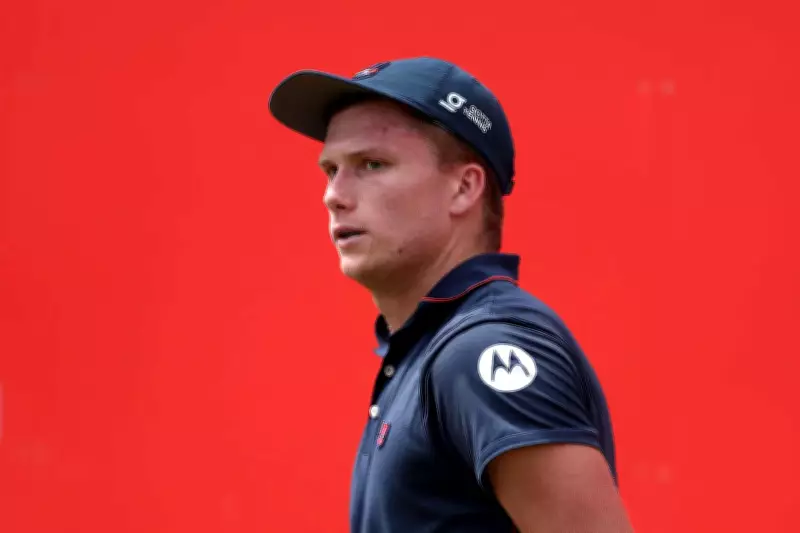
American tennis professional Jenson Brooksby possesses a game that defies conventional expectations. Standing at an imposing 6 feet 4 inches, his physical presence on the court is formidable, yet it is his quiet agility and razor-sharp court coverage that truly define his playing style. Much like his approach to life, Brooksby's tennis is shaped by seeing the world through a different lens, a perspective deeply influenced by his neurodevelopmental condition.
The Unorthodox Style of a Quiet Competitor
Brooksby's groundstrokes are characterized by a short backswing, relying heavily on precise timing and strategic redirection rather than raw power. His service motion can appear somewhat halting to observers, yet his ability to cover the court with unusual nimbleness for his stature makes him a challenging opponent. During a conversation on the sidelines of the Dubai Duty Free Tennis Championships earlier this year, the 25-year-old athlete spoke with the same focused energy that he brings to his rallies.
"A lot of the years growing up, I felt myself being more secluded. It was hard for me to socialize, especially during my school years," Brooksby revealed in an exclusive interview. "Now it's pretty normal, I'll talk with players when I'm at tournaments, and I have good relations with my team, but maybe there's still a part of me that likes to be by myself more often than the average person does."

A Diagnosis That Explains Both Challenges and Strengths
In a significant personal disclosure late last year, Brooksby shared that he was diagnosed on the severe end of the autism spectrum as a child. He was nonverbal until the age of four and underwent intensive Applied Behavior Analysis therapy, totaling 40 hours per week. His parents, Glen and Tania, never hid his diagnosis from him, instead fostering open conversations about the condition with medical experts.
"My parents did not hide my diagnosis from me," Brooksby explained. "A majority of what I heard about the disorder growing up was through conversations I would hear between my parents and experts, which would make me think about it more."
The tennis star describes his condition as one that presents both challenges and unique strengths. He emphasizes his exceptional ability to focus deeply, noting that he thrives on repetition, discipline, and a structured, routine-driven approach to both tennis and daily life.
Navigating Professional Tennis with Neurodiversity
Brooksby's professional journey has been marked by remarkable highs and challenging setbacks. He announced himself on the global stage five years ago at the US Open, where he stunned higher-ranked opponents including Taylor Fritz and Aslan Karatsev before falling to Novak Djokovic in the fourth round. The following year, he surged to a career-high ranking of No. 33.
However, his career faced significant obstacles when he missed most of 2023 and all of 2024 due to a combination of factors. These included a ban for missing three out-of-competition drug tests within a 12-month period—a violation that can be sanctioned without a positive result—and injury woes that required surgeries on both wrists.
Finding Confidence Through Disclosure
A pivotal moment in Brooksby's journey came when he first discussed his autism diagnosis with his agent, Amrit Narasimhan, a former professional player from Bengaluru. This conversation occurred over dinner on Brooksby's birthday in 2023 and marked a significant step in his personal development.
"That was a big step, I was sharing something I never really felt comfortable sharing," Brooksby recalled. "I saw how he responded to it, he took it normally. I did wonder before telling him if he'd treat me differently, but no, that didn't happen and that gave me so much confidence. I was then able to share it with the rest of my team."
Narasimhan, who has known Brooksby since his teenage years, responded with understanding and adaptation. "I always knew there were challenges, but didn't know the why," Narasimhan said. "Once I found out I felt I needed to learn, adapt and do things differently in a way that worked for him."

The Structure That Fuels Success
Brooksby's approach to training and competition reflects his need for structure and routine. During practice weeks, he maintains a steady schedule, waking around eight in the morning, beginning with an extensive gym session, followed by one to two hours on the tennis court. Tournament weeks are less predictable, shaped by match timings and recovery needs.
"Regardless of who I'm playing, I feel good about how I'm supposed to play. I'm able to focus on those few things and do it for a long period of time," Brooksby noted. "But if I'm playing someone who has more variety, I struggle to switch things around quickly. I think everyone has some level of struggle with that, but it is a little bit higher for me."
Evenings are typically low-key for the tennis professional, whether he's dining at home alone or going out with friends. During tournaments, his routine becomes even more focused, with meals often taken with his team or in solitude as competition demands intensify.
A Broader Message About Neurodiversity in Sports
As one of the first professional athletes to openly discuss his autism diagnosis, Brooksby's story carries significance beyond the tennis court. His journey represents a broader narrative about neurodiversity in sports—how different ways of processing the world can create unique competitive advantages while presenting distinct challenges.
The balance Brooksby has found between structure and flexibility, solitude and connection, mirrors his broader journey as he learns to navigate the world on his own terms. His story challenges conventional narratives about autism, demonstrating how neurodevelopmental differences can shape not just challenges, but also exceptional abilities and perspectives that contribute to success in elite sports.
Through his openness about his condition, Brooksby is helping to reshape conversations about neurodiversity in professional athletics, showing that different ways of experiencing the world can be sources of strength rather than limitation.