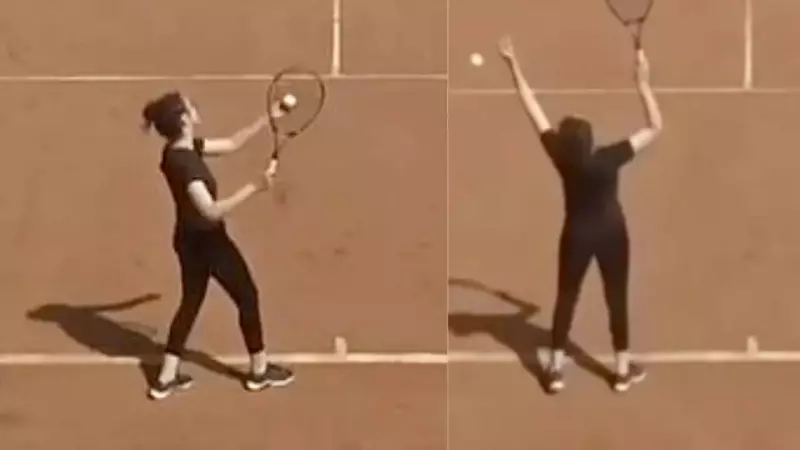
A single, disastrous tennis match at a professional tournament in Nairobi has unexpectedly catapulted a young Moroccan player into the harsh glare of the internet spotlight. The story of 19-year-old Hajar Abdelkader's first-round loss at the ITF W35 event in early January 2026 has become a viral sensation, sparking intense debate about pressure, development, and the brutal reality of professional sports.
The Match That Captured the Internet's Attention
The scene was the Nairobi Tennis Club in the first week of January 2026. Hajar Abdelkader, a teenager ranked outside the world's top 1000, was competing in one of her first professional tournaments at this level. Her opponent was Diae Hadid. What transpired was a match that lasted less than an hour but would resonate for days online.
From the very first game, Abdelkader's serve completely deserted her. The match became a relentless sequence of double faults, one after another. By the time the final point was played, the staggering tally stood at 20 double faults. Her service game yielded only three points won in the entire contest. The scoreboard reflected the one-sided nature of the struggle: a decisive 6-0, 6-1 victory for Hadid.

From Court to Viral Controversy
Short clips and statistics from the match spread like wildfire across social media platforms, particularly on X (formerly Twitter) and TikTok, amassing millions of views within days. The extreme nature of the serving struggle led many viewers to react with shock and, in some cases, ridicule. The phrase "worst tennis player ever" began trending alongside her name.
However, the viral moment quickly evolved into a more nuanced discussion. While some fans laughed at the spectacle, a significant number of others called for perspective and patience. Comments highlighted the immense pressure of a professional debut and the psychological toll of nerves. "This is what nerves look like on a big stage," wrote one user, while another noted, "Twenty double faults is hard to believe, but pressure can do that."
The Bigger Picture: Learning on the Pro Circuit
The incident has thrown a light on the challenging pathway for young athletes. ITF World Tennis Tour events, like the W35 in Nairobi, are precisely designed as a proving ground. They are where emerging talents like Abdelkader earn their first ranking points and learn the immense differences between junior and professional tennis.
Coaches and analysts often emphasize that the jump is monumental, with the serve being one of the most pressure-sensitive shots. A bad day under the spotlight can unravel quickly, as this match demonstrated. For Diae Hadid, the result meant progression to the next round and a chance to gain valuable points. For Hajar Abdelkader, the path forward involves returning to training and seeking more competitive experience at this level.
Most observers within the tennis community agree that this single, viral match should not define the career of a 19-year-old. It serves instead as a stark, public lesson in the highs and lows of sporting development. The episode underscores how a moment of struggle, amplified by social media, can ignite a global conversation about resilience and the human side of competition.