Padma Bhushan Honors Vijay Amritraj: The Tennis Pioneer Who Broke Stereotypes
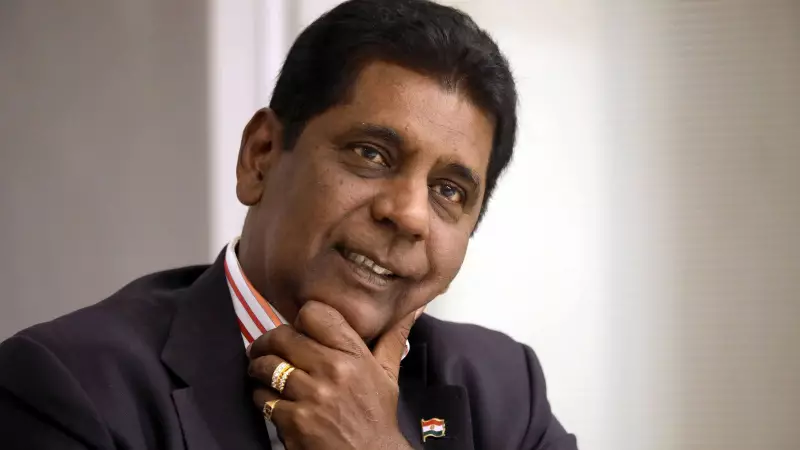
Decades after his retirement, India's original tennis superstar, Vijay Amritraj, has been awarded the prestigious Padma Bhushan, a recognition that celebrates his remarkable contributions both on and off the court. The citation highlights his 16 singles titles, his role as Davis Cup captain, and his efforts in putting India on the international tennis map. However, an additional accolade could be noted: as a charismatic television personality and influential figure, he has consistently polished India's image abroad, engaging with global leaders and celebrities.
Challenging Clichés Long Before 'Incredible India'
Long before the 'Incredible India' campaign became a branding phenomenon, Vijay Amritraj was already articulating to the world that his country offered far more than the stereotypical images of snake charmers and yogis. For younger generations who might believe tennis began with the Federer-Nadal rivalry and view the absence of Indians in singles draws as normal, Amritraj's story serves as a crucial reminder of India's early global sporting presence.
Far ahead of his time, Vijay was a crowd-puller at Grand Slam tournaments and a magnet at exclusive after-match parties among the elite. He, along with his brothers Anand and Ashok, demonstrated that acceptance in the Western world did not require conforming to exotic stereotypes. Instead, Vijay excelled in their sport, playing tennis with a skill that often surpassed his competitors, and communicated with an eloquence that commanded respect.

A Top Player and Cultural Ambassador
As a Top 20 player, Vijay Amritraj held his own against legends like Rod Laver, Stan Smith, John McEnroe, and Jimmy Connors. His charm, wit, and intellect granted him entry into elite circles, while his 6'3" broad-shouldered physique defied the archetypal Indian image of that era. In pre-liberalization India, his ambitions and dreams were larger than most, reflecting a global mindset even as he remained fiercely patriotic.
When traveling internationally, Vijay carried no 'third-world baggage.' He was soft-spoken yet assertive when necessary, embodying the qualities of a true global citizen while maintaining a deep commitment to his homeland. His dedication to Davis Cup duties was unwavering, playing a pivotal role in India's many epic triumphs, including reaching a final that was boycotted due to apartheid-era South Africa.
Overcoming Adversity and Embracing Hustle
Born with cystic fibrosis, a potentially fatal lung condition requiring constant hospital visits, Vijay turned into a spectacular over-achiever. He took up tennis on a doctor's recommendation to pursue an outdoor sport, transforming a health challenge into a legendary career. With minimal financial resources, he and his brother Anand traveled to England, mastering concepts like 'hustle' and 'jugaad' long before these terms became popular in corporate India.
On a frugal budget, the brothers adopted a hand-to-mouth economic model. During tough times, when early tournament exits left them with just five dollars for the week, Vijay devised a clever backup plan: betting on Anand's chess skills against wealthy club members. This ensured they could afford meals even if they lost at tennis, showcasing their resilience and ingenuity.
Changing Perceptions Through Performance
As his results improved, America warmed up to the tall, lanky Indian with a powerful serve-and-volley game. At his peak, Vijay once played at a Florida hotel frequented by elderly white patrons, where he wore Chennai shirts and Kolhapuri chappals to dinner, initially inviting stares. However, after defeating Rod Laver and Jimmy Connors in matches, those same club members inquired about where to purchase such attire, symbolizing a shift in perceptions driven by his excellence.
Later, at the US Open, Vijay defeated Laver again, earning praise from The New York Times, though a line from the report—'The incredibly poised and polite dark‐skinned Amritraj'—highlights the racial nuances of that era. His role in the James Bond film 'Octopussy,' where he portrayed a snake charmer and auto driver amid stereotypical Indian imagery, contrasts sharply with his real-life achievements as a Hollywood producer, broadcasting icon, UN ambassador for peace, and ATP Hall of Famer.

Legacy of a Padma Bhushan Recipient
Today, as Vijay Amritraj receives the Padma Bhushan, his journey underscores how India's global image has evolved, partly thanks to individuals like him who transcended clichés through talent and determination. From battling health issues and financial constraints to becoming a tennis icon and cultural ambassador, his story is a testament to perseverance and the power of sport to bridge cultures. This honor not only celebrates his past accomplishments but also inspires future generations to dream big and redefine boundaries.