American Tennis Faces Scrutiny Over Clay Court Participation Strategy
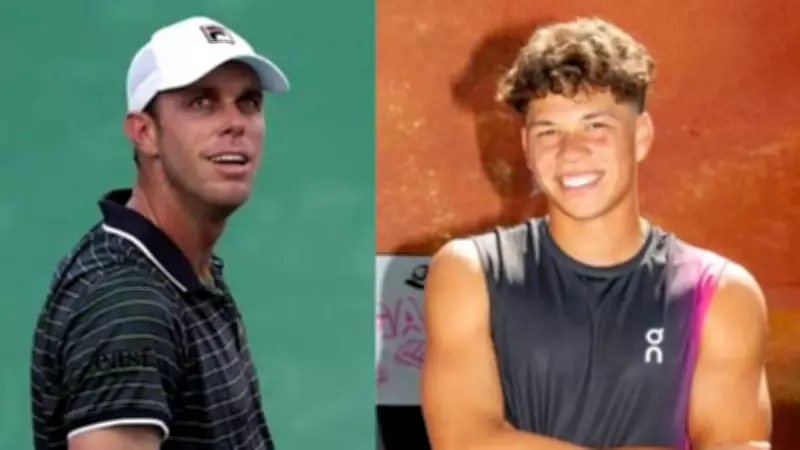
The American tennis landscape finds itself under intense examination once again, though this time the focus centers on strategic decisions rather than celebratory achievements. Former professional player Sam Querrey has publicly raised significant concerns regarding the participation patterns of top United States stars in European clay court tournaments.
Questioning the Absence of Key Players
Querrey's pointed commentary emerged as young American talent Ben Shelton demonstrated impressive performance at the BMW Open in Munich, illustrating that tangible results become attainable when athletes commit to competing regularly on the challenging red clay surface. Simultaneously, established American names including Taylor Fritz and Tommy Paul opted to bypass crucial preparatory events such as the prestigious Monte Carlo Masters.
This selective participation has sparked serious questions about adequate preparation ahead of major tournaments like the French Open. With American players achieving limited deep runs in recent clay court competitions, the performance gap has become increasingly conspicuous during the current season.

Querrey's Direct Critique of Tournament Selection
Sam Querrey did not mince words while expressing his perspective on the situation. He specifically highlighted that American competitors frequently overlook smaller clay court events that could substantially enhance their skills and adaptation to European conditions.
"The Americans never win on the European clay," Querrey stated emphatically. "For the most part, the top Americans just play Madrid, Rome, Roland Garros, and maybe that week before Roland Garros. If they played Marrakesh, Kitzbuhel, Umag, and all these European 250s on clay, we would have a lot more titles on the European red clay."
His observations followed a particularly challenging period for American tennis professionals on clay surfaces. At the Monte Carlo Masters, only Emilio Nava represented the United States in the main draw. The Barcelona tournament witnessed no American athlete advancing beyond the round of sixteen.
Shelton's Contrasting Approach and Perspective
Meanwhile, Ben Shelton distinguished himself by progressing to the later stages of the Munich Open, also recognized as the BMW Open. Shelton offered a different viewpoint regarding tournament scheduling decisions, explaining that the extended European clay court season necessitates careful strategic planning.
Speaking through thetennisgazette.com platform, Shelton elaborated: "One of the most important aspects of clay is being able to adapt week to week. You get completely different conditions in certain tournaments. Madrid is the opposite of Rome, Paris has its own unique way that it plays."
He further added: "This is a long European swing for us, so mine was more about being here a couple weeks earlier and extending that trip than starting here in Munich. So yeah, we will see how this season goes and each year I think I figure out more what's best for me."
Shelton's Current Form and Future Prospects
Shelton arrived in Munich following a defeat against Thiago Agustin Tirante in Houston but rapidly rediscovered his competitive form. He now prepares to confront Italy's Flavio Cobolli in the BMW Open final, presenting a valuable opportunity to validate that sustained activity on clay courts can yield significant dividends.
The ongoing debate highlights fundamental questions about optimal preparation strategies for American tennis players as they navigate the demanding European clay court circuit. While Querrey advocates for increased participation across various tournament levels, Shelton's current success suggests that tailored approaches might also prove effective for individual competitors.