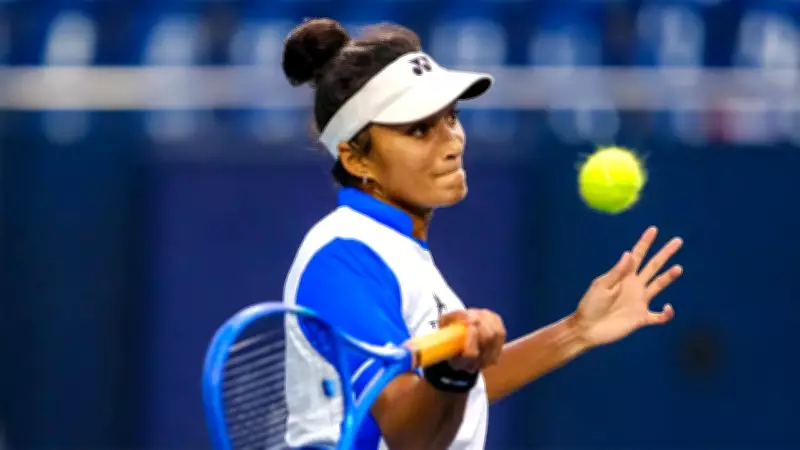
Sahaja Yamalapalli Calls for More High-Level Tennis Tournaments in India
India's leading women's tennis player, Sahaja Yamalapalli, has expressed significant concern regarding the shortage of high-level professional tournaments within the country. She identifies this gap as a critical obstacle for aspiring Indian players striving to ascend the global rankings.
Current State of Indian Tennis Events
While India does organize some lower-tier International Tennis Federation (ITF) events, there is a notable absence of higher-level competitions such as ATP-WTA 250, 500, or 1000 tournaments. These events offer substantially more ranking points on home soil, which are essential for player development. Currently, the Bengaluru Open stands as India's premier men's ATP Challenger event, awarding 125 ranking points to the winner. In women's tennis, the ITF Open W100 Bengaluru is one of the largest international events, providing 100 WTA ranking points for the champion. Notably, the Tata Open Maharashtra, formerly South Asia's biggest men's tournament as an ATP 250 event, relocated to Hong Kong in 2024.
Impact on Indian Players
Sahaja, ranked No. 385 globally, emphasized the importance of hosting more high-level tournaments in India to foster the growth of local talent and enhance their rankings. She stated, "It's crucial for India to organize more top-tier events to support Indian players and their ranking progress. Even regular lower-level tournaments offer valuable exposure to younger athletes. When larger competitions occur, everyone gains opportunities. In contrast to the United States, where Americans dominate such events, in India, these tournaments often feature mostly foreigners, with only a few Indian participants. This dynamic needs to change."

She highlighted the financial challenges faced by Indian players who must travel abroad to compete in higher-level events. "The primary issue is the lack of domestic high-level tournaments. We have only a couple, whereas players from other nations enjoy back-to-back events in their home countries without needing to travel internationally. Indian players typically compete in just five or six weeks domestically, forcing them to incur substantial travel, accommodation, and coaching expenses abroad. Despite abundant talent, these hurdles explain why India has only four or five players in the top 500 rankings."
Sahaja's Personal Journey and Insights
The 25-year-old from Telangana shared that she was an average player during her youth but experienced a transformation through the U.S. education system and collegiate sports. "College life was vastly different because, prior to that, I had limited match experience due to financial constraints. In college, we competed weekly, exposing me to high-level tennis. This environment pushed me to improve and fundamentally changed me as a player. It offered a unique experience with opportunities not readily available in India, which greatly benefits professional development."
Additionally, Sahaja briefly adopted a vegan diet due to vitamin deficiencies but found it challenging to maintain while traveling. "I turned vegan because of low vitamin levels in my blood, but managing protein intake abroad proved difficult. Although I felt good on the court initially, I continued to lose weight, necessitating a return to a non-vegan diet."
Upcoming Billie Jean King Cup and Team Prospects
Looking ahead to the Billie Jean King Cup Asia-Oceania Group I tie at the DLTA Stadium from April 7 to 11, Sahaja expressed optimism about the Indian team's chances. "We have been training here for several days, with plans to acclimate for a week before the tie begins. This preparation has helped us adapt to the conditions and build team camaraderie. We are eagerly anticipating the start of the matches."