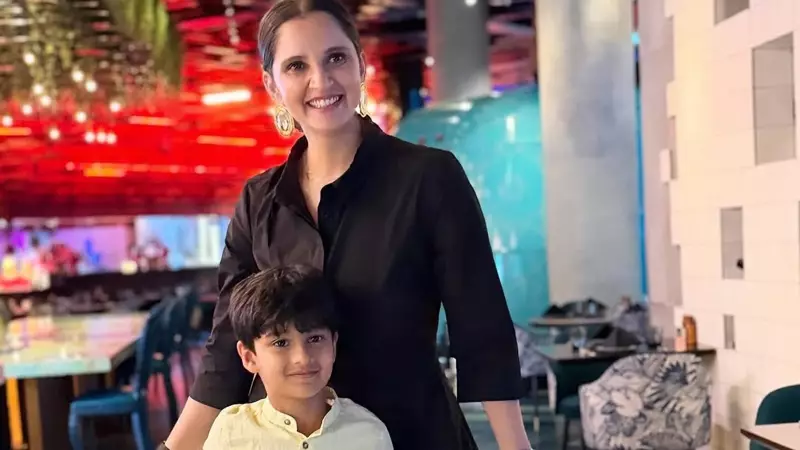
Tennis legend Sania Mirza has opened up about her unique and competitive approach to parenting, especially when it comes to playing sports with her young son. In a candid conversation on her podcast, Serving It Up With Sania, with football icon Sunil Chhetri, Mirza shared that she believes in not handing out easy victories, even to her child.
The Competitive Mother: No Free Wins
Mirza revealed that she is "extremely competitive" when playing various sports with her son, from padel to tennis. "I don't let him win," she stated firmly. She did, however, admit with a laugh that her son legitimately beats her at football due to his skill, while she humorously claims to have "two left feet" despite her tennis prowess.
She praised her son's excellent hand-eye coordination and smart strategy, noting that he often prefers to team up with her to secure a win. However, when she does triumph in a game, his reaction is intense. "Very. He gets very upset," Mirza said when Chhetri asked about her son's response to losing. This leads to an important parenting moment where she has to consciously soften her approach. "I have to tone it down and tell him, 'It's okay if you lose'," she explained.
Why Early Losses Are Crucial for Development
This approach aligns with expert advice on child psychology. Dr. Rimpa Sarkar, a clinical psychologist and founder of Sentier Wellness, emphasized that learning to handle loss is a critical part of emotional growth. She explained that when children experience losing in safe, supportive environments—like playing with parents—they develop essential life skills.
"They learn resilience, frustration tolerance, emotional regulation, and perseverance," Dr. Sarkar told indianexpress.com. She warned that constant winning might boost short-term confidence but ultimately deprives a child of learning to cope with disappointment, an inevitable part of real life.
According to the psychologist, parents who don't automatically let their child win are modelling realism and effort-based growth instead of fostering a sense of entitlement. This practice, she believes, prepares children to manage more significant setbacks later in life, whether in academics, facing rejection, or navigating career challenges.
The Right Way to Guide Through Failure
Dr. Sarkar stressed that the intention behind this method is paramount. It must be free from humiliation or excessive pressure. "Parents should never mock, compare, or dismiss a child's feelings after a loss," she cautioned. The balance is key; allowing genuine wins in areas where a child is developing strength is equally important for building competence and self-belief.
After a loss, children typically experience anger, sadness, or embarrassment. Dr. Sarkar highlighted the parent's vital role in helping the child name these emotions, normalise them, and shift focus from the outcome to the effort and lessons learned. "Parents who say, 'It's okay to feel upset, what can we learn from this?' help children develop resilience, self-awareness, and emotional maturity," she concluded.
The real harm often stems not from the loss itself, but from adult reactions to it. Overprotection can make children fragile, while harsh criticism can attach shame to failure. The healthiest path, as outlined by the expert, combines encouragement with honesty.
Ultimately, children who are guided—not shielded—through the experience of losing grow into adults who can face failure without it damaging their self-worth. Sania Mirza's practical, if fiercely competitive, parenting style offers a real-world example of this principle in action, teaching her son that while winning is enjoyable, losing is a fundamental and instructive part of life's game.