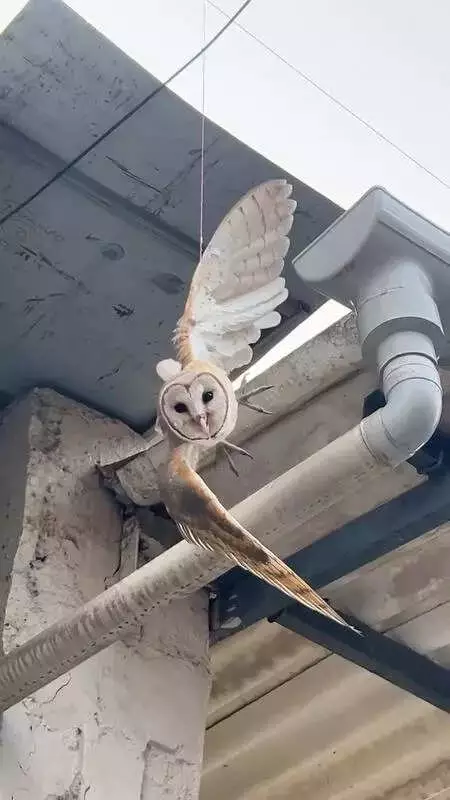
Ahead of the Uttarayan festival, the skies of South Gujarat are turning deadly for birds, with multiple cases of avian creatures falling victim to sharp kite strings, known as manja. In a recent rescue operation, an owl trapped in such a string was saved by volunteers in Valsad district.
Dramatic Rescue in Pardi Village
The incident occurred on Monday in Pardi village of Valsad district. Local residents spotted the distressed owl entangled in the nearly invisible manja and immediately alerted animal welfare volunteers. A rescue team from the Jivdaya Group swiftly reached the location.
Ali Ansari, president of Jivdaya Group, Killa Pardi, described the scene, stating the owl was found hanging from the string. Using a ladder, the team carefully brought the bird down and worked to remove the tangled manja from its wings. After a thorough check confirmed the owl was unharmed, it was released back into the wild after nightfall, a suitable time for the nocturnal bird.

Ansari emphasized that timely intervention by the locals was crucial, noting the owl would likely have died without their alert.
Why Manja is a Silent Killer for Birds
Animal welfare organizations are raising a serious alarm about the menace of discarded manja. They explain that the threat persists long after the kites have landed. Strings left dangling from trees, buildings, and electric cables, or carelessly discarded on terraces, become invisible traps.
Birds that fly during the low-light hours of dawn and dusk are especially at risk, as they cannot see the nearly transparent strings. Nocturnal birds like owls are particularly vulnerable. Once entangled, birds often suffer deep, fatal wounds from the abrasive, coated strings as they struggle to break free.
Appeal for a Safer Uttarayan
The rescue in Pardi is not an isolated event. Similar incidents are being reported across South Gujarat as the festival approaches. Adding to the concern, there have also been recent reports of commuters in Surat and other parts of the region sustaining injuries from manja.
Volunteers are making a fervent appeal to the public. They urge citizens to:
- Avoid using sharp, Chinese or glass-coated manja altogether.
- Dispose of used kite strings responsibly by cutting them into small pieces and discarding them in closed bins.
- Clear their terraces and surroundings of any leftover string waste.
- Immediately report any injured bird or animal to local rescue groups.
The goal is to celebrate the joy of kite flying without turning it into a perilous season for the region's wildlife and residents.