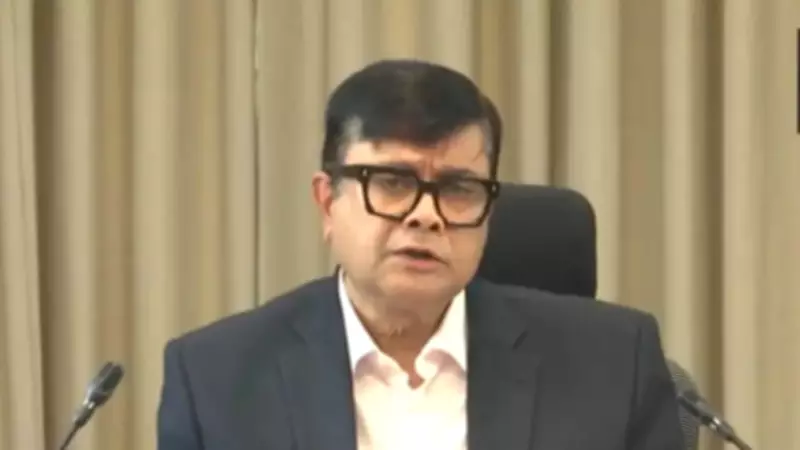
The Ministry of Education on Sunday clarified that the digital marking process for CBSE examinations is not a new initiative, amid concerns from students over a dip in the overall pass percentage for Class 12 this year. Addressing a press conference, Sanjay Kumar, Secretary of the Department of School Education and Literacy, stated, “Some students feel that they should have received higher marks than those actually awarded to them. I would like to emphasise that On-Screen Marking is neither a novel concept nor is this the first time it has been implemented.”
History of On-Screen Marking
According to Kumar, the CBSE first introduced the On-Screen Marking (OSM) system in 2014. However, due to limitations in technical infrastructure at the time, the system could not be sustained. This year, the system was successfully reintroduced during the Class 12 board examinations. Under this process, answer sheets were scanned and converted into PDF copies before being evaluated by examiners.
Extensive Scanning and Security
Kumar revealed that answer sheets of approximately 98 lakh students were scanned for the examinations. He emphasised that three levels of security were maintained throughout the scanning process. One of the major advantages of digital evaluation, he noted, was the elimination of errors in totalling marks. “One advantage of this has been that the mistakes that sometimes used to happen in totalling have been completely eliminated,” he said.

Training and Challenges
Teachers were trained before the system was implemented. However, officials encountered around 13,000 answer sheets that could not be read properly after scanning because students had used very light-coloured ink. “Ultimately, it was also found that in the end, we had about 13,000 such answer sheets, which we found that no matter how many times we scanned them, there was some illegibility in them because the ink used was of very light colour,” Kumar explained. These answer sheets were later checked manually by teachers, and the marks were added to the system. Kumar assured that special attention was given to security and accuracy to ensure the reliability of the on-screen marking process.
Changes in Re-evaluation and Verification
Along with defending the new marking process, Kumar announced changes related to re-evaluation and verification. “We will charge a fee of Rs 100 from any student who wishes to view their answer sheets; a separate fee of Rs 100 applies if they wish to have their papers validated; and a fee of Rs 25 applies for the re-checking of the answer to any specific question,” he said. He added that if a student’s marks increase after scrutiny or re-evaluation, the entire amount paid by the student would be refunded.
Commitment to Fairness
Kumar stated that both the Ministry of Education and CBSE want to ensure that no student feels unfairly marked. “Whether it is the ministry of education or the CBSE, the welfare and concerns of all our children are of paramount importance to us,” he said. He added that the provision for re-evaluation has always existed in the CBSE system and assured students that the board would ensure the awarded marks and totalling are “absolutely accurate”.