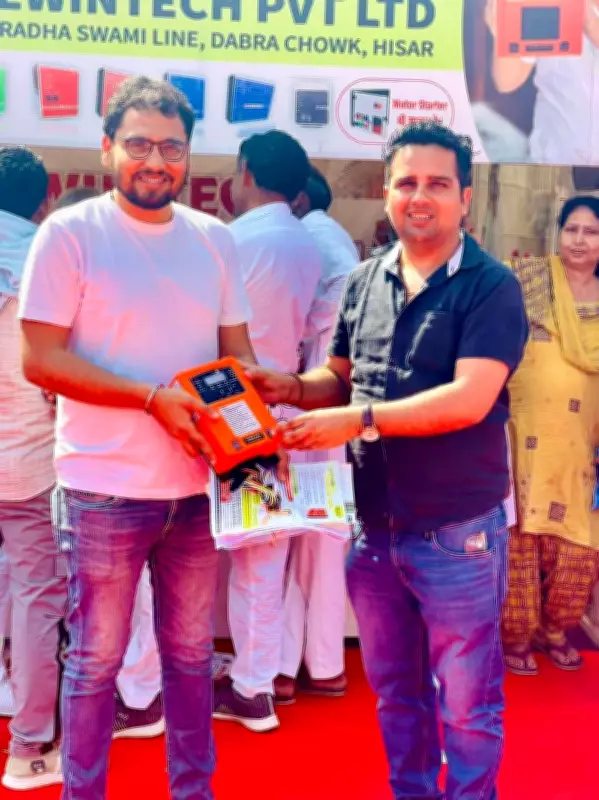
A startup based in Hisar, Haryana, has developed a remote-controlled irrigation system that is transforming the way farmers manage water resources. The innovation allows farmers to operate pumps and monitor soil moisture from their smartphones, reducing manual labor and optimizing water usage.
How the System Works
The system consists of a mobile app connected to a microcontroller installed at the farm. Farmers can turn pumps on or off remotely, set timers, and receive real-time data on soil moisture levels. The device uses solar-powered sensors to ensure energy efficiency.
Key Features
- Remote Access: Control irrigation from anywhere via smartphone.
- Water Conservation: Sensors prevent overwatering, saving up to 30% water.
- Energy Savings: Solar-powered components reduce electricity costs.
- User-Friendly: Interface designed for farmers with basic digital literacy.
Impact on Farmers
Early adopters report significant benefits. Farmer Rajesh Kumar from Hisar district said, “Earlier, I had to travel to the farm twice a day to check water levels. Now I can do it from home. My yield has improved, and my electricity bill has dropped.” The system also helps prevent pump burnout by automatically shutting off when water levels are low.

Affordability and Scalability
The startup offers the system at a subsidized cost of around Rs 5,000 per unit, with government schemes covering part of the expense. They plan to expand to other states like Punjab and Rajasthan, where water scarcity is a major issue.
Future Plans
The team is working on integrating AI to predict irrigation needs based on weather forecasts and crop type. They also aim to partner with agricultural universities for field trials and further refinement. The startup has already received funding from the Haryana government’s innovation fund and is in talks with private investors.
This innovation aligns with the government’s push for precision farming and digital agriculture. By empowering farmers with technology, the startup is contributing to sustainable farming practices and improved livelihoods.