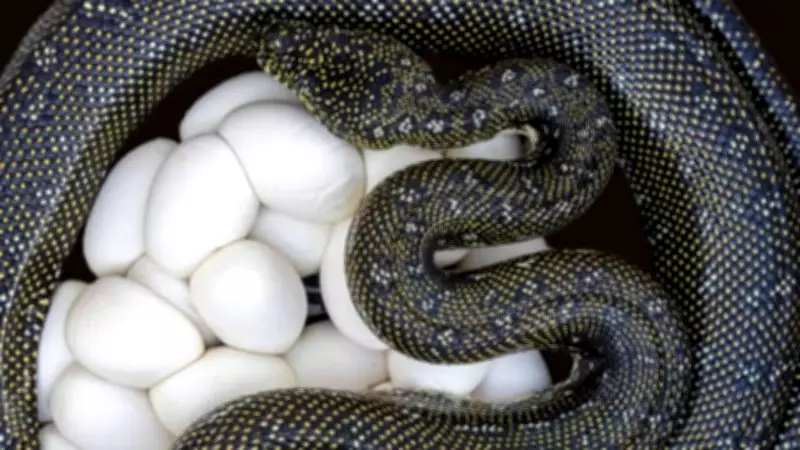
Discovering clusters of eggs in your garden, compost heap, shed, or backyard often raises questions about whether they belong to a snake. Although relatively uncommon, snake eggs are frequently mistaken for bird eggs, lizard eggs, or even fungal growths. According to wildlife experts, proper identification of snake eggs requires caution. Since some snakes are endangered while others are dangerously venomous, it is strongly advised not to handle unknown eggs. Below are seven distinct characteristics that can help you identify potential snake eggs.
1. Soft and Leathery Shell
The most notable difference between snake eggs and bird eggs is the shell texture. Snake eggs have a soft, flexible, leathery shell, unlike the rigid, hard shells of bird eggs. This unique construction allows the embryo to develop in moist environments. The shell absorbs moisture from the surroundings, which is why snake eggs are rarely as stiff as bird eggs.
2. Oval Shape
Snake eggs typically have an elongated oval shape, meaning they are slightly longer than they are wide. They resemble white capsules. While size varies among species, the shape remains consistent. This distinctive oval form helps differentiate them from eggs of other reptiles.

3. Laid in Clusters
Most egg-laying snakes deposit their eggs in clusters rather than individually. The leathery shell becomes somewhat sticky immediately after laying, causing the eggs to adhere to one another in a loose cluster. Depending on the species, a cluster may contain from a few to several dozen eggs.
4. Warm, Sheltered Locations
Because snake eggs are leathery and absorb moisture, snakes choose moist, sheltered sites with stable environmental conditions. Common locations include compost heaps, piles of leaves, rotting wood, mulched beds, and abandoned burrows. Searching in these areas increases the likelihood of finding snake eggs.
5. White or Off-White Color
Unlike many bird eggs with colorful shells, most snake eggs are white or off-white. Over time, external factors like soil or moisture may alter the color. While not definitive, color can serve as an additional clue for identification.
6. Not All Snakes Lay Eggs
It is important to note that some snake species give birth to live young rather than laying eggs. Therefore, finding baby snakes near an unknown egg mass does not necessarily mean eggs were present. This highlights the diversity of snake reproductive behavior.
7. Avoid Touching and Contact Experts
If you suspect you have found snake eggs, do not disturb them by touching or moving them. Handling eggs can negatively affect embryo development. Observe from a distance and, if possible, consult wildlife experts for proper identification. This ensures the safety of both animals and humans and supports the eggs' healthy development.