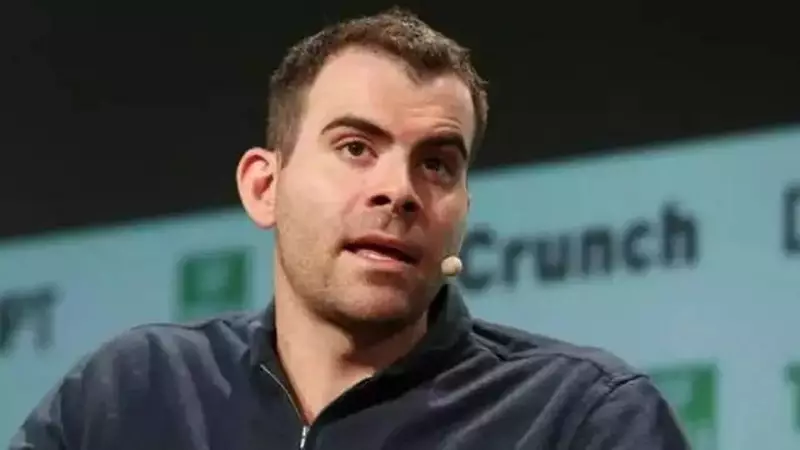
In a candid discussion, Adam Mosseri, the head of Instagram, has shared his perspective on the strengths and weaknesses of its Chinese rival, TikTok, particularly in the United States market. While acknowledging TikTok's pioneering role in popularizing short-form video, Mosseri suggested its evolution into a "super app" might not resonate with Western users.
Super App Strategy: A Chinese Export Facing Western Hurdles?
Speaking on Semafor's Mixed Signals podcast, Mosseri dissected TikTok's global strategy. He noted that the platform is applying lessons learned in China to the rest of the world, a move with both advantages and drawbacks. The clear pro, according to him, was TikTok's early and massive bet on short-form video content, which Instagram later emulated with Reels.
However, Mosseri pointed to a potential con. "Super apps," which are immensely popular in China, have not gained similar traction outside. He speculated that TikTok is transforming into such a Chinese-style super app, and its success with this model in Western markets remains uncertain. "Are they overly projecting one win on the next, or am I just a naive out-of-touch Westerner?" he pondered aloud.

He also argued that Instagram maintains a distinct edge in business operations and monetization compared to its competitors. Furthermore, Mosseri revealed that the political pressure on TikTok in the US, including efforts to force a sale or ban, has slowed the rival's momentum. This provided Instagram with a critical window to refine its own algorithmic feed in a less competitive environment.
Instagram's Foray into the Living Room with TV App
Shifting focus to Instagram's own innovations, Mosseri discussed the platform's recent expansion. Earlier this month, Instagram launched a dedicated app for Amazon Fire smart TVs. This move stems from the app's massive success on mobile and is an attempt to explore its viability as an alternative to YouTube for living room entertainment.
Mosseri, in an interview conducted before the launch, admitted uncertainty about how users would interact with Instagram on a TV screen. He suggested possibilities like passive viewing of Reels or shared content experiences in a room. "We're going to learn a lot," he said, acknowledging that the team would likely get some things wrong but promising to iterate quickly.
He emphasized that Instagram's TV strategy differs from YouTube's focus on long, highly-produced videos. Such content traditionally hasn't performed well on Instagram. However, Mosseri left the door open for adaptation, stating, "It might turn out that maybe we'll need premium content to work. It might be that we need long-form video." This would mark a significant strategic shift for a platform that has explicitly avoided that market.
A 'Fundamentally Different' Instagram on the Horizon
Looking ahead, Mosseri predicted substantial changes for Instagram in the near future. He stated that the platform plans to give users more proactive control over shaping their feeds, a change that would feel "fundamentally different."
He elaborated that new technologies should evolve to allow users to "touch metal"—to directly instruct the platform on what they want. This could involve fine-tuning their feed for specific interests, conducting deep searches, or creating content more intuitively. Mosseri believes these changes will unfold over the next two to four years.
Peering even further into the future, the Instagram head predicted that in a decade, the platform will feel more surreal. He envisions smart glasses potentially replacing phones, drastically altering how people interact with a visual platform like Instagram. This shift towards audio-primary interactions via wearables presents a significant, open question for the platform's development team.