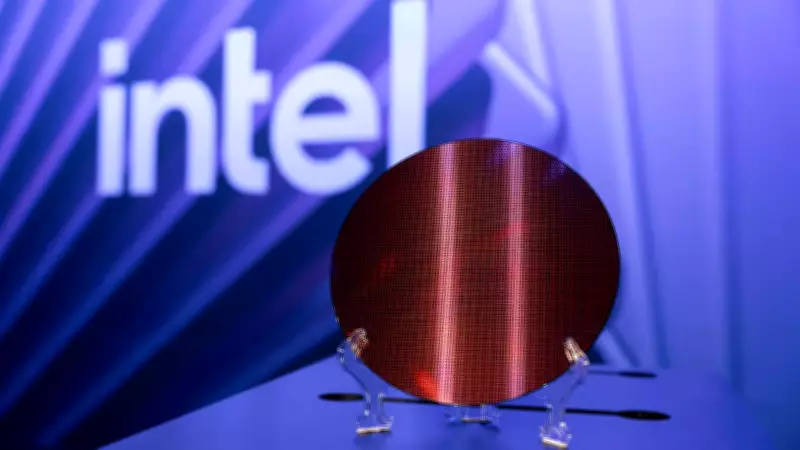
Intel has announced that its next-generation chip manufacturing process, Intel 18A-P, has entered risk production, meaning early manufacturing runs are underway ahead of full commercial availability. The US-based chipmaker made the announcement at the 2026 VLSI Symposium, one of the semiconductor industry's most closely watched technical conferences. In simpler words, the 18A-P is the first performance enhancement built on top of Intel's existing 18A process node. According to the company, it delivers meaningful gains in speed, power efficiency and thermal management without requiring customers to redesign their chips from scratch.
What Intel 18A-P Delivers
According to Intel, when compared to the base Intel 18A process, the 18A-P delivers either 9% higher performance at the same power level, or 18% lower power consumption at the same performance level. Chip designers typically choose between these two outcomes depending on what they are optimising for. For example, a gaming PC may go for a high-performance processor for the speed gain, while a business notebook may get a battery-powered chip for power saving. Thermal performance has also improved significantly. The 18A-P shows 20 to 40% better thermal resistance, meaning chips built on the process generate and retain less heat under load. For high-frequency computing applications — processors running at the speeds needed for AI inference, data centre workloads, and advanced gaming hardware — this is a practically important improvement. Cooler chips can sustain higher clock speeds for longer before thermal throttling kicks in.
Intel 18A-P: The New Technology Inside the Process
Apart from this, Intel introduced several specific innovations in 18A-P that underpin these performance and efficiency gains. The most significant is Power Boost, which is a new dual contact, low resistance transistor option that increases the drive current available to the transistor and allows higher operating frequencies without a proportional increase in capacitance. Intel says that the electrical resistance in the vertical connections that link different layers inside a chip has been reduced by 10 to 30% through geometric and materials optimisations. Lower resistance means less energy lost as heat and faster signal transmission between chip layers. One of the more commercially significant aspects of the 18A-P announcement is what it does not require of customers: a redesign. Intel 18A-P is fully design rule compatible with Intel 18A, meaning existing chip designs and intellectual property developed for the base 18A process can be reused directly on 18A-P without modification. The process retains the same two cell heights: 180 nanometres and 160 nanometres. For semiconductor companies that have already invested significant time and engineering resources in designing chips for Intel 18A, this backward compatibility reduces the cost and timeline of moving to the improved process substantially.

What Intel is Working on Beyond 18A-P
Alongside the 18A-P production announcement, Intel Foundry used the VLSI platform to share early research results across several areas that point toward where chip manufacturing is heading beyond the current generation. CFET transistors: Intel demonstrated monolithic Complementary FET inverters with vertically stacked NMOS and PMOS devices at a 45 nanometre gate pitch. Gallium nitride on silicon: Intel demonstrated the integration of gallium nitride power devices with silicon logic on 300mm wafers, including a digital control block of approximately 1,000 gates. Subtractive ruthenium interconnect: Intel demonstrated a subtractive ruthenium process with airgap integration that achieves up to 35% capacitance reduction compared to copper interconnects.