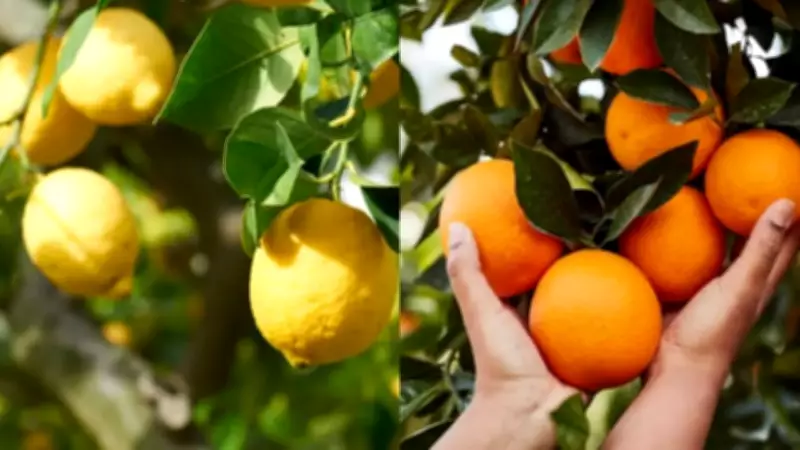
Although lemons and oranges both belong to the citrus family, their plants have distinct characteristics that become apparent when growing them. For beginner gardeners, understanding these differences is essential for proper identification and care. This guide explains how to tell a lemon plant from an orange plant.
Leaf Shape and Texture
A quick way to identify the plant is by examining the leaves. Lemon plant leaves are narrower than orange leaves, with slightly serrated edges and pointed tips. In contrast, orange leaves are thicker, glossier, and have smooth edges.
Leaf Aroma When Crushed
Crushing a leaf and smelling it can reveal the plant type. Lemon leaves release a sharp, tangy citrus scent that is distinct and refreshing. Orange leaves have a milder, slightly sweet citrus aroma. This fragrance difference comes from natural oils in the leaves and helps identify the plant even without fruit.

Presence of Thorns
Both plants have thorns, but they differ in size and shape. Lemon plants have sharp, long thorns on their branches. If a plant has few or no thorns, or only small spiky parts, it is likely an orange plant.
Flower Appearance and Fragrance
The flowers of both plants are white and fragrant, but their scents differ. Lemon flowers have an intense, sharp fragrance, while orange blossoms smell sweeter.
Fruit Shape and Skin Texture
When fruits are present, identification is easy. Lemons are elongated and slightly pointed, with a rougher skin. Oranges are round with smoother skin and develop an orange color.
Taste and Internal Structure
Lemons are sour, with more segments but less pulp than oranges. Oranges are juicy and sweet, with many segments containing pulp.
Disclaimer: This article is for general informational purposes only. The comparisons and identification tips are based on common characteristics and may vary by variety, growing conditions, and region. Consult local horticulture experts for accurate identification and care.