

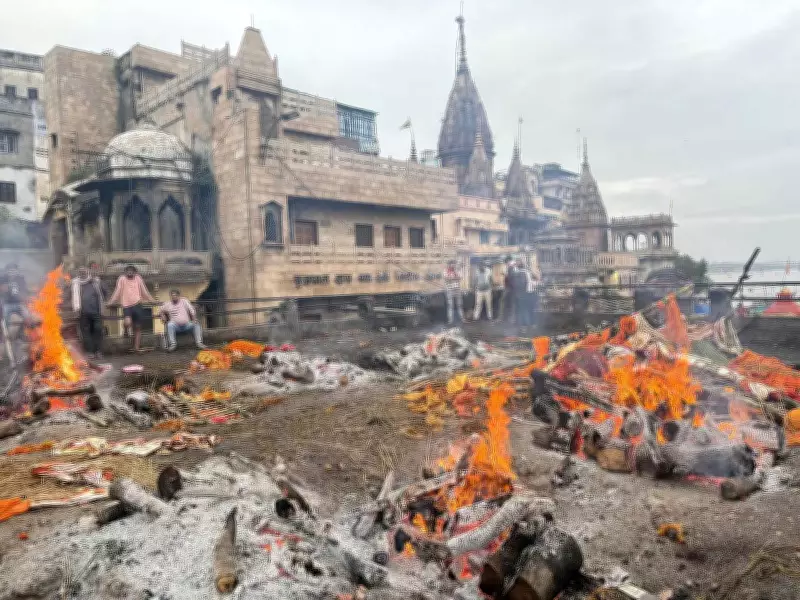
Vadodara: By the glow of funeral pyres that never go out, young workers and men at Varanasi’s Manikarnika Ghat spend their childhood and youth performing one of Hinduism’s most sacred duties. An MSU study has now documented the human cost of this tradition, revealing a community grappling with poverty, illness, stigma and limited opportunities beyond the cremation grounds.
Study Details
A study conducted by MSU Master of Social Work student Vraj Thakkar, under the guidance of assistant professor Manish Dhakad, examines the socio-economic and psychological experiences of adolescents and youth from the Dom community, which has traditionally overseen cremation activities at the ghat.
Key Findings
The research highlights the difficult realities faced by those engaged in cremation work. Nearly 69% of respondents said their income was insufficient to support their families, while more than 91% reported health issues, including burn injuries, respiratory ailments, stress and physical exhaustion. Over 77% said they had faced discrimination due to their occupation.

Many of the respondents said they entered the profession at a young age, driven by family tradition and a lack of alternative livelihood options. Despite the hardships, nearly two-thirds said they expected to continue in the occupation, citing limited job opportunities outside the cremation economy. However, many also expressed interest in vocational training, particularly in trades such as tailoring and driving.
Emotional Toll
The study further notes the emotional toll of working in an environment dominated by death. While some respondents said they had become accustomed to the work over time, others reported feelings of sadness, discomfort and psychological strain. Nearly 97% said they consumed tobacco or alcohol, often as a coping mechanism for physical and emotional stress.
Sense of Duty
At the same time, many workers described their role as a sacred duty, expressing pride in assisting families in performing last rites and believing they contribute to the journey of the soul towards moksha.
Expert Commentary
Assistant professor Dhakad said social work research must engage with field realities that often remain invisible to mainstream discourse. He noted that the study sheds light on an occupation that is socially significant yet rarely examined in academic research.
Recommendations
The study recommends improved healthcare access, mental health support, workplace safety measures, skill development programmes and stronger social inclusion for young cremation workers.






