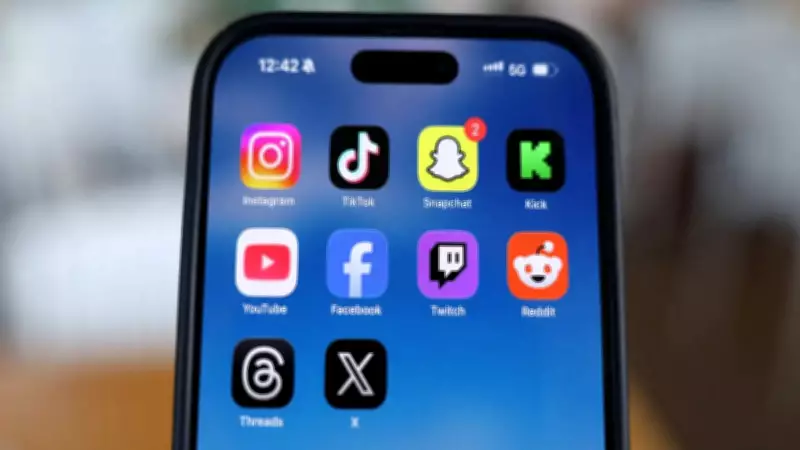
Pinterest CEO Advocates for Global Social Media Ban for Minors Under 16
In a bold move, Bill Ready, the CEO of Pinterest, has publicly called for governments worldwide to implement a ban on social media access for individuals under the age of 16. This appeal was made in a comprehensive essay published in Time Magazine, where Ready framed the issue as both a professional responsibility and a personal concern as a parent.
Comparing Social Media to Tobacco Industry
Ready drew a stark parallel between current technology executives and 20th-century tobacco leaders, labeling social media as the 'New Big Tobacco'. He emphasized that while legal compliance is often met, it does not equate to safety for young users. 'As both a tech CEO and parent, I know legal compliance is not the same as safety. And I understand broad restrictions come with difficult tradeoffs. But social media, as it’s configured today, is not safe for young people under 16,' he stated in the post.
He criticized the design of social media platforms, arguing they are engineered to maximize screen time, keeping children engaged without adequate consideration for their well-being. 'Instead, it’s been designed to maximize view time, keeping kids glued to a screen with little regard for their well-being. In courtrooms, we’ve seen how social media companies put profit over young people’s safety, sometimes with tragic outcomes,' Ready added.

Describing a 'Social Experiment' with Harmful Consequences
Ready described the current era as 'the largest social experiment in history', conducted on a massive scale with insufficient foresight into the repercussions. He pointed out that tech companies have failed to adequately consider the consequences, leading to exposure to unknown strangers and fostering screen addictions among youth.
'This social experiment has been conducted at scale, and thus, the results are now painfully clear: rising anxiety and depression, eroding concentration, and classrooms competing for attention,' he wrote. He noted that despite years of opportunity to address these harms, the industry has repeatedly fallen short, declaring that 'The time for self-regulation has passed.'
Pointing to Australia as a Model for Action
As a potential solution, Ready highlighted Australia's recent legislation banning social media for users under 16, enacted last year, as a model worth emulating globally. He urged other nations to adopt similar stringent measures to protect minors.
Drawing an analogy to age restrictions on activities like driving, smoking, and alcohol consumption, Ready argued for giving children time to develop before making choices that could impact their well-being. 'We must give our children a chance to develop before making consequential choices that could significantly affect their well-being,' he said.
Calling for Clear Standards and Accountability
Ready proposed establishing a clear standard: no social media for teens under 16, supported by robust enforcement and accountability for mobile operating systems and apps. 'We need a clear standard: no social media for teens under 16, backed by real enforcement, and accountability for mobile phone operating systems and the apps that run on them. It’s time to raise the bar on safety and well-being for kids. We need clearer rules, better tools for parents, and stronger accountability for platforms and social media apps,' he concluded.