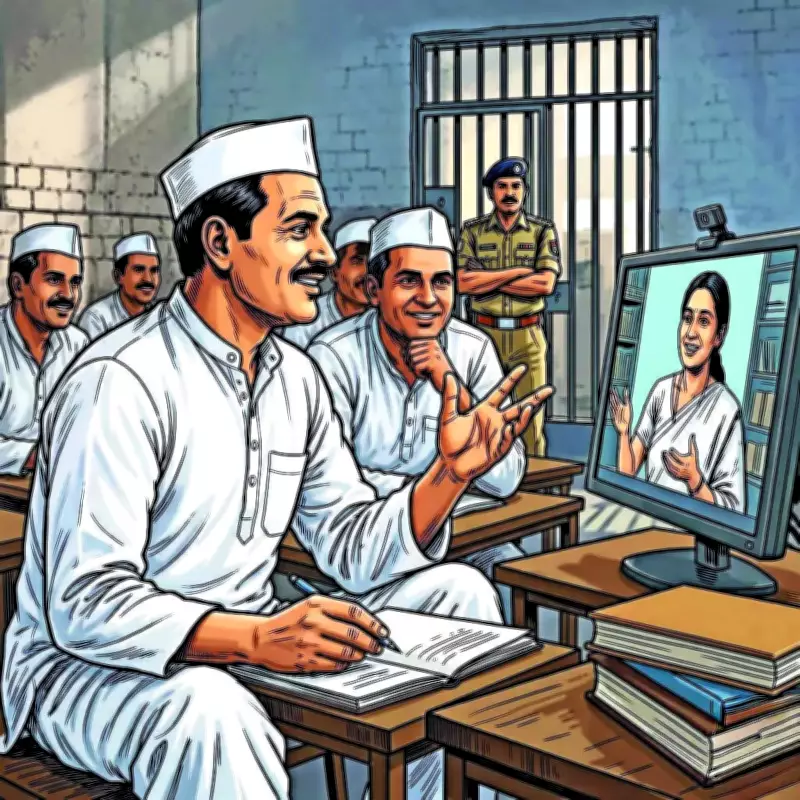
In a pioneering initiative, Sabarmati Central Jail in Ahmedabad is set to launch a virtual education programme that will enable inmates to attend regular online classes and interact directly with teachers from within the prison premises. The programme, informally called 'Jail Ki Pathshala', aims to provide educational opportunities ranging from primary schooling to higher studies, along with vocational and skill-development courses.
Shift from Traditional Distance Learning
Jail officials stated that this move marks a significant shift from the existing system, where prisoners largely depended on distance learning programmes offered by open universities. Under the old model, inmates studied independently using course materials provided to them. The new model introduces daily e-learning sessions through virtual classrooms, allowing real-time interaction with teachers for the first time.
Objectives and Implementation
The programme is designed to improve literacy, encourage rehabilitation, and prepare inmates for reintegration into society after their release. Sabarmati Jail Superintendent Gaurav Agrawal highlighted that while several inmates had previously pursued degree courses through open universities, there was a pressing need to focus on basic education.

Agrawal said, 'For this, I have spoken with representatives of the National Institute of Open Schooling (NIOS), who have shown readiness to establish a centre inside the jail. This will enable inmates to study from Class 1 to Class 12 through regular e-schooling sessions.' Once the centre is established, jail authorities will collaborate with open universities to start teaching programmes for degree and diploma courses.
Positive Response and Future Plans
The authorities have received a positive response from NIOS, and classes are expected to begin soon. Apart from formal schooling, the jail administration is also planning to introduce degree courses and skill-based programmes such as spoken English and vocational training. The full-fledged e-learning system is being designed as a long-term correctional measure to help inmates rebuild their lives through education and skill enhancement.
Earlier, jail inmates had taken various skill-based courses, including communication studies and the making of anti-theft pockets, in collaboration with the National Institute of Design (NID) Ahmedabad.