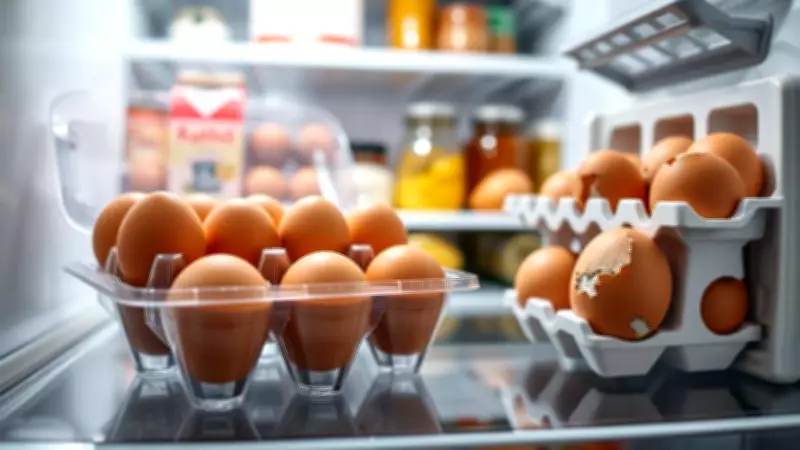
After visiting the grocery store, most of us follow an automatic routine: walking into the kitchen, opening the refrigerator door, and placing newly purchased eggs into the designated spots on the inside of the fridge door. However, this common practice may be a significant mistake when it comes to food storage.
Why the Fridge Door Is a Bad Choice for Eggs
Eggs are hardy yet extremely sensitive to their environment. Proper storage is not only about longevity but also about food safety. If egg whites appear thin and weak, and yolks break easily, it may be due to the storage location. The constant opening and closing of the refrigerator door exposes the outer shelves to warm air, causing temperature fluctuations. According to the USDA Food Safety and Inspection Service, perishable foods like eggs must be kept at a steady temperature of 40 degrees Fahrenheit or below to inhibit bacterial growth. The outermost shelving is the warmest part and most susceptible to these fluctuations. When eggs undergo repeated warming and cooling cycles, condensation can form on the shell, allowing bacteria like Salmonella to penetrate the microscopic pores and compromise safety.
Best Practices for Egg Storage
To prevent spoilage, the USDA advises placing eggs away from the refrigerator door. The middle or lower parts of the refrigerator, close to the back wall, remain cooler regardless of door openings. This helps keep eggs consistently cool, slowing spoilage and maintaining egg white thickness and yolk stability. For optimal freshness and safety, keep eggs in their original carton in these cooler, more stable sections.

An often-made mistake is using built-in egg compartments while discarding the original carton. Although these compartments look convenient, they do not provide the same protection. Egg cartons serve multiple purposes: they protect eggs from absorbing odors (eggshells are porous and can pick up smells from onions or cheese), prevent moisture loss that dries out eggs, and keep eggs in the "large end up" position, which helps center the yolk and stabilize the air cell.
The FDA also warns against washing eggs before storage. Commercial eggs are already washed and sanitized; rewashing can strip away a natural protective coating and push bacteria through the pores into the egg.
In summary, resist the temptation to store eggs in the door bins. Keep them in their cartons on an inner shelf for safety and quality. Following this basic food safety measure ensures your eggs remain fresh and your baked goods turn out great.