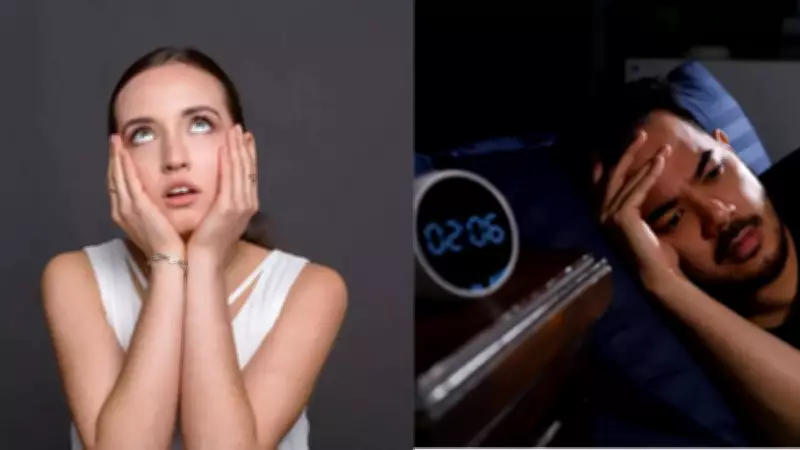
Do you also spend nights tossing and turning, staring at the walls, hoping for at least one night of perfect sound sleep, only to end up disappointed? Then you must read on, as a viral sleep hack is helping people achieve a good night's sleep in just a few minutes, and yes, it is without consuming any sedatives. Here is a viral trend that has been a respite for people struggling with sleep disorders; read on to find out more about it!
Is It Actually Worth the Hype?
For over a decade, sleeping through the night has been a battle for many. People spend thousands of dollars on sedatives, alternative medicines, meditation apps, white noise machines, and weighted blankets. However, what may change the dynamics of fixing sleep is a free hack that requires a bizarre exercise, and this is what makes it viral.
The Bizarre Trick
The method is incredibly easy: just close your eyes and roll your eyeballs slowly from side to side, then up and down, and finally in circles, both clockwise and counterclockwise. Keep the movements slow and even until you drift off. The hack became a viral trend after surgeon Dr. Katelyn Tondo-Steele shared it on Instagram. She claimed it worked for her 14 out of 15 times when waking up in the middle of the night, sparking millions of views and endless positive comments.

Why May It Work?
Interestingly, the hack is not just another fad or fancy viral trick; rather, it is a simple technique based on a neurological theory. According to a report published in a digital daily, pediatric neurology nurse Kiara DeWitt explains that forcing your eyes into slow, smooth arcs simulates the natural movements of REM sleep, signaling the nervous system to wind down. Psychiatrist Ishdeep Narang points to a simpler psychological reason: waking up usually triggers panic about being tired the next day. This technique hijacks your attention, replacing anxious thoughts with a boring, physical task.
What the Science Says
Unfortunately, there is no direct research on this specific method. Ophthalmologist Dr. Gregg Feinerman notes that while rhythmic motions can redirect focus from anxiety, relaxation happens in the brain, not the eyes. According to a report published in HuffPost, citing sleep specialist Alex Dimitriu, the approach is purely anecdotal right now. He notes that unlike this viral trend, methods like box breathing, progressive muscle relaxation, and Yoga Nidra are backed by substantial scientific evidence.
How This Hack May Backfire
For others, the trick did more harm than good. Erika Lavin, who has managed insomnia since childhood, tried the hack during a middle-of-the-night panic attack. The eye movements actually made her feel more alert, feeding into her anxiety rather than stopping it. Denise Murray tracked her two-week trial with a smartwatch and found her heart rate actually increased. The movement made her hyper-aware of her body, shifting her brain into an analytical mode about work. By night 10, it took her twice as long to fall asleep, so she quit.
Who Should Try It?
Since it is free and safe, there is no harm in giving it a shot, provided you keep your expectations realistic. Just remember to keep the movements gentle, and consult a doctor first if you have eye conditions like glaucoma or retinal issues. Most importantly, if it does not work after a few minutes, stop.
Get the latest movie news, reviews, and celebrity updates. Download the TOI App.