

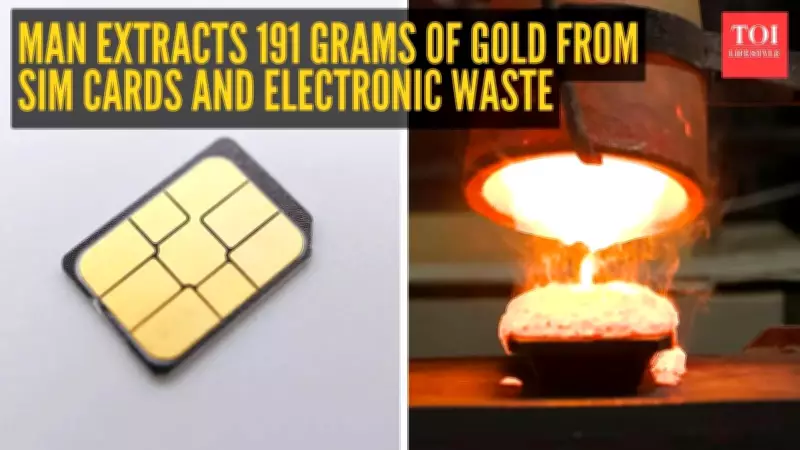
Viral Video Reveals Gold Recovery from Discarded SIM Cards in China
A fascinating video originating from southeastern China has taken social media by storm, capturing widespread attention with its depiction of gold extraction from old SIM cards and various forms of electronic waste. The clip has amassed millions of views online, igniting significant curiosity and conversation across digital platforms.
The Man Behind the Viral Phenomenon
The individual featured in the video is known online as Qiao, a resident of Huizhou in Guangdong province. Professionally engaged in precious metal scrap recovery, Qiao demonstrates in his viral footage the intricate process of retrieving gold from telecom industry electronic waste. His demonstration has not only fascinated viewers but also spurred increased interest in used SIM cards, with some individuals beginning to purchase them following the video's popularity.
The Gold Extraction Process Unveiled
In the compelling video, Qiao methodically pours used SIM cards and chip waste into large containers filled with specialized chemicals. Through a series of carefully controlled steps including corrosion, displacement, and heating, he successfully separates gold mud from the electronic components. After additional filtering and heating processes, this mud is transformed into solid, recoverable gold.

According to detailed reports, Qiao managed to extract an impressive 191 grams of gold through this process. This quantity holds substantial value, estimated at nearly 200,000 yuan or approximately US$29,000, highlighting the potential economic worth hidden within everyday electronic waste.
Clarifications and Industry Insights
Qiao later clarified to media outlets that the gold did not originate exclusively from SIM cards but rather from a mixture of electronic chip waste. He explained that "key parts of SIM cards are gold-plated to ensure stability and corrosion resistance," making them valuable sources for precious metal recovery when processed correctly.
The video's viral success has triggered noticeable commercial activity online. One seller began offering bundles of old SIM cards with claims they could be used for "alchemy," while another online store sold gold-refining tools accompanied by instructional video lessons for 485 yuan (US$70), with nearly 2,000 copies reportedly sold.
Online Reactions and Expert Warnings
Social media users expressed varied reactions to the viral content. One commenter lamented, "When I ran an internet cafe, I threw away lots of computer chip waste. Now I regret missing out on all that gold." Another observer noted, "Qiao is professional. Alchemy has a high chemical threshold," acknowledging the technical expertise required for such processes.
Qiao himself issued important warnings, emphasizing that he conducts his work legally with proper certification for specific electronic waste refinement. "My goal is to share my skill," he stated, while cautioning others against attempting similar extraction methods without proper qualifications and safety measures.
Safety Concerns and Regulatory Framework
An industry insider quoted by mainland media highlighted the significant dangers involved in gold extraction processes. They noted that people typically use aqua regia—a highly dangerous chemical mixture—for such purposes, explaining that "this process is highly sensitive to temperature, time and pH control. A small mistake can release toxic gases or trigger strong corrosive reactions."
In China, refining and selling precious metals remains strictly controlled under regulatory frameworks. Scrap refining operations require specific certification, and used SIM cards are classified as hazardous waste, subject to particular handling and disposal regulations to ensure environmental and public safety.






