

Whether you are a professional doom-scroller or just trying to keep your phone from pulling a sudden shutdown on your social life, your charging cable is the unsung hero of your daily grind. It is the lifeline for your actual lifeline, your phone, and replacing an official one often costs more than a month of premium streaming.
The Common Struggles with Charging Cables
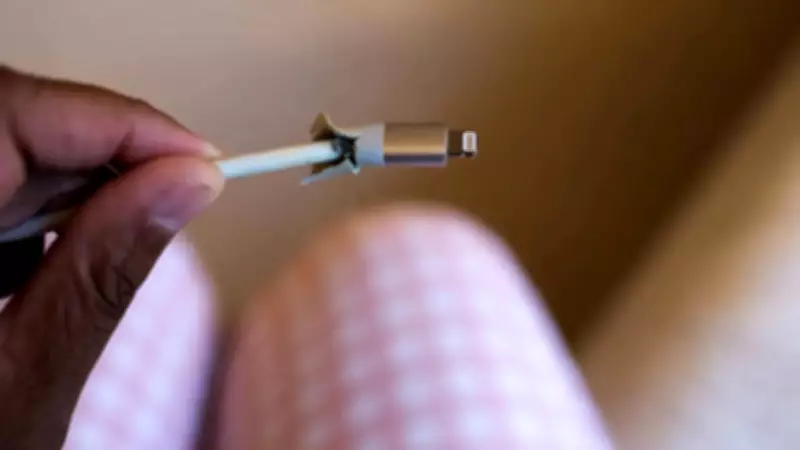
There comes a time in everyone's life when the charger cable suddenly breaks overnight, destroying the ease of plugging in your phone one second and sleeping the next. You then begin the nightly struggle of trying to find the right angle where the charger actually works, while also fearing a mishap and delaying buying a new cable. But have you ever wondered just how and why charger cables break so often, even when you wrap them up at times to increase their longevity?
The Circle of Charging Cables
Most people wrap their charging cables in loose concentric circles to protect them. This is a very common idea among users, so much so that there is a market for eccentric wraps and charger covers. One of the most common places where charging cables break is where the cable meets the plug. This typically happens when you lie in awkward positions with your phone plugged in, pulling the connector at a sharp angle to keep using it, thus stretching it every time.

Another reason is when your phone is done charging and you grab the end of the cable to pull out rather than the connector. This puts stress directly on the internal solder joints between the wire core and connector, leading to broken connections over time. Leaving cables in hot cars all day long or using them under high-power charging conditions for long periods can also elevate the stress on the cables.
The Anatomy of a Charger
Charging cables are full of little metal wires wrapped with insulation. On the far end, they thread into a connector with a plug at the end. This joint is where things get delicate. When unnecessary and uncomfortable bending happens, the connector, which acts like an anchor, is stressed. On a microscopic level, bending beyond the elastic range makes the bonds between the atoms break and reform as they shift positions. Too many dislocations harden the metal, and it snaps, leaving you to bear the consequences.
How to Make Charging Cables Last Longer
Treat the connecting part of the cable with respect, and it will last longer than you will. One of the easiest ways to ensure your charging cables last longer is to invest in good-quality cables that are a bit more expensive than the ones you buy at the gas station. Ideally, opt for braided cables, which use tight textiles or a nylon mesh woven over the wires instead of a plastic exterior. Even Apple has gone to braided cables in their most recent models just because the strength and shielding of the braids protect it better. Choose cables with 110W to 240W fast charging and a built-in E-marker chip for safe power negotiation.
But more than all of this, improve your habits while using charging cables. Respect them just like you respect your phones by placing them safely, not bending them at extreme angles, and pulling at the connector rather than the cable itself.






