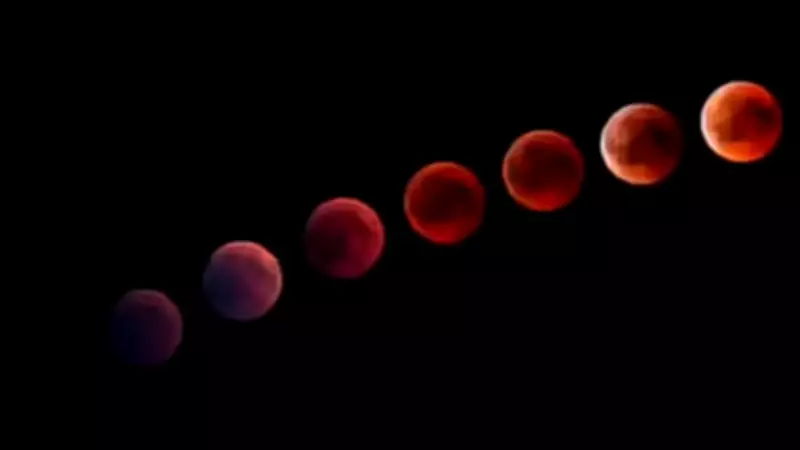
Chandra Grahan 2026: Total Lunar 'Blood Moon' Eclipse Timings and Visibility in India
The first lunar eclipse of 2026 is set to occur on Tuesday, March 3, 2026, coinciding with Holi celebrations across India. This celestial event represents one of the most significant astronomical highlights of the year, capturing the attention of skywatchers, astronomy enthusiasts, and spiritual observers nationwide.
Complete Eclipse Timings and Duration
The total lunar eclipse will commence at 3:20 PM IST on March 3, 2026. The dramatic totality phase, when the Moon is fully immersed in Earth's shadow, begins at 4:34 PM IST and concludes at 5:33 PM IST. The entire eclipse event will end at 6:47 PM IST, lasting for over three hours from start to finish.
However, visibility across most of India will be limited because the eclipse begins before moonrise. Observers will primarily witness the closing stages of the eclipse shortly after sunset.

Understanding the 'Blood Moon' Phenomenon
During the totality phase, the Moon may acquire a striking reddish hue, commonly referred to as a "Blood Moon." This occurs because sunlight passes through Earth's atmosphere, where shorter blue wavelengths are scattered, while longer red wavelengths bend around our planet and illuminate the lunar surface. Unlike solar eclipses, lunar eclipses can be safely viewed with the naked eye without any special protective filters.
Spiritual Significance and Traditional Observances
In India, the lunar eclipse or Chandra Grahan holds considerable religious and spiritual importance. Many communities observe Sutak Kaal before the eclipse, a period considered inauspicious for certain activities. Traditional practices during this time include:
- Engaging in prayers and meditation
- Chanting mantras and performing rituals
- Observing fasting or dietary restrictions
- Avoiding new ventures or important decisions
Visibility Across Indian Regions and Major Cities
Due to the eclipse's afternoon timing, most locations in India will miss the complete totality phase. Here's a detailed breakdown of expected visibility:
Eastern India: Cities like Kolkata and other eastern regions may experience approximately 30–60 minutes of visibility after moonrise, before the eclipse concludes at 6:47 PM IST.
North-East India and Andaman & Nicobar Islands: These areas have the best chance to witness the end of the totality phase, offering a brief glimpse of the Blood Moon phenomenon.
Major Metropolitan Cities:
- Delhi, Mumbai, and Bengaluru: These cities are expected to see only a partial eclipse, with the Moon emerging from Earth's shadow shortly after sunset.
- Kolkata and Eastern Cities: Viewers here may enjoy a slightly longer viewing window, potentially catching the final stages of totality.
Why Most Observers Will Miss the Full Totality
The most dramatic phase of the eclipse—the deep red Blood Moon—occurs during late afternoon hours, when the Moon is still below the horizon for much of India. Consequently, skywatchers across the country will primarily observe the Moon's emergence from Earth's shadow during evening twilight, marking the eclipse's concluding act rather than its peak intensity.
This celestial alignment with Holi adds a unique cultural dimension to the 2026 lunar eclipse, blending astronomical wonder with traditional celebration across the nation.