Scientists Achieve Groundbreaking Revival of Ancient Arctic Creature
In a feat that blurs the line between science fiction and reality, researchers have accomplished the remarkable resurrection of a microscopic organism that lay dormant in Siberian permafrost for an astonishing 24,000 years. This scientific breakthrough has ignited global fascination, prompting profound questions about the endurance of life, the passage of time, and the very boundaries of biological existence.
Discovery and Resurrection of the Bdelloid Rotifer
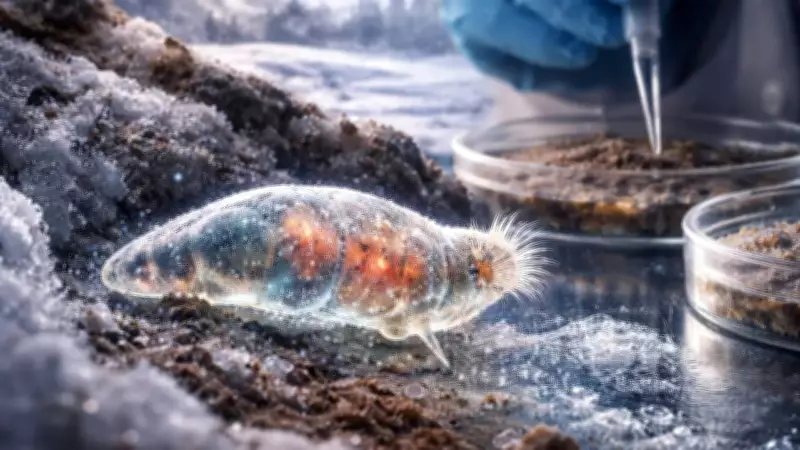
The creature, identified as a bdelloid rotifer, was unearthed from deep within the permanently frozen soil of northeastern Siberia. Scientists meticulously drilled into the Arctic ground to extract permafrost samples, with radiocarbon dating confirming the soil's age at approximately 24,000 years. In laboratory conditions, the samples were gradually thawed, allowing the rotifer to slowly awaken from its millennia-long slumber.
According to the study published in Current Biology, titled "A living bdelloid rotifer from 24,000-year-old Arctic permafrost," the organism not only revived but also began reproducing through parthenogenesis—a form of asexual reproduction. This demonstrated that the creature was fully functional, not merely alive, marking one of the most compelling cases of multicellular survival in suspended animation.

Cryptobiosis: The Key to Extreme Survival
The rotifer's incredible longevity can be attributed to cryptobiosis, a state where an organism's metabolism nearly halts, enabling it to withstand harsh environments such as freezing temperatures, dehydration, and oxygen deprivation. Bdelloid rotifers are renowned for their biological resilience, capable of enduring radiation, extreme cold, and other stressors, often repairing themselves when conditions become favorable. This makes them ideal subjects for studying natural survival mechanisms.
Implications for Cryobiology and Future Research
Beyond shedding light on prehistoric life, this discovery holds significant promise for the field of cryobiology. By examining how rotifers survive freezing, scientists may develop improved methods for cryopreserving cells, tissues, and organs, with potential applications in medicine and biotechnology. Additionally, this research could inform studies on biological survival in space, exploring whether life might exist under similarly extreme conditions on other planets.
Redefining the Limits of Life on Earth
This event challenges previous assumptions about life's limitations, suggesting that organisms can persist for millennia under ideal dormant states. It raises intriguing possibilities about other forms of life that might survive ice burial or harsh environments, both on Earth and beyond. Ultimately, the revival of this ancient creature pushes the scientific community to reconsider the definitions and boundaries of life itself.
Final Insights
The resurrection of the bdelloid rotifer after 24,000 years is more than a captivating scientific tale; it represents a pivotal milestone in understanding life's capacity to endure in dormant and extreme settings. By awakening from its frozen Arctic tomb, this tiny organism has sparked imagination and inquiry, highlighting the untapped potential of biological resilience in the natural world.