

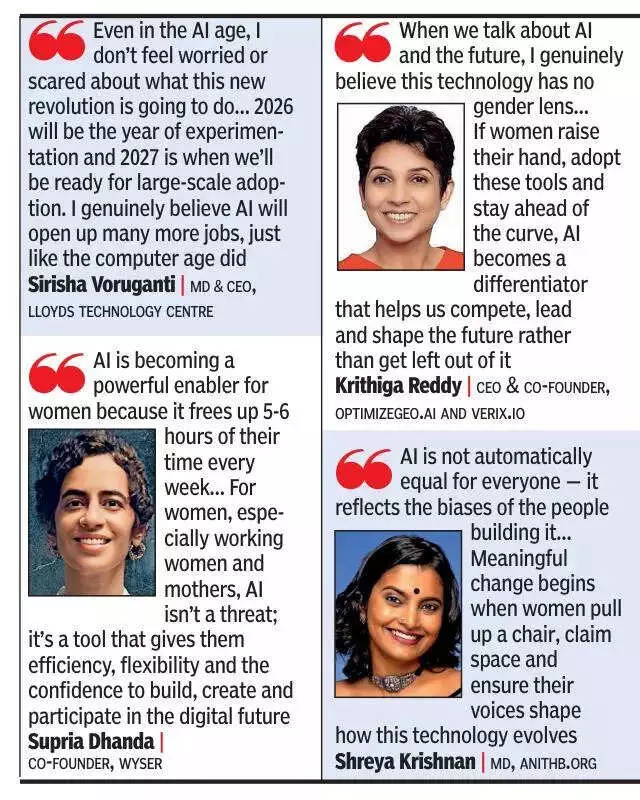
Artificial Intelligence holds the promise of becoming a significant force for gender equality, but this potential can only be realised if women step forward to shape its development and embrace its use. This was the central message from industry leaders at a major technology conference in India's Silicon Valley.
Unbound Potential at Grace Hopper Celebration 2025
The three-day Grace Hopper Celebration 2025 convened at the KTPO in Whitefield, Bengaluru, under the powerful theme 'Unbound: Challenging you to break barriers and imagine the impossible.' The event brought together a formidable gathering of entrepreneurs, CEOs, investors, and technologists. Their collective focus was to examine the deep and transformative impact AI is poised to have on the careers, personal choices, and future trajectories of women globally.
AI as a Tool for Liberation and Democratisation
Speakers at the summit presented a compelling case for AI's current benefits. They detailed how intelligent technology is already assisting women by freeing up valuable time, democratising access to complex skills, and opening doors to the innovation economy. A key insight was that women can now participate in tech-driven growth without the need for conventional, formal technical education backgrounds.

The discussion highlighted AI's expanding role, from boosting workplace productivity to enhancing personal well-being. Experts framed this era as a critical turning point, comparable to the advent of personal computers and the Internet. However, they stressed that the scale and societal impact of AI are predicted to be far greater, gradually shifting power and agency back into women's hands.
A Cautionary Note on Bias and the Call for Participation
Amid the optimism, women entrepreneurs sounded a crucial note of caution. They unanimously argued that AI will only be equitable if women are involved at every stage—as builders, testers, and key decision-makers. The risk, if development remains exclusive, is that AI systems trained on biased historical data will simply automate and perpetuate existing societal inequalities.
The proposed solution is not retreat or fear but proactive engagement. The path forward, as outlined by speakers, hinges on active participation, fearless experimentation, and claiming ownership of the technology. The narrative shifted from AI as something that happens to women, to a tool that must be built by and for them to ensure its benefits are distributed fairly.
The conference served as both a celebration of progress and a urgent rallying cry, setting the agenda for inclusive AI development in the years to come.






