AI CEO Issues Stark Warning: Artificial Intelligence Impact Could Dwarf COVID-19 Pandemic
Artificial intelligence has generated numerous bold predictions in recent years, with some sounding exaggerated while others have surprisingly materialized. Now, a prominent technology CEO is sounding an alarm that what comes next could be "much bigger" than the COVID-19 pandemic—a comparison that immediately commands attention and reflection.
Viral Essay Sparks Industry-Wide Conversation
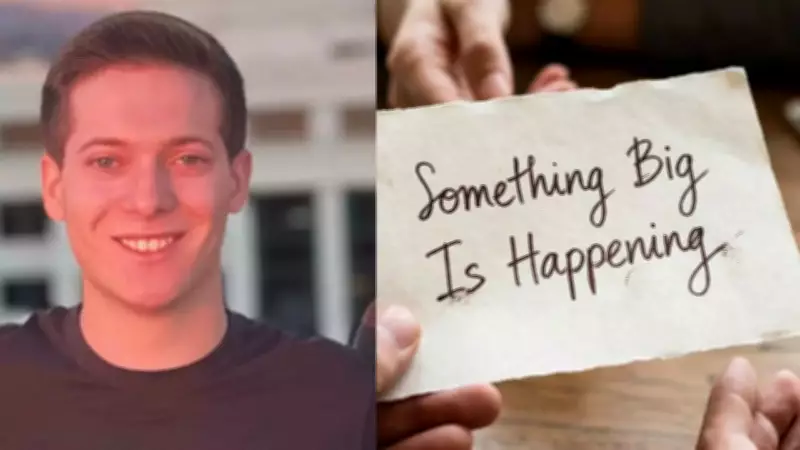
Hyperwrite CEO Matt Shumer published a comprehensive essay on X titled 'Something Big Is Happening' that rapidly went viral across social media platforms. His message was direct and unambiguous: artificial intelligence is no longer a distant future threat but is actively transforming employment landscapes, including within his own organization. Shumer believes many individuals still fail to comprehend the accelerated pace of AI development and implementation.
Notably, this warning comes from someone who leads an artificial intelligence company himself. Shumer revealed that AI can now manage all his technical work responsibilities, a significant admission from an industry insider.

From Polite Responses to Raw Honesty
The CEO wrote his essay primarily for friends and family members who persistently inquired about what is genuinely occurring with artificial intelligence. He confessed that conventional polite responses no longer felt authentic or adequate. His post reportedly accumulated more than 30 million views within a single day, capturing attention from major technology figures including Reddit co-founder Alexis Ohanian and numerous venture capital investors who publicly endorsed his perspective.
"We're not predicting. It already happened," Shumer emphasized, asserting that technology professionals are not speculating about potential futures but rather describing transformations that have already materialized within their workplaces.
The Rapid Evolution of AI Capabilities
Shumer argued that many outside the technology industry dismissed artificial intelligence after experimenting with early versions of ChatGPT. However, recent releases from companies like OpenAI and Anthropic demonstrate remarkable advancements. OpenAI's GPT-5.3 Codex, specifically designed for software engineering, was described by the company as instrumental in helping build itself—a revelation that raised eyebrows throughout the technology sector.
What once appeared messy and experimental now demonstrates impressive, practical capabilities, according to industry observers.
Drawing Parallels to February 2020
Shumer draws a compelling comparison between current AI developments and early 2020, when news of a virus spreading overseas seemed distant and irrelevant to daily life—until everything changed abruptly. He believes "AI's impact might be even bigger than COVID," noting that while the pandemic reshaped how and where people work, artificial intelligence could fundamentally transform who works at all.
This perspective explains why he specifically compares current AI growth to the February 2020 pandemic period, emphasizing the potential for sudden, widespread disruption.
Career Implications and Learning Urgency
The Hyperwrite CEO described a personal experience where he assigned OpenAI's latest coding model a task and left his computer for four hours, returning to find the work completed thoroughly and competently—not merely technically correct. He urgently advises people to learn artificial intelligence skills rapidly, suggesting this might be "the most important year of your career."
His reasoning doesn't focus on imminent layoffs but rather identifies a brief window where many companies still underestimate AI's capabilities. In Shumer's view, individuals who utilize artificial intelligence to complete three-day tasks in one hour will suddenly appear indispensable within their organizations.
The Mainstreaming of Artificial Intelligence
Artificial intelligence has transcended its status as a niche topic for engineers and technologists. It now enters boardroom discussions, human resources meetings, family dinner conversations, and daily life interactions. This cultural shift alone indicates that something substantial is occurring across society.

The widespread integration of AI into multiple facets of existence suggests we are witnessing a transformative moment that may reshape fundamental aspects of work, economy, and social interaction in ways we are only beginning to comprehend.