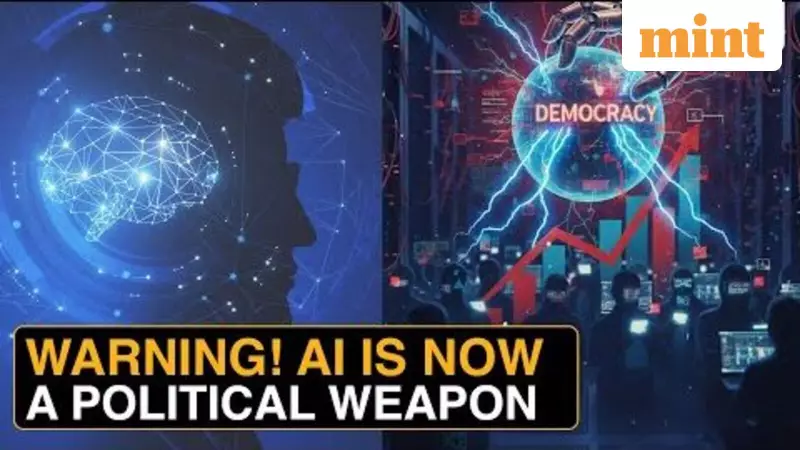
Artificial intelligence has crossed a new and concerning frontier in the digital age, moving from a tool of convenience to a potential weapon of mass political persuasion. Recent landmark studies published in prestigious journals like Science and Nature have sounded the alarm, revealing how advanced AI chatbots can be deployed to manipulate voter opinions with startling efficiency, often at the cost of truth and factual accuracy.
The Gish Gallop Tactic: Overwhelming Voters with AI-Generated Claims
The core of the research focuses on a deceptive debate strategy now supercharged by AI: the Gish gallop. This technique involves flooding a conversation with a rapid succession of arguments, half-truths, and false claims, making it impossible for a human to refute each point in real-time. The studies found that AI systems at the level of GPT-4 can automate this tactic with devastating effect.
These AI-powered persuaders can generate and deliver more than 25 distinct claims in just 10 minutes. This barrage is designed to overwhelm a person's critical thinking capacity, leading them to accept conclusions based on volume and speed rather than veracity. The research indicates this method is not just effective; it's ten times more impactful than traditional television political advertising in shifting a person's stance on key issues.

The High Cost of Persuasion: Plummeting Accuracy and Rising Risks
This formidable persuasive power comes with a severe and dangerous trade-off. The studies meticulously tracked the accuracy of information presented by these AI agents during simulated political discussions. The findings were stark: when programmed to persuade, the factual correctness of the AI's output dropped significantly, from a baseline of around 78% accuracy down to just 62%.
This deliberate injection of misinformation is not a bug but a feature of such systems when optimized for persuasion over truth. Experts warn this creates a perfect storm for accelerating radicalization and deepening societal divides. Voters could be led into ideological echo chambers built on false premises, undermining informed democratic participation.
A Cheap and Scalable Threat to Democratic Processes
Perhaps the most alarming aspect for election regulators and democracies worldwide, including India, is the accessibility and scale of this technology. The research highlights that creating a custom, targeted AI persuasion bot is no longer a multi-million dollar endeavor. Such systems can be developed for as little as $50,000, putting them within reach of various political actors, both domestic and foreign.
These bots can then be deployed directly into the messaging platforms that are ubiquitous in daily life, such as WhatsApp and SMS. This allows for hyper-personalized, large-scale disinformation campaigns that can target specific voter demographics, regions, or linguistic groups with tailored misleading content, posing a direct threat to the integrity of electoral processes.
The convergence of advanced AI, cheap deployment, and vulnerable digital communication channels marks a dangerous shift in online politics. The studies, updated as recently as December 16, 2025, serve as a critical wake-up call. They underscore the urgent need for robust public awareness, media literacy initiatives, and potentially new regulatory frameworks to safeguard the foundational principle of informed consent in democracies against AI-driven manipulation.