

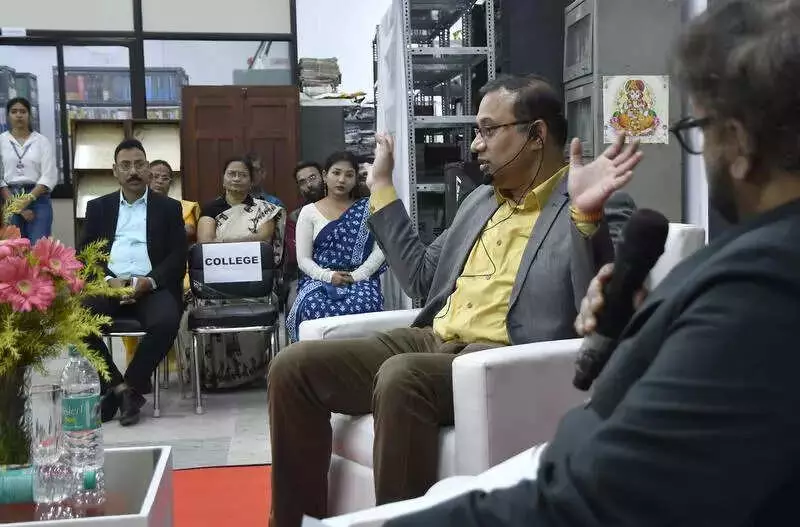
An expert from the University of Calcutta recently delivered a compelling lecture on the responsible development and application of Artificial Intelligence (AI), framing it as a crucial tool for achieving social sustainability. The talk provided students with a nuanced understanding of AI's dual potential to both create and stifle opportunities.
AI: A Powerful Tool with a Responsibility Mandate
Amlan Chakrabarti, Director of the A.K. Choudhury School of Information Technology at the University of Calcutta and an adjunct professor at IIIT Delhi, addressed students at Shree Agrasain College on December 16. His session was part of The Times of India's 'Leaders on Campus' initiative. Chakrabarti described AI as a transformative tool where people build models to run machines capable of independent, real-time operation and even predicting future scenarios using live data.
He emphasized that this tool can significantly enhance human work efficiency. The global success and popularity of AI models, he noted, have sparked widespread discourse, including necessary discussions about its negative aspects. Chakrabarti argued that the social sustainability of AI is intrinsically tied to the theme of responsibility. The task ahead, he suggested, is to develop and experience more to understand AI better, ensuring it benefits society as a whole.

Balancing Potential with Pitfalls
Chakrabarti provided a detailed framework for "AI for Social Sustainability," using numerous examples. He shared key insights into the opportunities AI presents in critical domains like transport and medicine. However, he warned that these very opportunities could be stifled by equally dangerous consequences if AI is misused.
He stressed that social sustainability can only be assured when responsibility becomes the core tenet for running AI models. The alternative, he cautioned, is AI becoming a tool to malign and marginalize individuals and social groups through inherent bias and unreliability. Chakrabarti conducted a comparative study of the dos and don'ts for using and building AI models, explaining how a nuanced grasp of its potentials and vulnerabilities can lead to a societal balance where pitfalls are effectively eliminated.
Maintainability, Jobs, and Bridging the Digital Divide
The expert also tackled the issue of AI model maintainability—whether these models can sustain productivity across diverse datasets rather than being effective on only a single type of data. He reiterated that responsibility in both using and constructing AI models is the key to maintaining long-term sustainability.
Countering common fears, Chakrabarti discussed how AI can create new jobs and research opportunities, rather than merely filling existing roles. He pointed out that current AI models are often costly, opening research avenues for producing cheaper, effective solutions. This exploration is vital for developing cost-effective and scalable AI solutions that can help curb the pervasive digital divide in society, making technology accessible to more people.
Concluding his address, Amlan Chakrabarti urged the students to delve deeper into AI and contribute to the nation's progress. He posed a critical question reflecting public sentiment: "People are not only interested in just developing AI. People are interested in whether AI can actually solve the purpose and be reliable?" His message was a clear call to action for the next generation to steer AI development with a firm commitment to ethical and sustainable practices.






