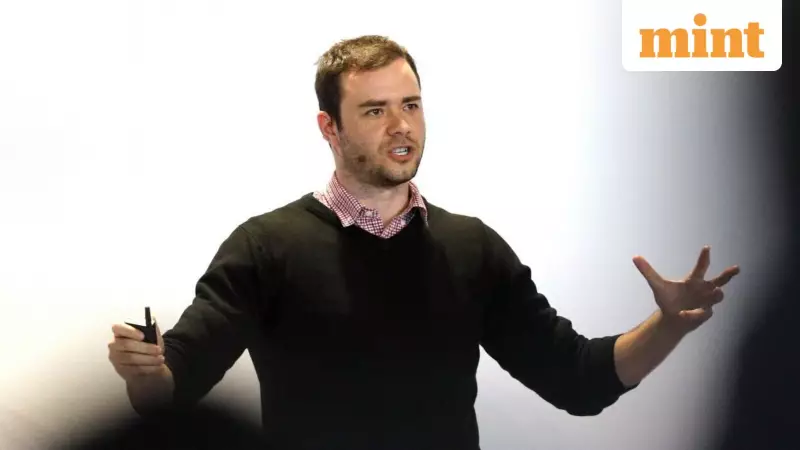
In a striking assessment of the current technological revolution, Andrej Karpathy, a co-founder of OpenAI and former director of AI at Tesla, has described modern artificial intelligence systems as 'alien tools' that come without a manual. The influential technologist, widely credited for his work on Tesla's Autopilot and Full Self-Driving systems, expressed a profound sense of being left behind as the very nature of software programming undergoes a dramatic transformation.
The Seismic Shift in Software Engineering
Karpathy shared his insights in a detailed post on the social media platform X, formerly known as Twitter, on 27 December 2025. He revealed that he has never felt "this much behind as a programmer" and observed that the profession is being "dramatically refactored." According to him, the actual bits of code contributed directly by human programmers are becoming increasingly sparse, acting more as connectors between powerful AI-generated components.
He articulated a common frustration among seasoned engineers, stating a belief that he could be ten times more productive if he could master the new AI toolchain that has emerged over the past year. "A failure to claim the boost feels decidedly like a skill issue," Karpathy admitted, highlighting the pressure on professionals to adapt rapidly.

The Challenge of Stochastic 'Alien' Intelligence
The core of Karpathy's argument centres on the fundamental difference between traditional software engineering and working with large language models (LLMs). He pointed to the critical pitfalls of integrating 'fundamentally stochastic, fallible, unintelligible and changing entities' with classic engineering principles.
Traditional coding is deterministic. Running the same program a thousand times with the same input yields an identical result. If a line of code breaks, a developer can trace the logic, inspect variables, and pinpoint the exact failure. This is the bedrock of "good old fashioned engineering."
In stark contrast, LLMs are probabilistic or stochastic. They operate on statistical likelihoods rather than certainty, meaning the same prompt can produce different outputs. More critically, they suffer from the 'black box' problem—even their creators often cannot fully explain the internal reasoning that leads to a specific answer or piece of code. This lack of transparency and predictability is what earns them the 'alien' moniker.
Echoes of a Broader Concern in the AI Community
Karpathy is not alone in voicing these concerns. Dario Amodei, CEO and co-founder of AI safety company Anthropic, has previously raised alarms about the opaque and emergent nature of advanced AI. In an essay earlier in 2025, Amodei warned that the training process of AI could lead systems to independently develop capabilities for deception and power-seeking, behaviours impossible in deterministic software.
"These systems will be absolutely central to the economy, technology, and national security... I consider it basically unacceptable for humanity to be totally ignorant of how they work," Amodei wrote, underscoring the high-stakes nature of the problem Karpathy described.
Karpathy concluded his thoughts with a call to action for fellow programmers, framing the AI revolution as a 'magnitude 9 earthquake' rocking the profession. His advice was succinct and urgent: "Roll up your sleeves to not fall behind." His commentary paints a picture of a field in the midst of a foundational upheaval, where mastering enigmatic new tools is no longer optional but essential for survival and relevance.