

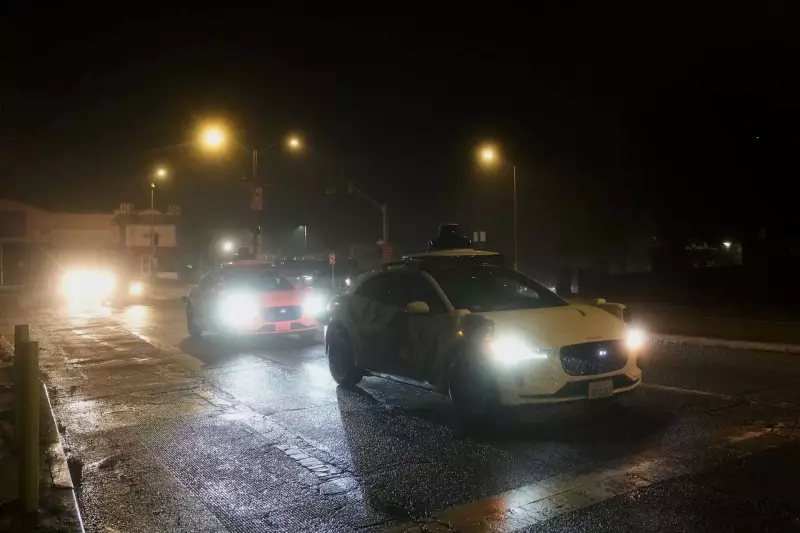
A widespread power failure threw a significant portion of San Francisco into disarray, leaving nearly 30% of the city in the dark for hours. The outage, which crippled critical infrastructure, had a particularly striking consequence: it rendered hundreds of Google-owned Waymo autonomous vehicles immobile, stranding them on busy roads and creating traffic snarls.
Waymo Fleet Grinds to a Halt Amidst Citywide Chaos
The blackout forced Waymo to take its entire fleet of robotaxis offline. The company officially suspended its ride-hailing services around 8 p.m. local time after its vehicles could no longer navigate intersections safely due to non-functional traffic signals. “We have temporarily suspended our ride-hailing services given the broad power outage in San Francisco,” a Waymo spokesperson stated, adding that their focus was on rider safety and ensuring clear access for emergency personnel.
Social media was quickly flooded with videos and photos showing the surreal scene of multiple Waymo cars stopped dead in the middle of major intersections, hazard lights flashing. Reports indicated at least four vehicles were stuck at one key junction, causing significant traffic backups. In a concerning incident, one passenger was reportedly trapped inside a stationary Waymo vehicle until they were manually rescued during the blackout.

Root Cause: Substation Fire Triggers Widespread Disruption
The massive outage impacted over 130,000 homes and businesses across several neighbourhoods, including the Richmond, Sunset, Presidio, and areas around Golden Gate Park. Officials from Pacific Gas and Electric (PG&E) traced the source to a fire at a key substation. The blaze knocked out critical components of the power grid, leading to what was described as “significant transit disruptions.”
The fallout extended far beyond the stranded autonomous cars. The city's rail services were shut down, and municipal buses were forced to skip multiple stops in the affected zones, bringing public transportation to a near-standstill.
Recovery and Lessons for an Automated Future
By Sunday, PG&E confirmed that the grid had been stabilised and no further outages were expected. Manual traffic control resumed, and city buses began returning to their standard routes. However, the event served as a stark reminder of the vulnerabilities of urban infrastructure and the unique challenges faced by autonomous vehicle technology during large-scale emergencies.
The incident raises critical questions about the resilience and fail-safe protocols for self-driving systems when supporting city infrastructure like traffic lights fails. While the blackout was a test for the entire city, the image of immobilized robotaxis became its most visible and symbolic consequence.






